Medication-Citrus Interaction Checker
Most people know grapefruit can mess with their meds. But if you’re eating pomelo or Seville orange, you might be in just as much danger - and nobody’s warning you.
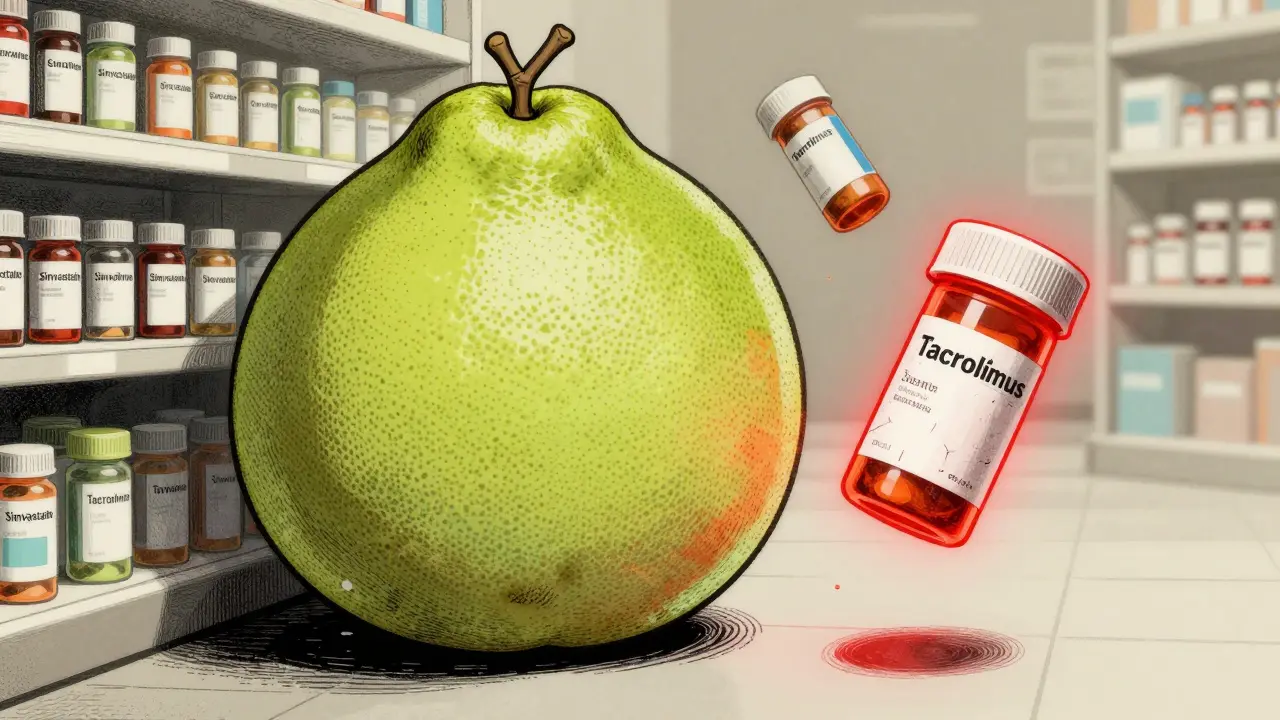
These fruits look different, taste different, and show up in different places. Pomelo is that giant, pale green or pinkish citrus you see in Asian markets. Seville orange is the bitter, dark yellow fruit used in traditional marmalade. Neither is called grapefruit. But when it comes to how they interact with your pills? They’re basically the same - and in some cases, even worse.
Why These Fruits Are More Dangerous Than You Think
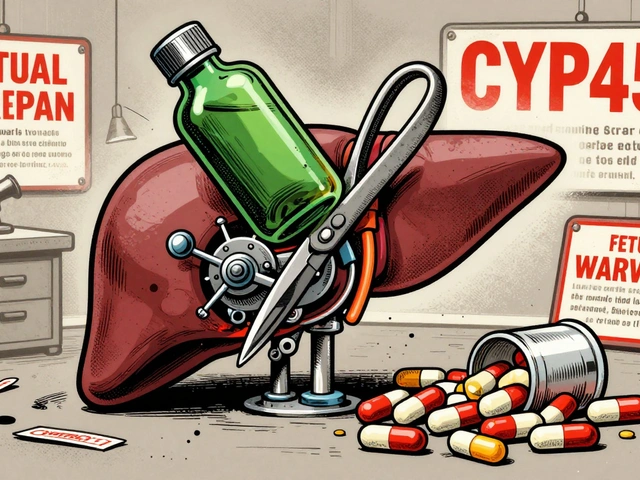
The problem isn’t sugar. It’s not vitamin C. It’s a group of natural chemicals called furanocoumarins, mainly bergamottin and 6’,7’-dihydroxybergamottin. These compounds shut down a key enzyme in your gut called CYP3A4. This enzyme is responsible for breaking down over half of all prescription drugs before they even enter your bloodstream.
When CYP3A4 gets blocked, your body absorbs way more of the drug than it should. That’s not a small increase. Studies show that just 200 mL of pomelo juice - about a cup - can spike drug levels by 30% to over 200%. And it doesn’t wear off quickly. Because the enzyme doesn’t just slow down - it gets permanently damaged. It takes up to 72 hours for your body to make new ones. So even if you eat pomelo at breakfast and take your pill at night? You’re still at risk.
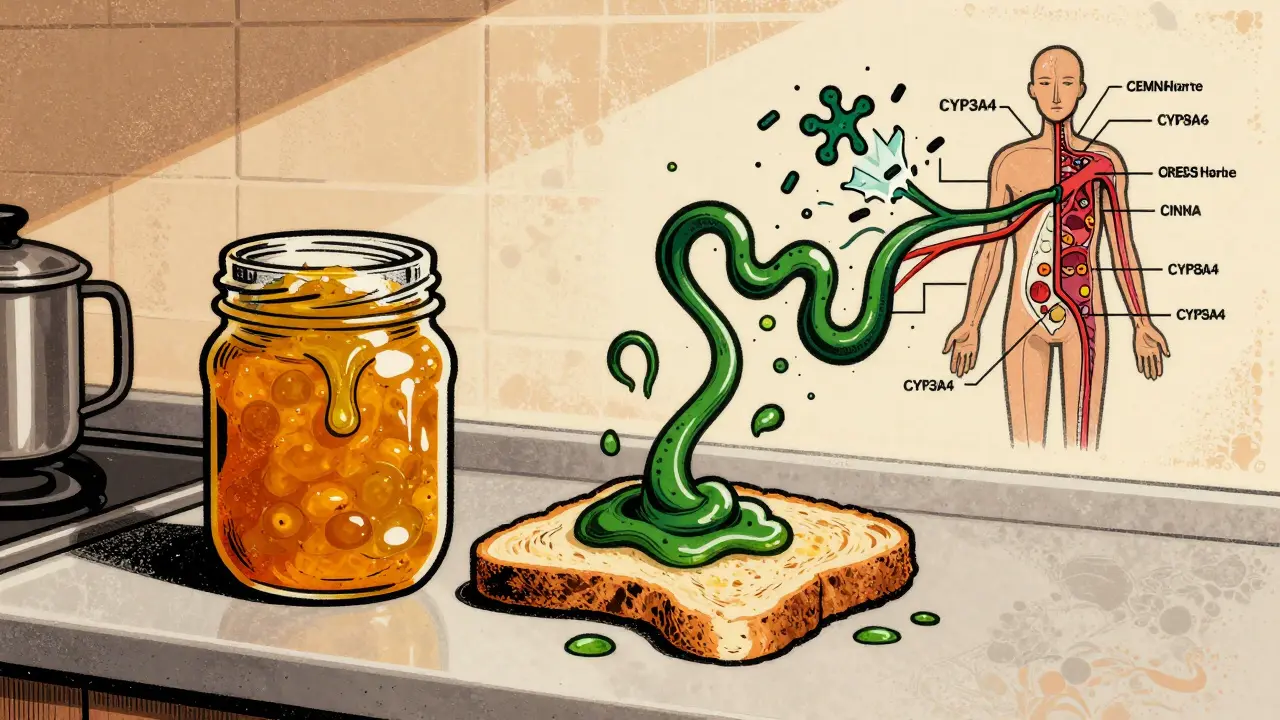
Seville orange? It’s even more potent. Research from Food Chemistry found some varieties contain up to 30% more bergamottin than grapefruit. And when it’s in marmalade? You’re not just getting juice - you’re getting concentrated peel, where the furanocoumarins are packed tight. One case report documented a transplant patient whose tacrolimus levels jumped 400% after eating just two tablespoons of Seville orange marmalade. That’s enough to cause kidney damage, seizures, or even death.
Which Medications Are at Risk?
Not all drugs are affected. But the ones that are? They’re often life-saving - and the side effects can be deadly.
- Statins (like simvastatin, atorvastatin): Too much in your blood = muscle breakdown (rhabdomyolysis), which can fry your kidneys. A 2018 study showed pomelo increased simvastatin exposure by 350% - more than grapefruit.
- Calcium channel blockers (like amlodipine, felodipine): These control blood pressure. Too much = dangerously low BP, dizziness, fainting.
- Immunosuppressants (like tacrolimus, cyclosporine): Used after transplants. Too much = kidney and liver toxicity. Too little = organ rejection. There’s no middle ground.
- Benzodiazepines (like midazolam, triazolam): Used for anxiety or sedation. Too much = extreme drowsiness, slowed breathing.
- Some anti-arrhythmics and antidepressants: Even small changes can trigger heart rhythm problems.
Here’s the kicker: if your drug is metabolized by CYP3A4, and it has a narrow therapeutic window (meaning the difference between a helpful dose and a toxic one is tiny), you’re in high-risk territory. And if you’re over 65, have liver issues, or take multiple meds? Your risk multiplies.
Pomelo vs. Seville Orange vs. Grapefruit: The Numbers Don’t Lie
| Fruit | Typical Bergamottin (μM) | Max Drug Increase (AUC) | Common Form Consumed | Labeling Warning Rate |
|---|---|---|---|---|
| Pomelo | 1.5-2.5 | 350% | Fresh fruit, juice | 37% |
| Seville Orange | 3.0-4.0 | 400% | Marmalade, juice | 29% |
| Grapefruit | 1.0-2.0 | 300% | Juice, segments | 78% |
Notice something? Pomelo and Seville orange aren’t just similar to grapefruit - they’re often stronger. And yet, while nearly 8 out of 10 grapefruit products carry a warning label, fewer than 4 out of 10 pomelo products do. Seville orange marmalade? Barely any labels at all. Consumers assume it’s just “orange jam.” It’s not.
Real People, Real Consequences
Online forums are full of horror stories. A Reddit user from Australia shared how their father, on simvastatin, developed rhabdomyolysis after eating pomelo daily for two weeks. He ended up in the ICU. No one warned him. His pharmacist didn’t ask. His doctor didn’t mention it.
A transplant patient in Spain was hospitalized after eating Seville orange marmalade every morning for years. Her tacrolimus levels were off the charts. She almost lost her new kidney. Her doctors didn’t connect the dots until she mentioned the marmalade during a routine checkup.
Here’s the scary part: 68% of patients surveyed on Drugs.com in 2023 said they were never warned about these fruits. Not by their doctor. Not by their pharmacist. Not even on the medication bottle.
What You Need to Do - Right Now
If you’re on any of the medications listed above, here’s what to do:
- Stop assuming. If it looks like a grapefruit but is bigger and less sour? It’s probably pomelo. If your marmalade tastes bitter and says “bitter orange” or “Seville orange” on the label? It’s dangerous.
- Ask your pharmacist. Don’t wait for them to ask you. Say: “I eat pomelo or Seville orange. Is this safe with my meds?”
- Check your meds. The University of Florida’s Pharmacogenomics Center lists 107 drugs with known interactions. If your drug is on that list, avoid these fruits completely.
- Switch to sweet oranges. Regular sweet oranges (Citrus sinensis) don’t contain furanocoumarins. They’re safe. Same with tangerines and clementines.
- Wait 72 hours. If you accidentally eat one, don’t take your medication for at least three days. Your body needs time to rebuild the enzyme.
Why This Isn’t Getting More Attention
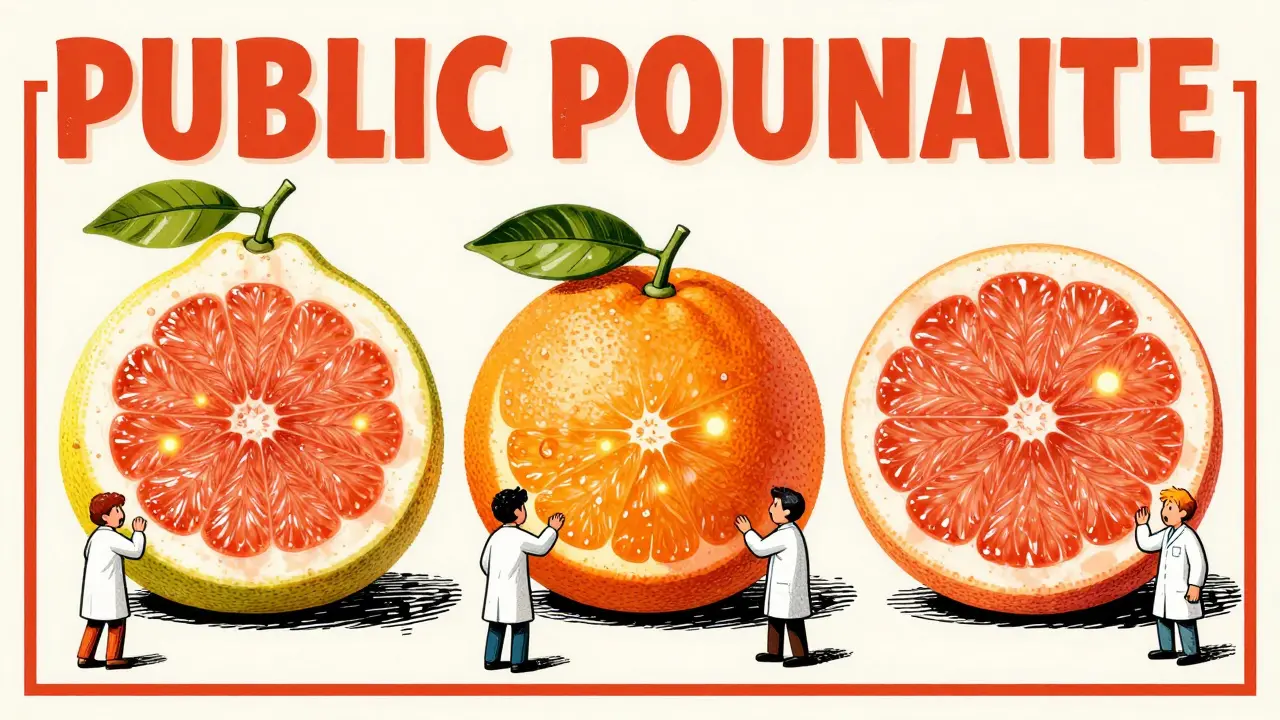
Grapefruit has been the poster child for this problem since the late 1980s. Pomelo and Seville orange? They’re regional. Pomelo is common in Southeast Asia and parts of the U.S. Southwest. Seville orange marmalade is mostly a British and European thing. So global awareness is low.
Pharmacies don’t flag them in their systems. Only 29% of major pharmacy chains include these fruits in their automated drug interaction alerts. Doctors aren’t trained to ask. Patients don’t know to tell them.
And here’s the worst part: climate change is making it worse. A 2022 study in Nature Food found that rising temperatures and droughts can increase furanocoumarin levels in citrus by up to 25%. So next year’s pomelo might be even more dangerous than this year’s.
The Bigger Picture
The FDA is finally waking up. In 2023, they proposed expanding warning labels to cover all furanocoumarin-containing citrus - not just grapefruit. Implementation is expected by mid-2025. But until then? You can’t wait for labels. You have to take charge.
There’s no magic pill here. No workaround. No “small amount is okay.” If your drug is on the list, these fruits are off-limits. Period.
And if you’re a caregiver, parent, or someone managing meds for a loved one? Don’t assume they know. Ask. Specifically. “Have you had any pomelo or bitter orange lately?”
Because this isn’t about being healthy. It’s about not ending up in the hospital because no one told you a big, weird citrus fruit could kill you.
Can I still eat oranges if I’m on medication?
Yes - but only sweet oranges (Citrus sinensis), tangerines, and clementines. These do not contain furanocoumarins and are safe. Avoid any citrus labeled as “bitter,” “Seville,” or “pomelo.” If you’re unsure, check the scientific name on the label or ask your pharmacist.
How long after eating pomelo should I wait before taking my medication?
Wait at least 72 hours. The enzyme inhibition caused by furanocoumarins is irreversible. Your body needs three full days to produce new CYP3A4 enzymes. Even one glass of pomelo juice can affect drug levels for this entire period.
Is pomelo juice worse than eating the fruit?
Not necessarily. Both contain the same active compounds. But juice often means more fruit is concentrated into one serving. A glass of pomelo juice may contain the equivalent of two or three whole fruits. Eating the fruit gives you fiber and slows absorption slightly - but it doesn’t eliminate the risk.
Do all citrus fruits interact with drugs?
No. Only citrus fruits high in furanocoumarins - grapefruit, pomelo, Seville orange, and some hybrids. Sweet oranges, lemons, and limes have negligible levels and are generally safe. Always check the specific type. Just because it’s citrus doesn’t mean it’s risky.
I’ve been eating pomelo for years and take simvastatin. Should I be worried?
Yes. The risk isn’t about how long you’ve been doing it - it’s about what’s happening inside your body right now. Each time you eat pomelo, you’re increasing your chances of muscle damage, kidney failure, or hospitalization. Stop immediately and talk to your doctor. Get your creatine kinase (CK) levels checked. It’s a simple blood test that can catch early signs of damage.
Are there any safe alternatives to Seville orange marmalade?
Yes. Look for marmalade made with sweet oranges or apricots. Many brands now offer “bitter orange-free” versions. Read the ingredient list carefully. If it says “Citrus aurantium” or “Seville orange,” avoid it. If it says “Citrus sinensis” or just “orange,” it’s safe. You can also use apple butter, fig jam, or honey as substitutes.