
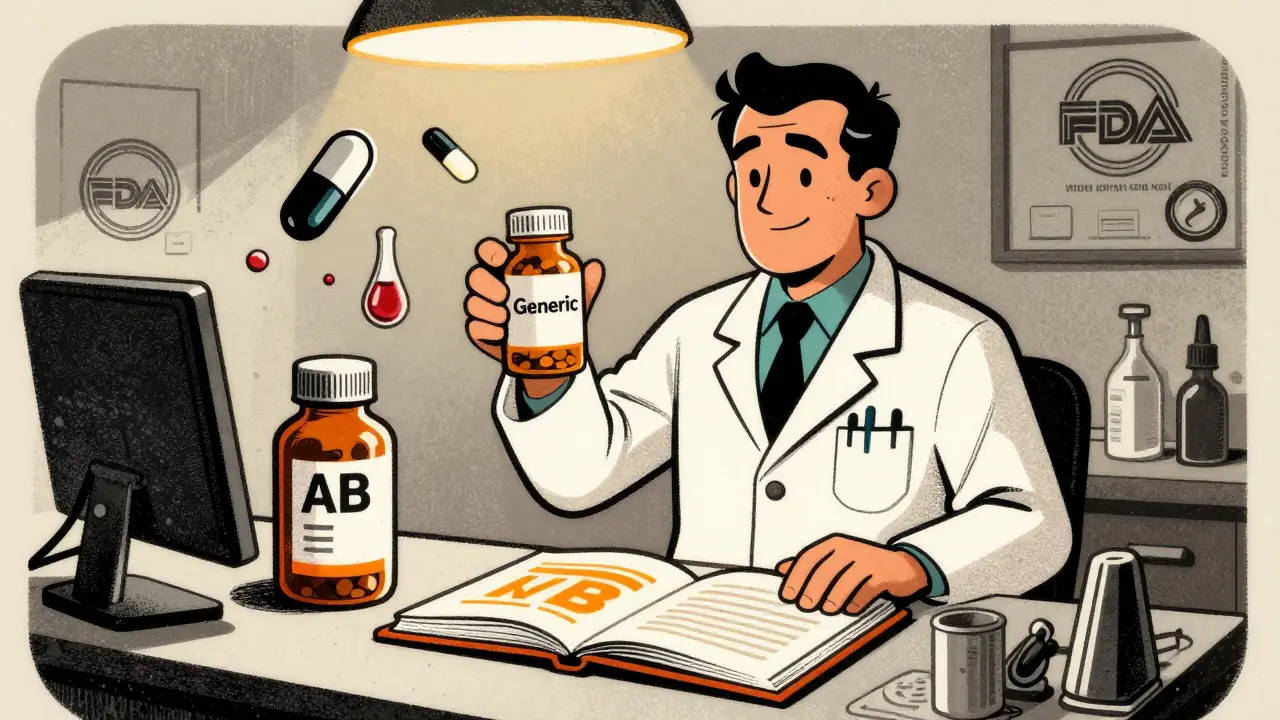
When a pharmacist hands you a pill bottle labeled with a generic name instead of the brand you asked for, you might wonder: Is this really the same thing? The answer isn’t guesswork. It’s a tightly regulated, science-backed process that every pharmacist in the U.S. follows daily. This isn’t about saving money alone-it’s about ensuring safety, consistency, and clinical effectiveness across millions of prescriptions every year.
What Makes a Generic Drug Truly Equivalent?
Not all generics are created equal-at least, not in the eyes of the law or science. For a generic drug to be approved for substitution, it must meet three strict criteria: pharmaceutical equivalence, bioequivalence, and therapeutic equivalence.
Pharmaceutical equivalence means the generic has the same active ingredient, strength, dosage form (tablet, capsule, injection, etc.), and route of administration as the brand-name drug. If the brand is a 50mg extended-release tablet taken by mouth, the generic must match that exactly. No extra fillers, no different coatings-just the same medicine in the same form.
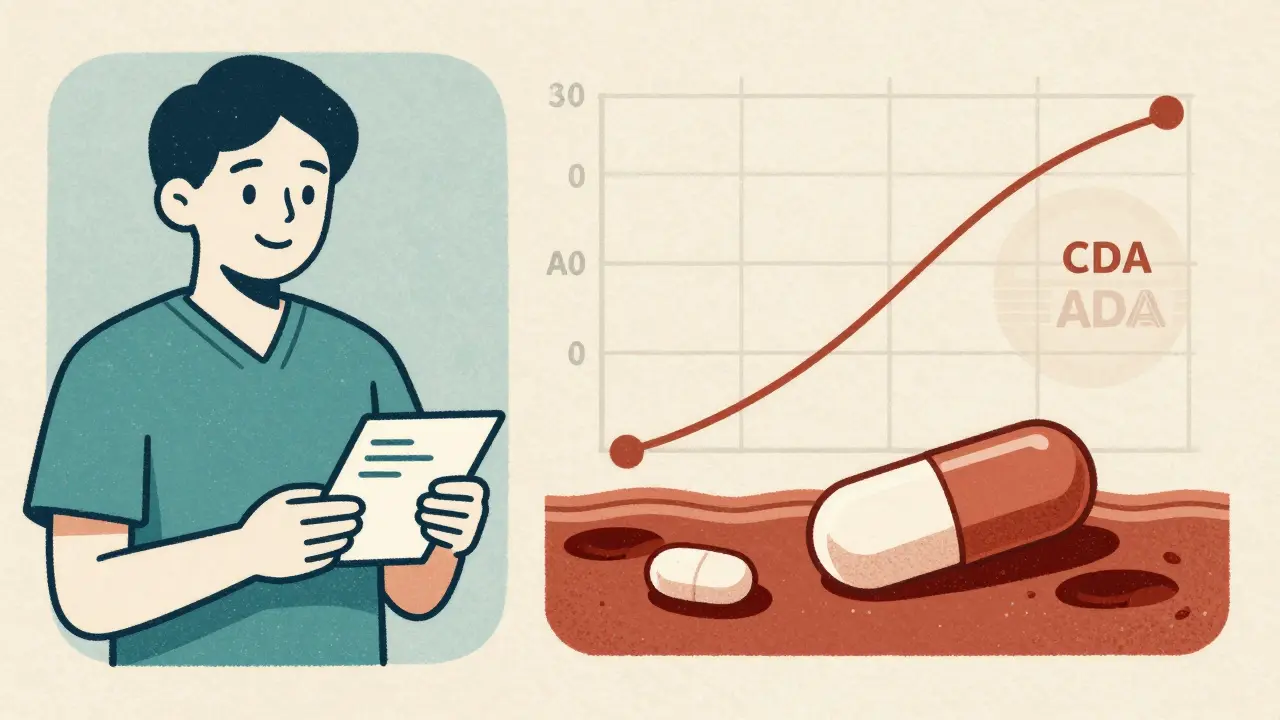
Bioequivalence is where the science gets serious. The generic must deliver the same amount of active ingredient into your bloodstream at the same rate as the brand. This isn’t assumed-it’s proven through clinical studies. The FDA requires that the 90% confidence interval for two key measurements-maximum concentration in blood (Cmax) and total exposure over time (AUC)-must fall between 80% and 125% of the brand’s values. That’s not a wide margin. It means the generic can’t be too slow or too fast in getting into your system. For high-risk drugs like warfarin or levothyroxine, the window tightens even further to 90-111%.
Therapeutic equivalence is the final stamp. It means that, based on all available data, the generic can be expected to produce the same clinical effect and safety profile as the brand. This is the only thing that legally allows substitution. And this is where the Orange Book comes in.
The Orange Book: The Pharmacist’s Bible for Substitution
The FDA’s Approved Drug Products with Therapeutic Equivalence Evaluations, better known as the Orange Book, is the single most important tool pharmacists use to verify generic equivalence. First published in 1980, it’s updated monthly and contains over 16,500 drug products as of 2024.
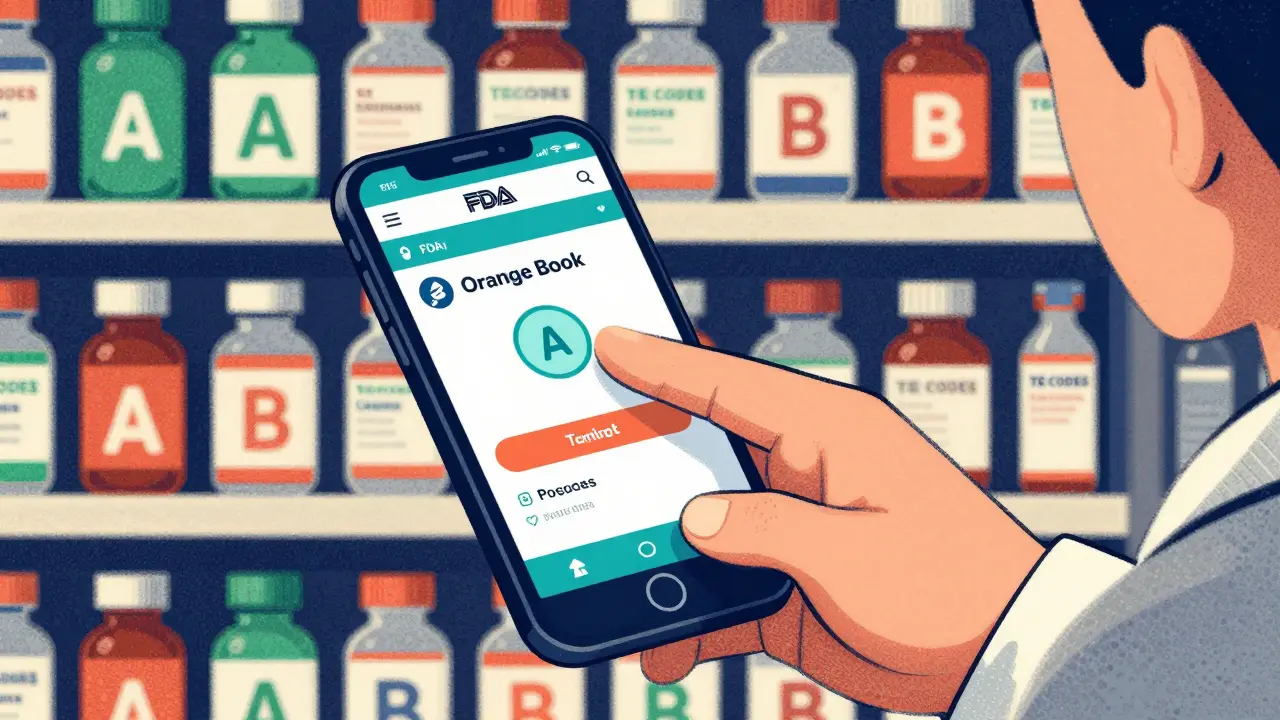
Each entry has a two-letter code that tells pharmacists everything they need to know:
- A means the product is therapeutically equivalent to the brand-name drug.
- B means it’s not considered equivalent-either because it hasn’t been proven bioequivalent or because it’s a complex product that doesn’t meet current standards.
The second letter adds detail. Most generics carry an AB rating-meaning they’ve passed both pharmaceutical and bioequivalence testing using human studies. You’ll also see codes like AN (aerosol nasal), AO (oral solution), and AT (topical), which tell you the product type and how equivalence was evaluated.
As of 2023, 98.7% of rated products in the Orange Book had an A rating. That’s over 15,900 drugs that pharmacists can substitute with confidence. But here’s the key: only the Orange Book has legal authority. Even if a commercial database like Micromedex or Lexicomp says a generic is equivalent, if it’s not listed as ‘A’ in the Orange Book, pharmacists can’t legally substitute it without risking liability.
How Pharmacists Actually Verify Equivalence in Practice
When a prescription comes in for a brand-name drug, the pharmacist doesn’t just flip through a book. They follow a clear, four-step process that takes less than 12 seconds per prescription:
- Identify the reference listed drug (RLD)-the original brand the generic is copying. The Orange Book lists this clearly.
- Match the active ingredient, strength, and dosage form exactly. A 10mg tablet of lisinopril must match a 10mg tablet of lisinopril-not a 20mg, not a capsule.
- Check the TE code. Is it an ‘A’? If yes, substitution is allowed. If it’s ‘B’ or unlisted, the pharmacist can’t substitute without a new prescription.
- Look for ‘Do Not Substitute’ on the prescription. Even if the generic is rated ‘A’, if the prescriber wrote ‘dispense as written,’ substitution is illegal.
Most pharmacists use the FDA’s free Orange Book mobile app, downloaded over 450,000 times by March 2024. Others rely on integrated pharmacy systems like PioneerRx or QS/1 that pull Orange Book data directly into their dispensing software. A 2023 survey found 98.7% of community pharmacists consult the Orange Book at least once a day.
Training is mandatory. Pharmacies spend 2-4 hours training new hires on how to use the Orange Book correctly. After training, 89.3% of pharmacists pass competency tests on equivalence verification. That’s not luck-it’s discipline.
When the Orange Book Doesn’t Have the Answer
Not every generic drug is listed in the Orange Book right away. About 5.7% of substitutions involve products that aren’t yet rated. This often happens with newer generics, complex formulations like inhalers or topical creams, or products from overseas manufacturers.
In these cases, pharmacists don’t guess. They follow the FDA’s Non-Orange Book Listed Drugs framework. This means reviewing the ANDA (Abbreviated New Drug Application) data, checking for published bioequivalence studies, and sometimes consulting with the prescriber. For complex products like nasal sprays or transdermal patches, the FDA has issued over 1,850 product-specific guidances since 2020 to help pharmacists make informed decisions.
But here’s the bottom line: if a drug isn’t rated in the Orange Book, and there’s no clear FDA guidance, the safest-and legally safest-choice is to dispense the brand-name drug unless the prescriber approves substitution.
Why This System Works-and Why It Matters
Some people worry that generics are ‘lesser’ versions. But the data doesn’t support that. A 2020 FDA meta-analysis of over 2,000 studies found that the rate of adverse events after switching from brand to generic was virtually identical: 0.78% for brands, 0.81% for generics. The difference wasn’t statistically meaningful.
And the savings? Massive. In 2023, generics made up 90.7% of all prescriptions dispensed in the U.S.-8.9 billion prescriptions. That saved the healthcare system an estimated $12.7 billion in just one year. Without the Orange Book system, that kind of savings wouldn’t be possible. Pharmacists wouldn’t have a clear, legal, science-based standard to rely on.
Even critics, like Dr. Randall Stafford of Stanford, acknowledge the system’s strengths. He’s pointed out that for complex products-like inhalers or topical creams-the current bioequivalence standards might not capture every clinical difference. That’s why the FDA is investing $28.5 million through GDUFA III to develop better testing methods for these drugs. But for now, the Orange Book remains the gold standard.
The Legal Shield Behind Every Generic Swap
Pharmacists don’t just rely on the Orange Book because it’s convenient. They rely on it because it protects them.
In 2019, a Texas pharmacist was sanctioned by the State Board of Pharmacy for substituting a generic that wasn’t listed in the Orange Book. The court ruled that using a commercial database instead of the official FDA source was a violation of state law. That case set a precedent: if you substitute without checking the Orange Book, you’re on your own.
Forty-nine out of fifty states have laws that protect pharmacists who follow the Orange Book. Only Massachusetts doesn’t allow automatic substitution-but even there, pharmacists still use the Orange Book to inform clinical decisions.
This isn’t just about rules. It’s about trust. Patients trust that when they get a generic, it’s safe. Prescribers trust that pharmacists won’t swap drugs without verification. And the system works because it’s built on data-not opinion.
What’s Next for Generic Equivalence?
The biggest challenge ahead isn’t pills-it’s biologics. These are complex, large-molecule drugs like insulin or rheumatoid arthritis treatments. Their generics, called biosimilars, are harder to replicate. As of June 2024, only 47 of 350 approved biosimilars were listed in the FDA’s Purple Book, the biologics equivalent of the Orange Book.
Pharmacists are already seeing more biosimilars in their pharmacies. But without clear TE ratings, substitution becomes tricky. The FDA is working to expand the Purple Book and develop new equivalence criteria for these drugs. Until then, pharmacists must rely on prescriber guidance and manufacturer data to make safe choices.
The system isn’t perfect. But it’s the best we have. And for over 40 years, it’s kept millions of patients safe while saving billions. That’s not just practice. That’s public health in action.

Joanne Smith
December 26, 2025 AT 05:41So let me get this straight-pharmacists are basically drug detectives with a government-issued cheat sheet? And we just assume the Orange Book is infallible? 😏 I once got a generic that made me feel like I’d been swapped into a parallel universe where my blood pressure was a sitcom. Still works? Maybe. But I’d like a Netflix doc on the 1.3% of generics that feel like betrayal in pill form.
Ryan Cheng
December 26, 2025 AT 13:41This is actually one of the most important things most people never think about. The system works because it’s grounded in real science-not marketing or cost-cutting. The 80–125% bioequivalence range? That’s not arbitrary. It’s based on decades of pharmacokinetic data. And the fact that 98.7% of generics are rated ‘A’? That’s a win for public health. Thanks for explaining this so clearly.
Ellie Stretshberry
December 27, 2025 AT 18:45Zina Constantin
December 28, 2025 AT 01:52Imagine if we applied this level of rigor to everything-like yoga mats or organic kale. But no, we just trust that our painkillers won’t turn us into zombies. Thank you, Orange Book, for being the quiet hero of American healthcare.
Jay Ara
December 29, 2025 AT 17:24Kuldipsinh Rathod
December 30, 2025 AT 05:43SHAKTI BHARDWAJ
December 31, 2025 AT 13:18david jackson
January 1, 2026 AT 03:08Let’s pause for a moment and truly appreciate the elegance of this system: a 40-year-old, federally mandated, peer-reviewed, statistically validated, legally binding, digitally accessible, daily-consulted, competency-tested, regulatory fortress that prevents pharmaceutical chaos with a two-letter code. It’s like the Constitution for pills. And yet, somehow, we treat it like a footnote. We should have parades for pharmacists. Or at least free coffee.
Jody Kennedy
January 2, 2026 AT 10:50My grandma switched to generics for her heart meds and saved $300 a month. She didn’t feel any different. But she could afford her groceries. That’s the real win here. Not just the science-the humanity behind it.
christian ebongue
January 2, 2026 AT 20:57jesse chen
January 4, 2026 AT 02:48It’s fascinating how such a seemingly mundane system-two letters, a database, a 12-second check-carries the entire weight of public trust in pharmaceutical safety. And yet, no one talks about it. No viral TikToks. No celebrity endorsements. Just quiet, meticulous, life-preserving work. Hats off.
Prasanthi Kontemukkala
January 4, 2026 AT 19:40Thank you for sharing this. I work in a clinic and see patients worried about generics all the time. This is the exact info I’ll share with them now. It’s not just about cost-it’s about knowing the science is there, even if they don’t see it.
Alex Ragen
January 5, 2026 AT 04:44One cannot help but marvel at the epistemological elegance of the Orange Book: a hermeneutic archive of pharmaceutical legitimacy, a semiotic codex wherein ‘AB’ transcends mere classification-it becomes a sacrament of therapeutic fidelity, a linguistic talisman against the chaos of commodified medicine. And yet… we use it like a grocery list. How tragic. How… human.