
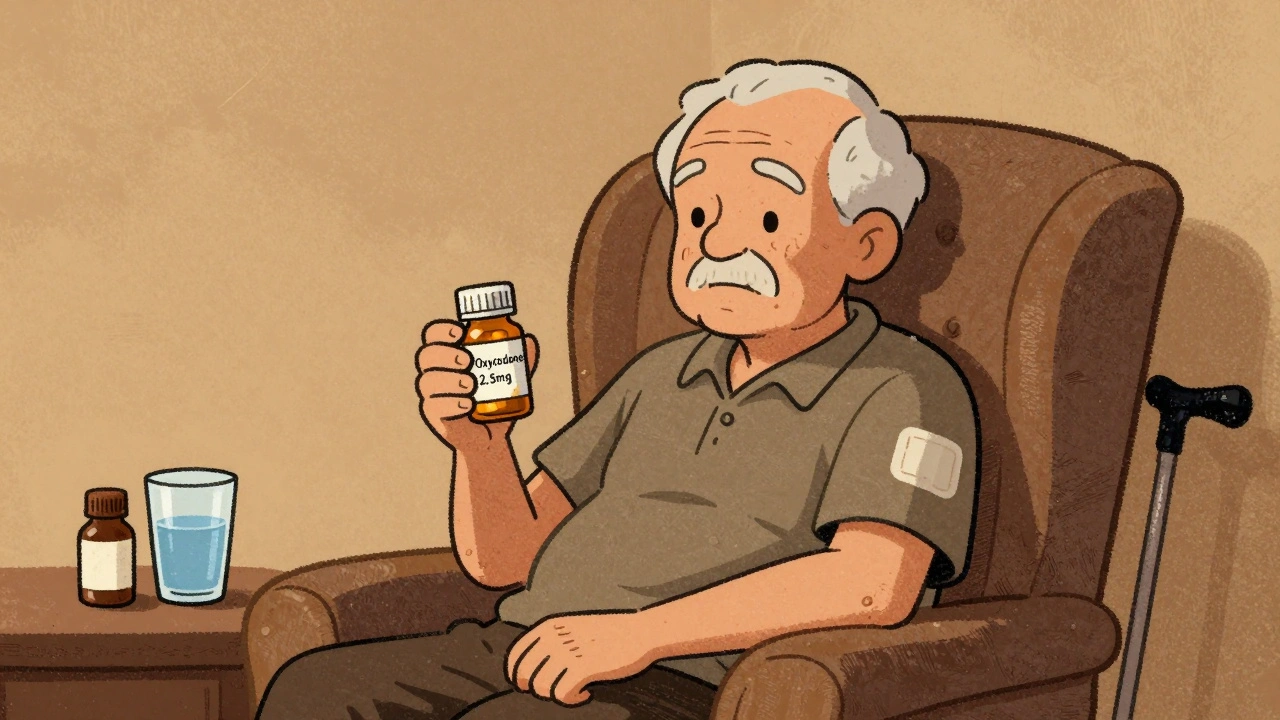
When a senior experiences chronic pain-whether from arthritis, nerve damage, or cancer-it’s tempting to reach for opioids. They work. But for older adults, these drugs carry hidden dangers that aren’t always obvious. The same pill that helps a 40-year-old might send a 78-year-old into delirium, a fall, or even respiratory failure. This isn’t about avoiding opioids altogether. It’s about using them safely-with precision, vigilance, and respect for how aging changes the body.
Why Seniors Are at Higher Risk
As we age, our bodies process drugs differently. Kidneys and liver slow down. Fat increases, muscle decreases. This means opioids stay in the system longer and build up faster. Even a standard dose meant for a younger adult can become toxic. Studies show seniors are twice as likely to suffer opioid-related side effects like confusion, dizziness, or constipation compared to younger patients.Many seniors also take five, six, or more medications daily. Opioids don’t play well with other drugs. Mixing them with benzodiazepines, sleep aids, or even common antihistamines can dangerously slow breathing. The risk of overdose climbs sharply when multiple sedating drugs are combined.
And then there’s the silent danger: undiagnosed sleep apnea. One in three seniors has it. Add opioids, and breathing can stop during sleep-sometimes permanently. That’s why starting opioids without checking for sleep issues isn’t just risky-it’s irresponsible.
What Opioids Are Safe? What to Avoid
Not all opioids are created equal for seniors. Some should be off the table entirely.Avoid these:
- Meperidine (Demerol): Its metabolite, normeperidine, builds up in the kidneys and causes seizures and severe confusion. It’s dangerous at any age, but especially for seniors.
- Codeine: It turns into morphine in the liver, but older adults often lack the enzymes to do this properly. Some get no relief; others turn morphine too quickly and overdose.
- Methadone: Its long, unpredictable half-life makes dosing a gamble. Accumulation can lead to sudden respiratory arrest days after starting.
Use with caution:
- Tramadol and tapentadol: These carry serotonin syndrome risks when mixed with antidepressants, which many seniors take. They’re also less effective than once thought.
- Hydrocodone with acetaminophen: The acetaminophen part can damage the liver. Never exceed 3,000 mg per day-2,000 mg if the patient is frail or drinks alcohol.
Better options:
- Oxycodone (immediate-release): Start at 2.5 mg every 6 hours. Avoid extended-release forms until tolerance is established.
- Morphine: Use only in liquid form for precise low dosing. Start at 7.5 mg per day, split into doses.
- Buprenorphine (transdermal patch): This is one of the safest choices. As a partial agonist, it has a ceiling effect-less risk of overdose. It causes less constipation and doesn’t cause drowsiness when used with low-dose oxycodone for breakthrough pain.
According to the American College of Osteopathic Family Physicians (2024), low-dose transdermal buprenorphine (≤30 mg morphine equivalents per day) is often the best starting point for seniors with chronic pain.
How to Start Opioids the Right Way
Never begin opioids with long-acting pills or patches. That’s like turning on a gas stove and walking away. You don’t know how the patient will react until you’ve tested the flame.Start at 30-50% of the usual adult dose. For someone who’s never taken opioids:
- Oxycodone: 2.5 mg every 6 hours
- Morphine: 7.5 mg total per day, split into 3 doses
- Buprenorphine patch: 5 mcg/hour
Use liquid formulations if possible. Pills come in fixed doses-7.5 mg morphine tablets are rare. But liquid morphine lets you give exactly 2.5 mg. That’s critical.
Wait at least 48 hours between dose increases. This isn’t a race. Opioids take time to reach steady levels in the blood, especially in seniors. Rushing increases the chance of overdose.
Never start with a fentanyl patch. It’s too potent, too slow to adjust, and too dangerous for opioid-naïve seniors. Even the smallest patch delivers more than most older patients can safely handle.
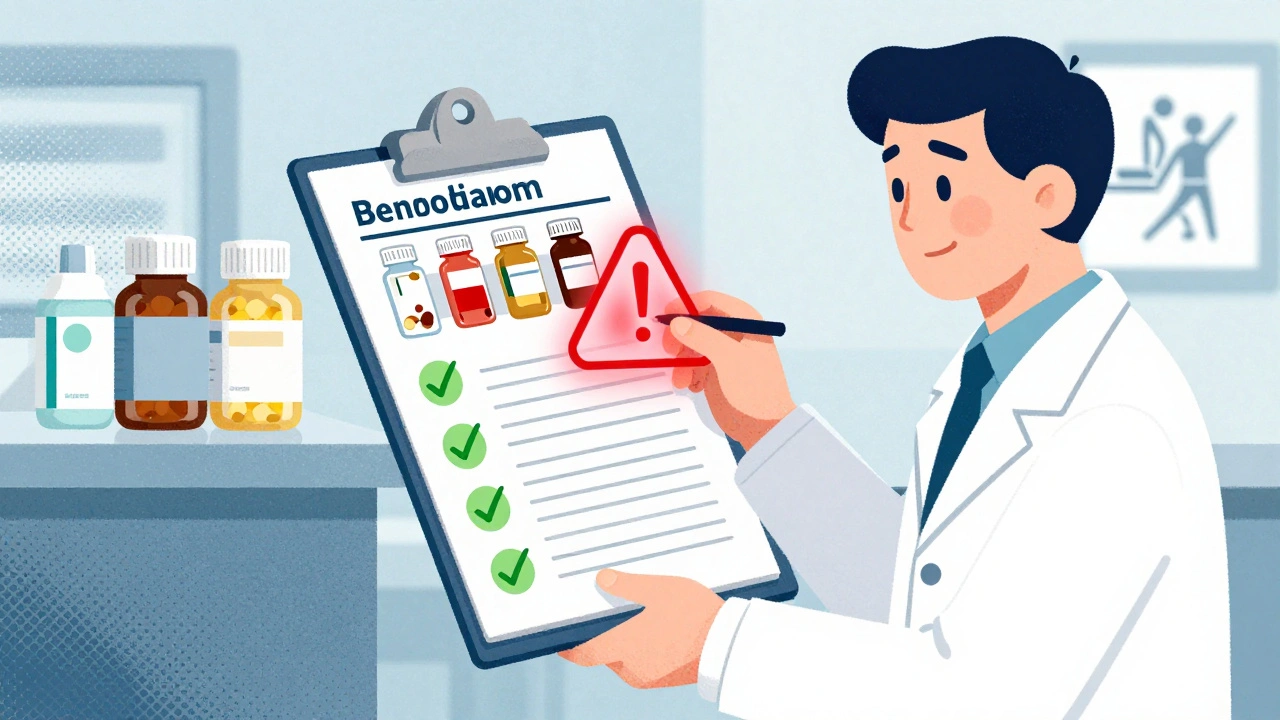
Monitoring: What to Watch For
Starting opioids is just the beginning. The real work is watching what happens next.Weekly check-ins for the first month:
- Respiratory rate: Is it below 12 breaths per minute? That’s a red flag.
- Cognitive changes: Is the patient more confused, forgetful, or withdrawn? Delirium is common and often missed.
- Fall risk: Are they stumbling more? Opioids impair balance-even at low doses.
- Constipation: This is almost universal. Start a bowel regimen on day one: stool softeners, fiber, fluids. Don’t wait until they’re impacted.
- Pain relief: Are they moving better? Sleeping more? Function matters more than pain scores.
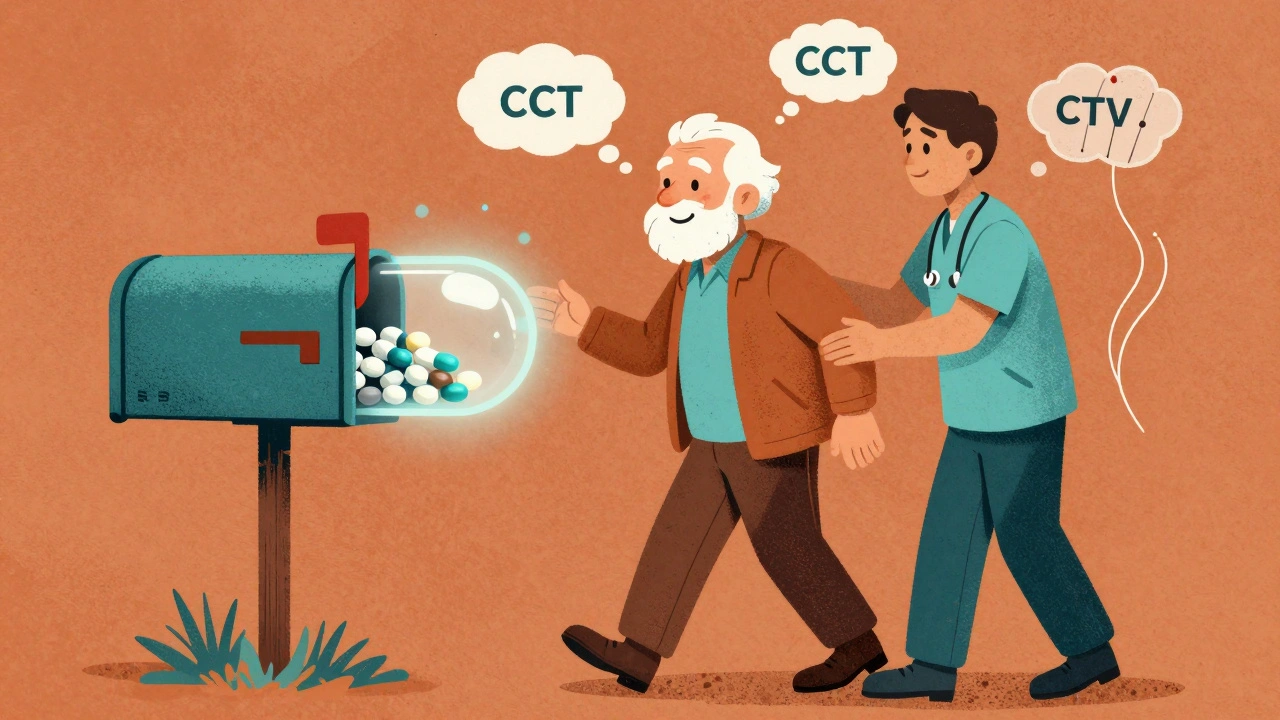
The CDC’s 2022 guidelines stress that treatment goals must be set with the patient-not for them. Ask: “What do you want to be able to do that you can’t do now?” Maybe it’s walking to the mailbox. Maybe it’s sitting through dinner with family. If the opioid isn’t helping with those goals, it’s not working.
Urine drug screens are required for anyone on opioids longer than three months. This isn’t about suspicion-it’s about safety. Are they taking what they’re prescribed? Are there hidden drugs like benzodiazepines or alcohol?
When Opioids Aren’t the Answer
Too often, opioids are chosen because nothing else was tried. That’s outdated thinking.Non-opioid options that work for seniors:
- Topical NSAIDs: Diclofenac gel applied to the knee or shoulder reduces pain with almost no systemic side effects. Use for up to two weeks during flare-ups.
- Physical therapy: Strength training and mobility exercises reduce pain and improve function better than pills for osteoarthritis.
- Cognitive behavioral therapy (CBT): Helps change how the brain processes pain signals. Proven to reduce pain intensity in older adults.
- Acupuncture: Multiple studies show moderate pain relief for back and knee pain in seniors.
- Nerve blocks and neuromodulation: For neuropathic pain, targeted injections or spinal cord stimulators can offer long-term relief without drugs.
Gabapentinoids like gabapentin or pregabalin were pushed as alternatives after the 2016 CDC guidelines-but they’re not better. A 2023 JAMA Network Open study found they reduce pain by less than one point on a 10-point scale compared to placebo. Worse, they cause dizziness and confusion in nearly 40% of seniors.
The Bigger Picture: Lessons from the Past
In 2016, the CDC released guidelines that led to widespread opioid restrictions. Many doctors stopped prescribing opioids to seniors entirely-even those with cancer.The result? Pain went untreated. People suffered needlessly. A 2023 study found that seniors with cancer were switched to less effective drugs like gabapentin or tramadol, not because they were safer, but because doctors feared opioids.
The CDC fixed this in 2022. They explicitly said: “The 2016 guideline was misapplied to people with cancer.” They now affirm that opioids remain the first-line treatment for moderate-to-severe cancer pain in older adults-with a 75% response rate.
This isn’t about reversing course. It’s about getting smarter. Pain management isn’t one-size-fits-all. A 70-year-old with mild arthritis needs different care than an 85-year-old with metastatic cancer. The key is individualization.
What Families Should Know
If you’re caring for an older relative on opioids, here’s what you need to do:- Know the exact name and dose of every medication they’re taking.
- Watch for signs of confusion, slurred speech, or unsteadiness.
- Make sure they’re taking stool softeners daily.
- Don’t let them skip doses to “save” pills-this can lead to rebound pain and higher doses later.
- Ask the doctor: “What are we trying to achieve? And how will we know if this is working?”
Don’t assume the doctor has everything under control. Seniors are often silent about side effects. They don’t want to be a burden. You have to speak up.
Final Thoughts: Balance, Not Fear
Opioids aren’t the enemy. Misuse and ignorance are.Seniors deserve to live without constant pain. But they also deserve to live without the risk of overdose, falls, or delirium. The answer isn’t to avoid opioids-it’s to use them with care. Start low. Go slow. Monitor closely. Combine with non-drug therapies. And always, always listen to the patient.
There’s no perfect drug. But with the right approach, opioids can be part of a safe, effective plan-even for the oldest among us.
Are opioids safe for seniors with cancer pain?
Yes, opioids remain the first-line treatment for moderate-to-severe cancer pain in seniors. Studies show a 75% response rate and an average 50% reduction in pain intensity. The 2022 CDC guidelines corrected earlier misapplications that wrongly restricted opioids for cancer patients. When used properly-with low starting doses and careful monitoring-they are both safe and effective.
What’s the safest opioid to start with in an elderly patient?
Transdermal buprenorphine is often the safest first choice. It’s a partial opioid agonist with a ceiling effect, meaning it has a lower risk of overdose. It causes less constipation and doesn’t lead to drowsiness when used with low-dose immediate-release oxycodone for breakthrough pain. If buprenorphine isn’t available, low-dose immediate-release oxycodone (2.5 mg every 6 hours) or morphine (7.5 mg per day in divided doses) are next best options.
Can seniors take opioids with other medications?
They can-but with extreme caution. Combining opioids with benzodiazepines, sleep aids, antidepressants, or even antihistamines increases the risk of respiratory depression and falls. Tramadol and tapentadol can trigger serotonin syndrome when mixed with SSRIs. Always review all medications with a pharmacist. Use tools like the Beers Criteria to identify dangerous combinations.
How often should seniors on opioids be monitored?
Weekly for the first month, then monthly for the first three months. After that, every 3-6 months if stable. Each visit should include a review of pain levels, function, side effects (especially constipation, dizziness, confusion), and medication adherence. Urine drug screens are required after three months. Any new symptoms or falls should trigger an immediate reevaluation.
What should I do if my senior relative seems confused or unsteady on opioids?
Don’t wait. Confusion and unsteadiness are warning signs, not normal side effects. Contact their doctor immediately. Reduce or stop the opioid temporarily. Check for other causes like infection, dehydration, or new medications. Delirium from opioids can be reversed quickly once the drug is adjusted. Never ignore these symptoms-they can lead to falls, hospitalization, or worse.
Are non-opioid treatments effective for seniors?
Yes-and often better. Topical NSAIDs, physical therapy, and cognitive behavioral therapy are proven to reduce pain and improve function without the risks of opioids. For nerve pain, nerve blocks or spinal cord stimulators can be more effective than gabapentin. The goal isn’t to avoid opioids entirely, but to use them only when non-drug options aren’t enough. Many seniors do better with a combination of therapies than with pills alone.

Lynette Myles
December 5, 2025 AT 15:51Opioids are a controlled substance for a reason. The government and Big Pharma push them because they profit. Seniors are being used as test subjects. Watch your meds. Always.
Annie Grajewski
December 6, 2025 AT 23:10so like... we're supposed to just let old people suffer because some doc got lazy and prescribed a pill? lol. what's next? telling grandma to 'walk it off' when her hip's falling apart? i mean, sure, buprenorphine sounds fancy but did you know it's basically just a glorified patch that makes you smell like a pharmacy? 🤡
Harry Nguyen
December 8, 2025 AT 09:20This is why America is collapsing. We’ve turned pain into a moral issue instead of a personal responsibility. If you’re old and in pain, you should’ve taken better care of yourself. Now you want the state to fix it with drugs? No. No more handouts disguised as medicine.
Philip Kristy Wijaya
December 8, 2025 AT 16:11One must consider the ontological implications of pharmaceutical intervention in geriatric populations. The body as a vessel of entropy, the mind as a fading signal in a decaying system. To administer opioids is to intervene in a natural progression toward dissolution. Yet paradoxically, to withhold them is to impose a different kind of suffering. The ethical calculus is not binary. It is a gradient of dignity. And dignity is not quantifiable by CDC guidelines.
Jennifer Patrician
December 8, 2025 AT 17:14They’re hiding the truth. Opioids are being used to control the elderly population. Why do you think they’re pushing patches? So they can track you. So they can know when you take it. So they can shut you down if you talk too much. The CDC? A front. The real agenda is population control. You think this is about pain? It’s about compliance.
Mellissa Landrum
December 9, 2025 AT 07:09so like... buprenorphine is safe?? lol. what about the feds putting microchips in patches? i heard a nurse at the VA say they track your breathing through the skin. and gabapentin? totally fine right? until you start hallucinating your cat talking to you. and dont even get me started on the pharmaceutical lobbyists who own congress. they dont care if you die. they just want your medicaid.
luke newton
December 10, 2025 AT 17:32My mother was on oxycodone for three years after her hip replacement. She became a shadow. She forgot my name. She stopped eating. She fell three times. They told us it was normal. It wasn’t normal. It was neglect disguised as care. I don’t care what the guidelines say. If it rots your mind, it’s not medicine. It’s poison wrapped in a prescription.
Ali Bradshaw
December 11, 2025 AT 12:49Really appreciate this breakdown. I’ve seen too many seniors get handed a script and told to figure it out. Starting low and going slow isn’t just smart-it’s kind. And non-opioid options? They’re underrated. My dad did PT for his knees and now walks to the park every morning. No pills. Just movement and a little patience. That’s the win.
an mo
December 11, 2025 AT 14:00Per CDC 2022 guidelines, the risk-benefit ratio for opioid initiation in geriatric populations demonstrates a 2.3x increase in adverse event incidence when compared to non-opioid multimodal regimens. The pharmacokinetic alterations in hepatic CYP450 metabolism and renal clearance in patients over 70 necessitate a pharmacodynamic recalibration. Transdermal buprenorphine’s partial agonist profile reduces respiratory depression risk by 41% versus full agonists. However, concomitant use of CYP3A4 inhibitors elevates plasma concentrations by up to 300%. Monitoring must include serum drug levels, MMSE, and gait analysis. Failure to implement this protocol constitutes clinical malpractice.
aditya dixit
December 12, 2025 AT 08:45There’s a quiet wisdom in aging. Pain is part of it-not always an enemy. Sometimes it’s a teacher. But we’ve forgotten how to listen. We reach for pills because we’re afraid of stillness. Yet the real healing often comes from presence-from a hand held, a story shared, a walk taken slowly. Opioids can ease the body. But compassion eases the soul.
William Chin
December 12, 2025 AT 12:29It is imperative to underscore that the administration of opioid analgesics to geriatric cohorts necessitates rigorous adherence to evidence-based protocols delineated by authoritative medical bodies. The concomitant use of benzodiazepines constitutes a contraindication of the highest clinical severity. Furthermore, the utilization of extended-release formulations in opioid-naïve patients represents a deviation from accepted standards of care and may constitute a breach of the standard of care. Prudent clinicians must employ liquid formulations to ensure titration precision. The failure to do so is indefensible.
Ada Maklagina
December 13, 2025 AT 15:29My grandma took a patch and didn’t wake up. They said it was natural causes. I don’t believe it. I’m not saying don’t use them. I’m saying someone needs to be watching. Not just the doctor. Someone real. Like family. Or a neighbor. Or a friend. Someone who cares.
Stephanie Fiero
December 14, 2025 AT 17:54my aunt was on tramadol with her antidepressant and started seeing ghosts. literally. she said the cat had a halo. we pulled the meds and she was fine in 2 days. why do doctors not tell you this stuff? i had to google it myself. so dumb. just start low and watch. like seriously. it’s not that hard.
sean whitfield
December 16, 2025 AT 01:32They say start low go slow. But who’s going to check on your grandma? The nurse? The doctor? Nah. They’re too busy billing. The system is broken. And you think a patch is safe? It’s just a fancy way to make people numb until they disappear. We’re not treating pain. We’re erasing people.