
When your eyes feel gritty, burning, or just plain tired, artificial tears, over-the-counter eye drops designed to mimic natural tear film. Also known as eye lubricants, they’re the first line of defense for millions dealing with dry eye syndrome. Unlike prescription meds, you don’t need a script to buy them—but that doesn’t mean they’re all the same. Some are watery and wash away fast. Others are thick, sticky gels that last longer but blur your vision. Choosing the wrong one can make things worse.
Artificial tears work by replacing the missing parts of your tear film: water, oil, and mucus. If your eyes are dry because you’re staring at screens all day, you’re likely losing the oily layer that keeps tears from evaporating. In that case, you need drops with lipids or oil-based formulas. If your tear production is low because of age, medication, or autoimmune conditions like Sjögren’s, you need more water-based options. Some products even add hyaluronic acid or electrolytes to help your eyes hold onto moisture longer. Not all artificial tears are created equal, and the best one for you depends on what’s actually going wrong with your tear film.
It’s also easy to overuse them. Preserved drops contain chemicals like benzalkonium chloride to keep them sterile—but those preservatives can irritate your eyes if you’re using them more than four times a day. If you’re reaching for drops constantly, switch to preservative-free single-dose vials. They’re a bit pricier, but your eyes will thank you. And if your dryness doesn’t improve after a few weeks, it’s not just a lack of tears—it could be inflammation, eyelid problems, or even a side effect of your blood pressure or antidepressant meds.
You’ll find artificial tears in every drugstore aisle, but that doesn’t mean they’re all safe or effective. Some brands add redness relievers like tetrahydrozoline, which shrink blood vessels temporarily but cause rebound redness if you use them too often. Others include decongestants or fragrances that do more harm than good. The best ones are simple: no additives, no preservatives, just the basics your eyes need to feel comfortable.
What you’ll find below are real-world comparisons and deep dives into the most common eye drops people use—and why some work better than others. Whether you’re dealing with screen fatigue, post-surgery dryness, or chronic dry eye, there’s a solution here that matches your situation. No fluff. No marketing. Just what actually helps.
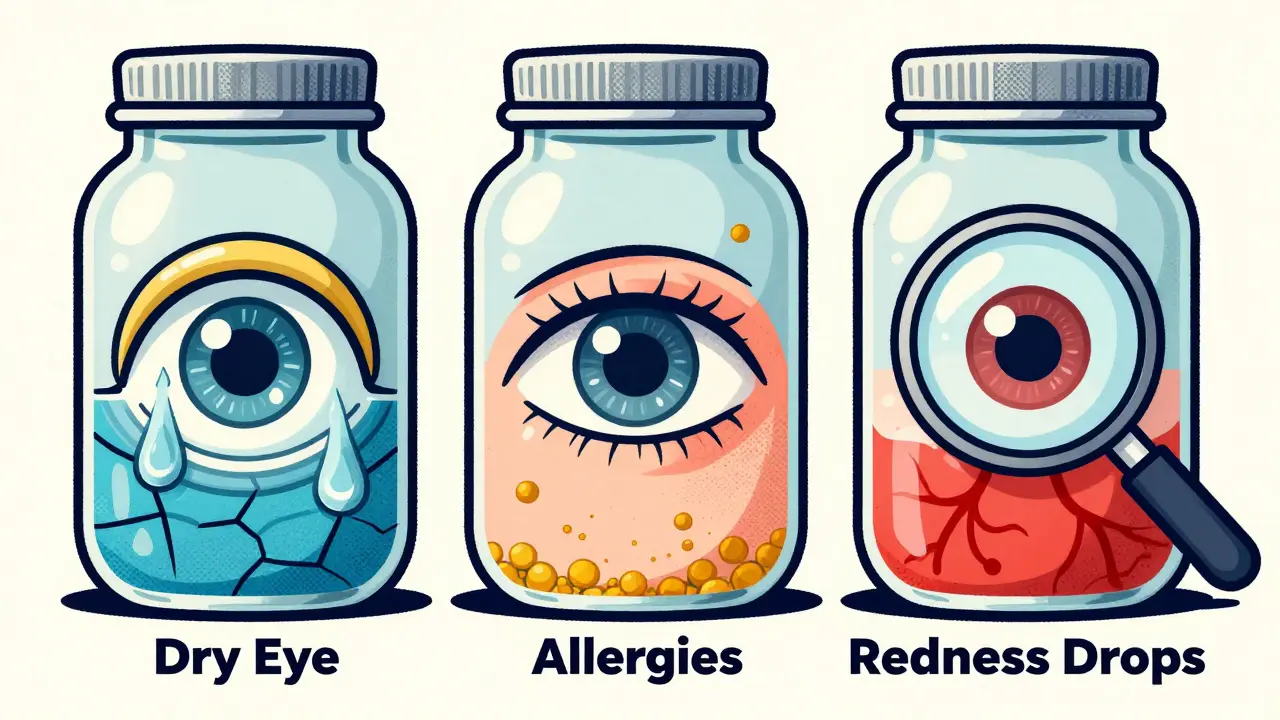
Learn how to pick the right OTC eye drops for allergies, dryness, or redness without making things worse. Know which ingredients work, which to avoid, and how to use them correctly.
View More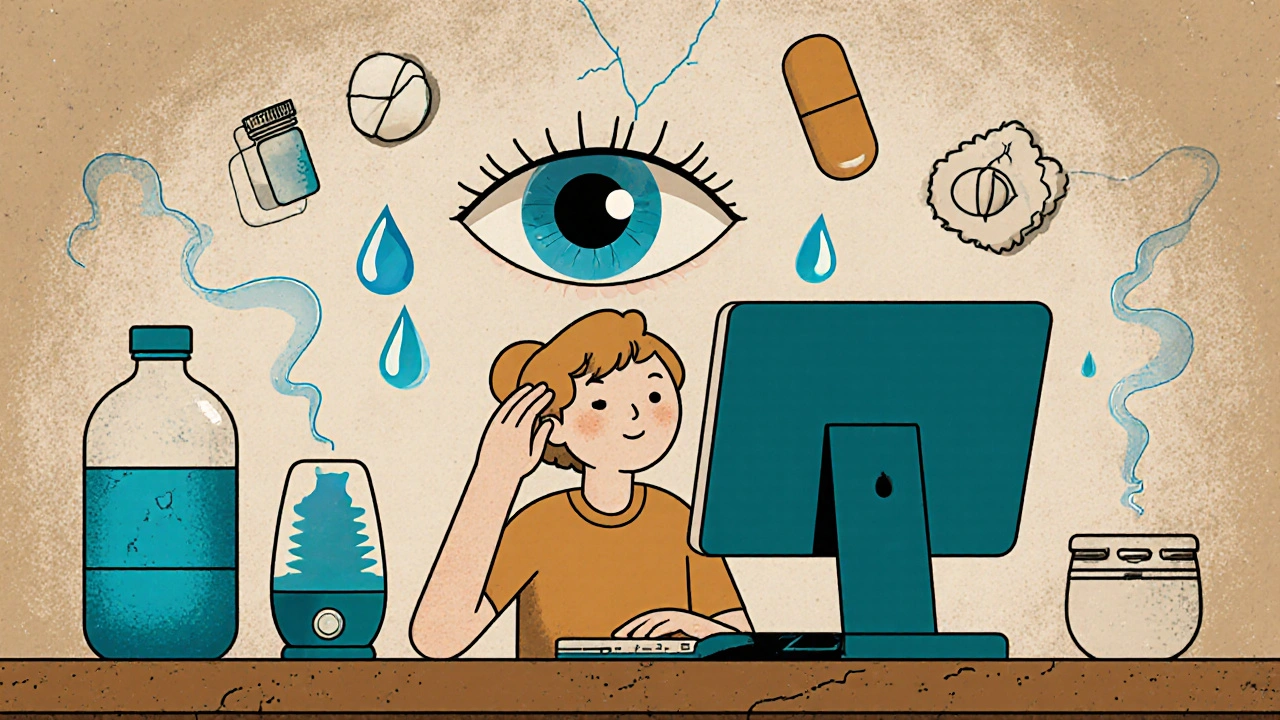
Learn how to manage dry eyes caused by medications using lubricants and humidifiers. Compare OTC and prescription options, understand real user experiences, and discover practical steps for relief.
View More