
When someone has color vision deficiency, a condition where the eyes can’t distinguish certain colors the way most people do. Also known as color blindness, it’s not a disease—it’s a difference in how the retina’s cone cells process light. About 1 in 12 men and 1 in 200 women have some form of it, mostly inherited. You might not even realize you have it until you’re asked to pick out matching socks or read a traffic light in low light.
Most cases fall into red-green color blindness, the most common type, caused by a genetic variation in the photopigments that detect red or green light. This isn’t about seeing in black and white—it’s about mixing up shades. A ripe tomato might look dull, green grass could appear brownish, and traffic lights become a matter of position, not color. Less common is blue-yellow color deficiency, a rarer form where blues look greener and yellows appear violet or pink. And while some people call it Daltonism after scientist John Dalton, that term is outdated and misleading—it’s not a single condition, but a group of variations.
It’s not just about aesthetics. People with color vision deficiency face real challenges: reading color-coded charts, identifying medication labels, spotting spoiled food, or even choosing paint for a room. Jobs like electrician, pilot, or graphic designer may have restrictions. But here’s the good news: tools exist. Apps can label colors on your phone. Special glasses like EnChroma help some people see more hues. And many workplaces now use patterns or labels instead of color alone to communicate info.
This collection of articles doesn’t just explain color vision deficiency—it connects it to real-world medication and health issues. You’ll find posts on how certain drugs can temporarily affect color perception, how pharmacists help patients with color-related labeling confusion, and why some treatments for eye diseases like glaucoma require extra care for those with color vision differences. You’ll also see how drug interactions, side effects, and even counterfeit medications can be harder to spot if you can’t rely on color cues.
Whether you’re living with color vision deficiency or care for someone who is, understanding how it works—and how it intersects with pharmaceuticals—can make a big difference. The articles below give you practical, no-fluff insights you can use every day.
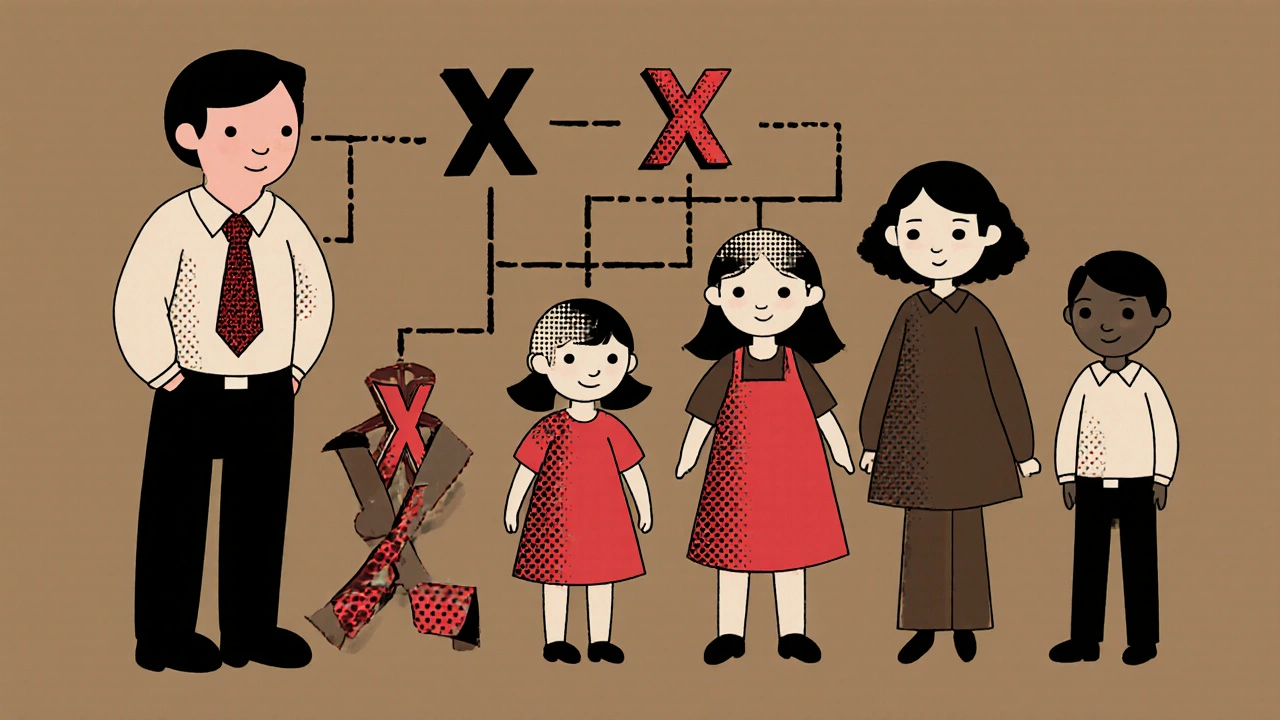
Red-green color blindness is a genetic condition affecting 8% of men and 0.5% of women. Learn how it's inherited, how it affects daily life, and what tools and technologies help people adapt.
View More