
When you take dairy and antibiotics, the interaction between calcium-rich foods and certain antibiotics can reduce how well the drug works in your body. Also known as milk and antibiotics, this combo is one of the most common—but often overlooked—drug-food mistakes people make. If you’re on antibiotics like tetracycline, doxycycline, or ciprofloxacin, drinking milk, eating yogurt, or having cheese right before or after your dose can block absorption. Your body ends up getting less of the medicine, which means the infection might not clear up—or worse, it could come back stronger.
The problem isn’t just milk. Any food high in calcium, iron, zinc, or magnesium can do the same thing. That includes fortified orange juice, antacids, and even some multivitamins. These minerals bind to the antibiotic in your stomach before it can get into your bloodstream. It’s not magic—it’s chemistry. Studies show that taking tetracycline with dairy can cut absorption by up to 50%. That’s like taking half a pill and thinking you got the full dose. For antibiotics like ciprofloxacin, the window matters too: you should wait at least two hours before or after eating dairy to take the drug. If you’re on a short course, this might feel annoying. But if your infection lingers because you didn’t time your meals right, it’s a bigger hassle.
Not all antibiotics are affected the same way. Azithromycin, amoxicillin, and penicillin don’t care about dairy. But if your prescription is one of the older ones—especially the ones ending in “-cycline” or “-floxacin”—you need to pay attention. Your pharmacist can tell you right away. Don’t guess. Look at the label. Ask. Even if you’ve taken the same antibiotic before without issue, your body’s absorption can change based on what else you’re eating or other meds you’re taking. This isn’t just about dairy—it’s about how your whole diet plays with your meds. One study found that nearly 40% of patients on tetracycline didn’t know they had to avoid dairy, and many of them reported the treatment didn’t work as expected.
And here’s the thing: it’s not just about timing. If you’re on long-term antibiotics for acne, Lyme disease, or a chronic infection, you might be tempted to keep eating yogurt to protect your gut. That’s smart—but not if it’s interfering with your drug. Some probiotics are fine, but not if they’re in dairy products that also contain calcium. You need to separate them. Try taking your antibiotic on an empty stomach with water, then have your yogurt a few hours later. Or switch to a non-dairy probiotic like a capsule with Lactobacillus or Bifidobacterium strains that don’t come with a side of calcium.
You don’t have to give up dairy forever. You just need to know when to pause it. Think of it like charging your phone—you wouldn’t plug it in while it’s still warm from use. Same here. Let your body absorb the drug cleanly, then refuel with food. This isn’t about being perfect. It’s about being smart. If you’ve ever felt like your antibiotics didn’t work, even though you took them every day, this might be why.
Below, you’ll find real guides that dig into how antibiotics interact with food, how to avoid common mistakes, and what alternatives exist when your meds don’t play nice with your breakfast. Whether you’re on a short course or managing a long-term condition, these posts give you the exact steps to make your treatment actually work.
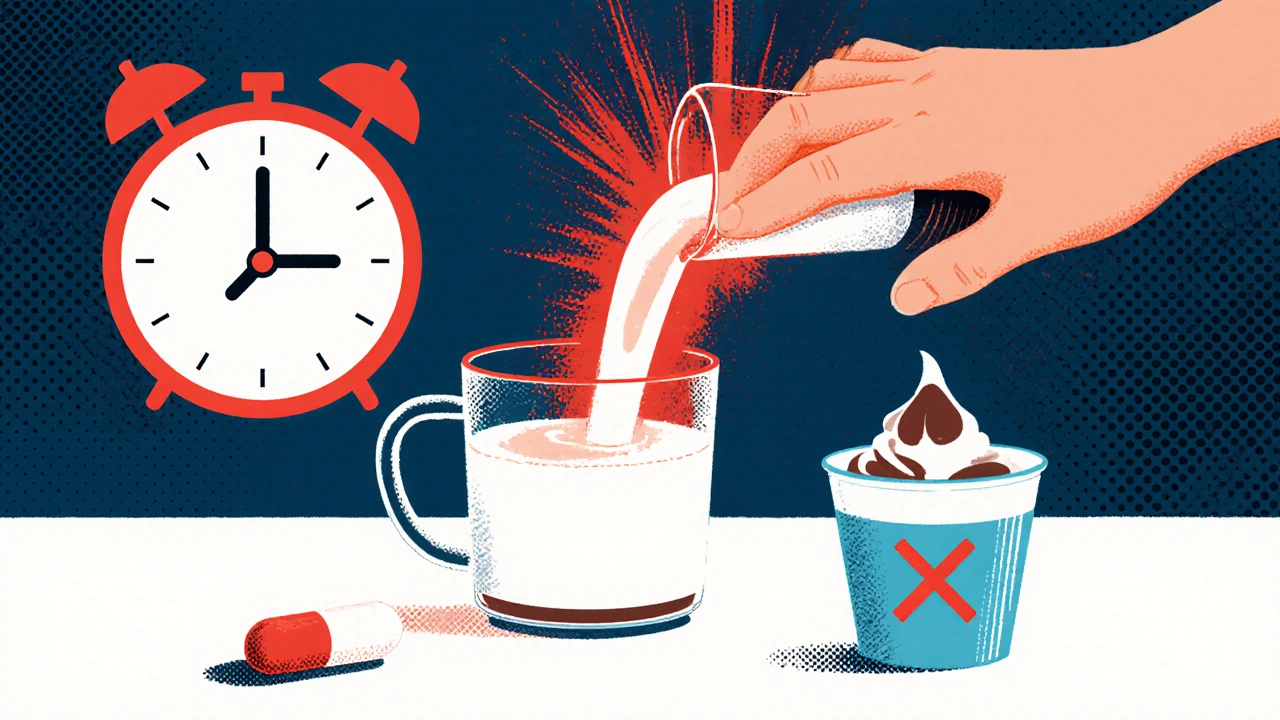
Dairy can block up to 92% of certain antibiotics from being absorbed. Learn which ones are affected, how long to wait, and what to avoid to make sure your treatment works.
View More