
When you're a commercial driver, FMCSA drug clearance, the official process that confirms a trucker is free from prohibited substances before operating a commercial vehicle. Also known as DOT drug clearance, it's not optional—it's the gatekeeper to your job. The Federal Motor Carrier Safety Administration (FMCSA) sets strict rules because a single impaired driver can cause a disaster. This isn't about punishment; it's about safety on roads shared with families, emergency vehicles, and heavy cargo.
FMCSA drug clearance ties directly to DOT drug testing, the standardized urine screening required for all CDL holders. Also known as federal drug screening, it checks for five major substance categories: marijuana, cocaine, amphetamines, opioids, and phencyclidine (PCP). These aren't random choices—they're based on real data showing which drugs most commonly impair driving. A positive test doesn't just mean a suspension—it means losing your CDL until you complete a Substance Abuse Professional (SAP) program, get evaluated, and pass a return-to-duty test. Many drivers don't realize that even legal prescriptions like oxycodone or Adderall can trigger a positive result if not properly documented with a licensed prescriber.
What trips people up isn't always the test itself—it's the paperwork, timing, and misunderstanding of rules. For example, if you're taking a medication for pain or ADHD, you need a valid prescription and proof that it doesn't affect your ability to drive safely. The FMCSA doesn't ban all medications—just those that cause drowsiness, dizziness, or altered judgment. Employers are required to follow FMCSA guidelines, but some drivers get caught off guard when their clinic uses a different testing panel than what's federally approved. And if you're in a state where marijuana is legal, that doesn't matter—federal law still applies to commercial drivers. There's no gray area: one positive test, and your clearance is suspended.
FMCSA drug clearance also connects to commercial driver drug policy, the set of employer and federal rules that dictate when and how testing happens. This includes pre-employment screening, random testing (at least 50% of drivers annually), post-accident testing, reasonable suspicion testing, and return-to-duty protocols. It's not just about passing a test—it's about understanding the system that keeps you on the road. Drivers who know these rules can avoid costly mistakes. For instance, if you're pulled over after an accident and asked to take a test, you have rights. You can request a split sample. You can challenge a false positive. But you have to act fast—deadlines are strict.
And then there's the human side. Many drivers avoid getting help for substance use because they fear losing their job. But the FMCSA system is designed to help, not just punish. SAP programs exist to get drivers back on track, not to trap them. The real issue isn't the test—it's the stigma. If you've struggled with pain, anxiety, or addiction, there's a path back. You just need to know how to use it.
Below, you'll find real-world guides on what happens after a failed test, how to handle prescription conflicts, what substances show up on DOT screens, and how to prepare for random testing without panic. These aren't theory pieces—they're from drivers who’ve been there, and the experts who help them get back on the road.
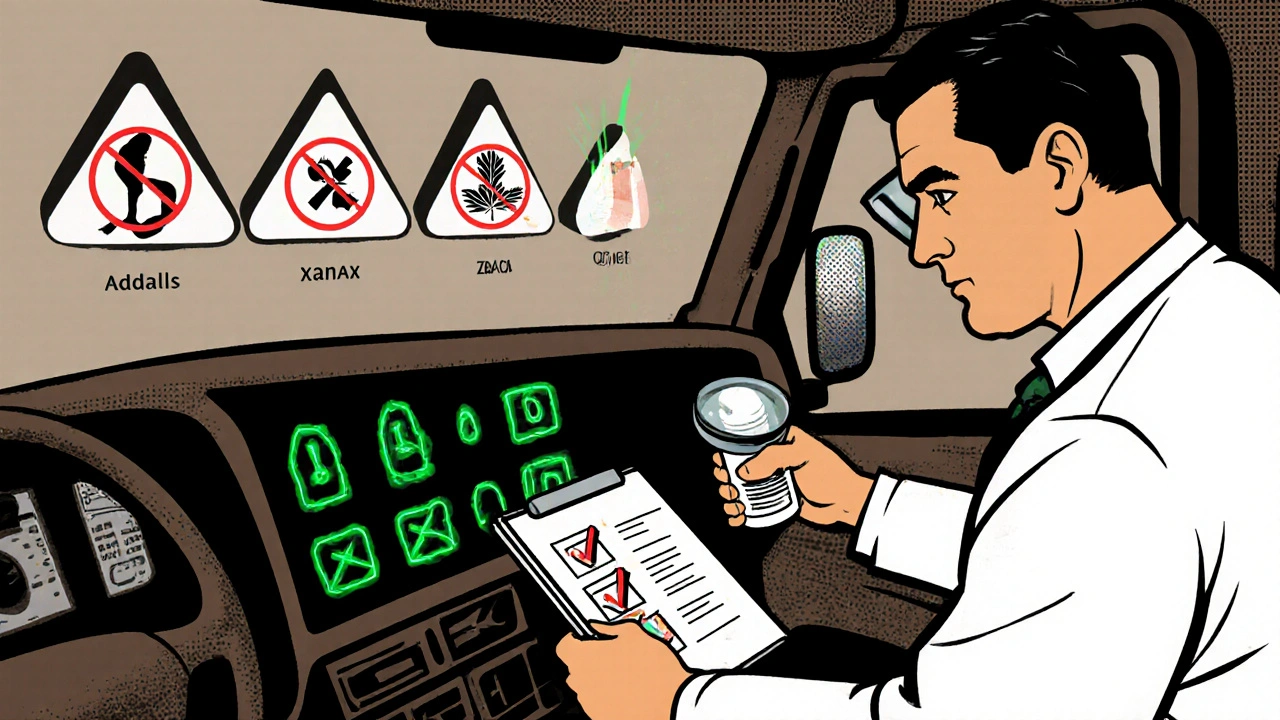
Commercial drivers must follow strict DOT medication rules to stay on the road. Learn which prescriptions are banned, how to stay compliant, and what alternatives exist for common conditions like ADHD and chronic pain.
View More