
When someone has red-green color blindness, a common form of color vision deficiency where distinguishing between red and green hues becomes difficult. Also known as deuteranopia or protanopia, it’s not just about seeing colors differently—it’s about missing critical visual cues in everyday situations. This isn’t a rare quirk. About 1 in 12 men and 1 in 200 women have some version of it. That means in a typical classroom or office, someone nearby is likely struggling to tell a ripe tomato from a green pepper, or read a red warning light on a dashboard.
It’s caused by a genetic difference in the light-sensitive cells in your eyes—specifically, the cones that detect red or green wavelengths. If those cones don’t work right, your brain gets mixed signals. Deuteranopia, the most common type, means your green cones are faulty. People with this can’t tell green from yellow or brown, and reds look duller. Protanopia, less common, means your red cones are weak or missing. Reds appear black or dark gray, and some shades of orange, yellow, and green look the same. These aren’t just theory—they affect real decisions. Think traffic lights, wiring colors in electronics, food spoilage alerts, even choosing matching clothes.
What’s surprising is how often this goes unnoticed. Many people grow up thinking they see colors normally, until a test or a mistake reveals the truth. A kid picks the wrong crayon. An adult misreads a chart. A driver hesitates at a signal. These aren’t accidents—they’re signs of a biological difference most people never think about. And while there’s no cure, tools exist. Special glasses can help some people distinguish colors better. Apps can label colors on your phone. Designers are starting to build websites and apps that work for everyone, not just those with full color vision.
What you’ll find in the posts below isn’t a list of medical jargon. It’s real-world guidance from people who’ve studied how drugs, conditions, and treatments interact with the body—just like how red-green color blindness interacts with your environment. You’ll see how medication side effects can mimic vision issues, how testing standards change for workers in safety-critical jobs, and how even something as simple as pill color can confuse someone with this condition. This isn’t about optics. It’s about how biology shapes everyday choices—and what we can do to make things clearer for everyone.
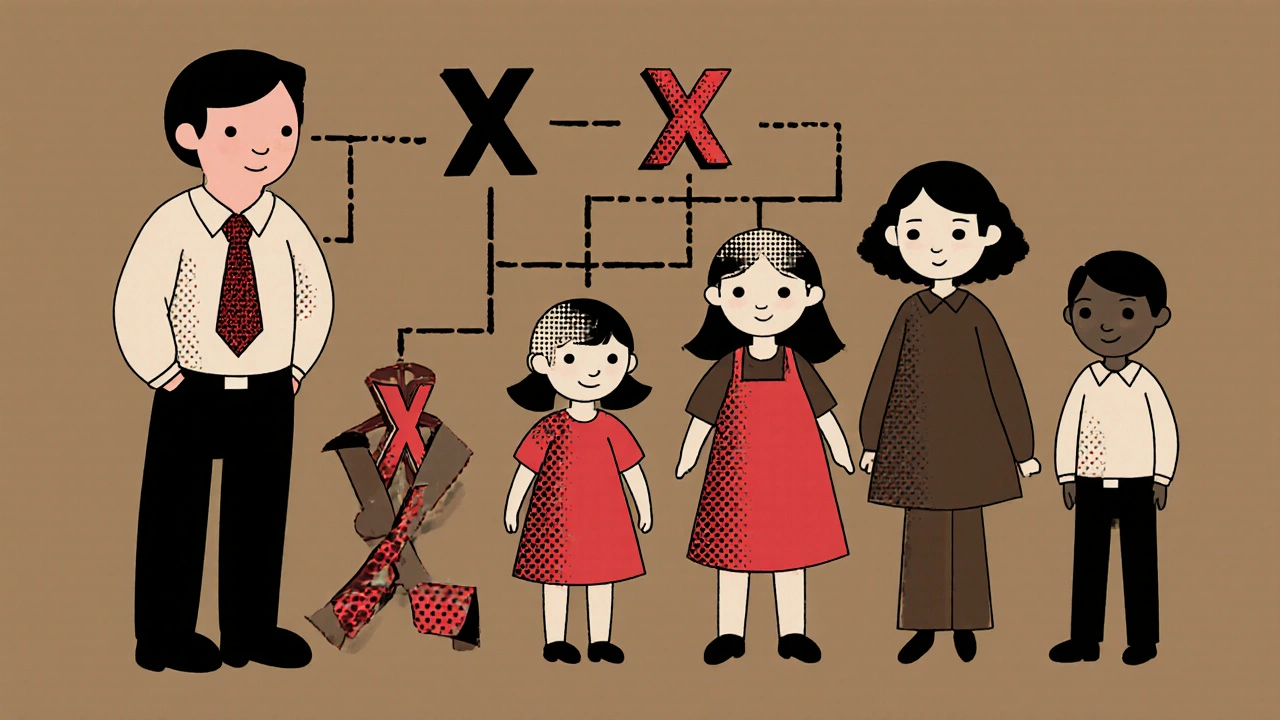
Red-green color blindness is a genetic condition affecting 8% of men and 0.5% of women. Learn how it's inherited, how it affects daily life, and what tools and technologies help people adapt.
View More