
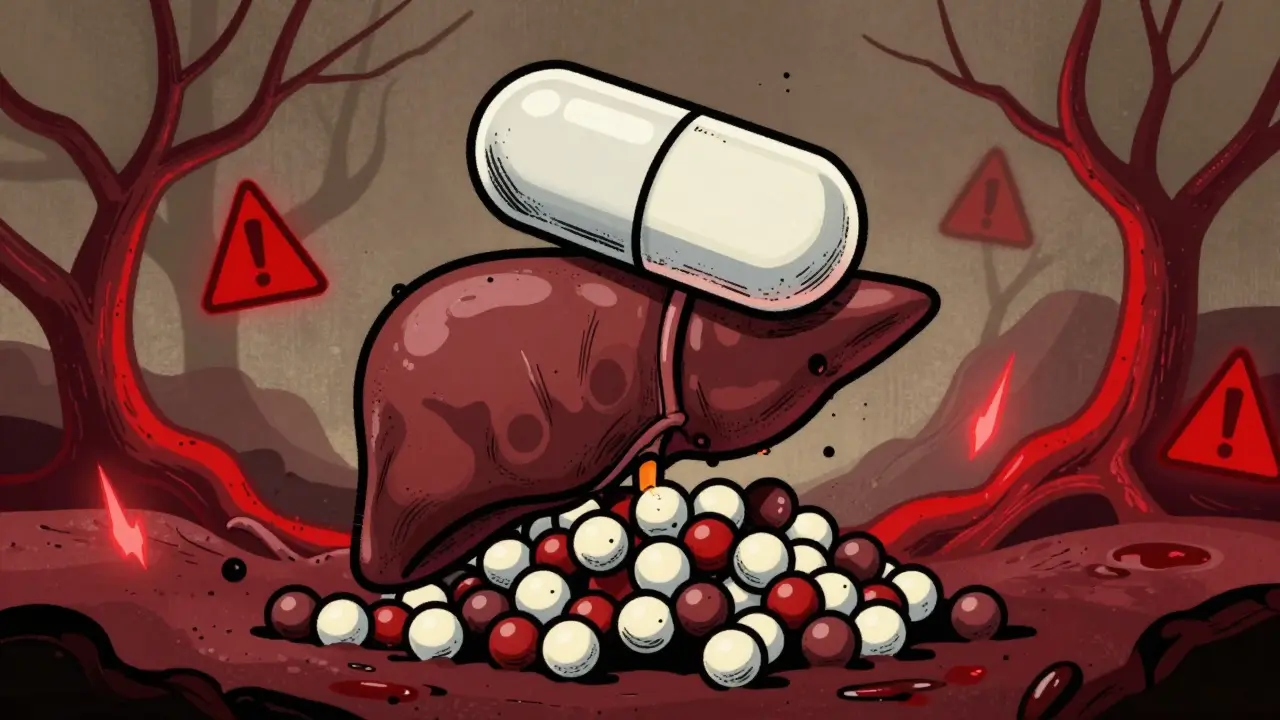
Theophylline-Ciprofloxacin Interaction Calculator
This calculator estimates the potential increase in theophylline levels when ciprofloxacin is prescribed. Theophylline has a narrow therapeutic window (10-20 mg/L), and ciprofloxacin can increase levels by 40-80%, potentially leading to dangerous toxicity.
Data based on medical studies showing ciprofloxacin reduces theophylline clearance by 40-80% due to CYP1A2 enzyme inhibition.
Risk Assessment
Clinical Recommendations
Enter your current theophylline level to see specific recommendations.
Important Warning
Ciprofloxacin can increase theophylline levels by 40-80% within days. This interaction is life-threatening and requires immediate attention if toxicity symptoms appear.
When you’re on theophylline for COPD or asthma, your body is walking a tightrope. The drug works at very specific levels-between 10 and 20 mg/L in your blood. Go a little higher, and you risk nausea, vomiting, a racing heart. Go much higher, and you could have seizures, irregular heartbeats, or even die. Now imagine someone prescribes you ciprofloxacin for a sinus infection or urinary tract infection. That’s not just another pill. It’s a hidden trigger.
Why This Interaction Isn’t Just a Warning-It’s a Landmine
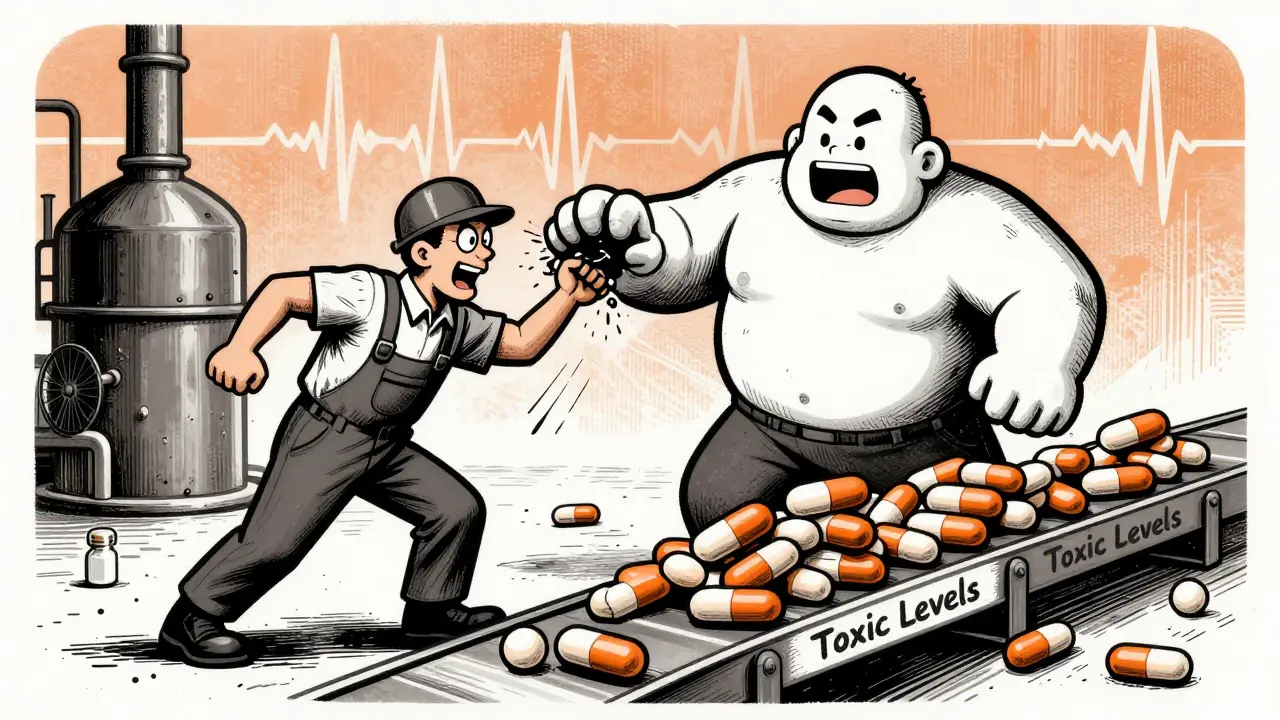
Ciprofloxacin doesn’t just mix with theophylline. It shuts down the enzyme that clears it from your body. That enzyme is called CYP1A2. It’s like a factory worker who normally keeps theophylline moving out of your system at a steady pace. Ciprofloxacin walks in, kicks the worker out, and the theophylline piles up. Within days, your levels can jump 40% to 80%. A dose that was safe last week becomes toxic this week.This isn’t theoretical. In 1987, doctors in Glasgow reported a case where an elderly patient’s theophylline clearance dropped from 2.3 liters per hour to just 0.8 when ciprofloxacin was added. When they stopped the antibiotic, clearance bounced back. That study was the first solid proof. Since then, dozens of cases have confirmed it: ciprofloxacin doesn’t just raise theophylline levels-it pushes them into the danger zone.
What Happens When Toxicity Hits
The symptoms don’t sneak up. They hit fast and hard.- At 20-25 mg/L: Nausea, vomiting, jitteriness, rapid heartbeat
- At 25-30 mg/L: Severe palpitations, low blood pressure, muscle twitching
- Over 30 mg/L: Seizures, cardiac arrest, coma
In 1990, a 93-year-old woman with no history of seizures had a grand mal seizure after starting ciprofloxacin while on theophylline. She hadn’t changed her dose. She wasn’t dehydrated. The only new variable? Ciprofloxacin. That case was published in JAMA Internal Medicine. It wasn’t an outlier. A 2020 review by the Institute for Safe Medication Practices found that 15-20% of theophylline toxicity cases in older adults are directly tied to ciprofloxacin. That’s not rare. That’s predictable.
The Numbers Don’t Lie: This Interaction Hospitalizes Thousands Every Year
A 2011 study tracked over 77,000 older adults in Ontario who were on theophylline. Researchers found that those who also took ciprofloxacin were nearly twice as likely to be hospitalized for toxicity. The odds ratio? 1.86. That’s higher than many well-known dangerous combinations.Compare that to other antibiotics. Levofloxacin? No increased risk. Trimethoprim-sulfamethoxazole? No risk. Cefuroxime? Safe. Only ciprofloxacin stands out. And it’s not just in Canada. In the U.S., the Agency for Healthcare Research and Quality estimates that ciprofloxacin-theophylline interactions cause about 4,200 hospitalizations each year. A 2021 study in Pharmacoepidemiology and Drug Safety found that nearly 9,300 adverse events in Medicare patients were directly caused by this combo.
And here’s the worst part: many of these cases are avoidable. A 2018 study found that 12.7% of older adults on theophylline were still getting ciprofloxacin. Why? Because doctors didn’t check. Or they thought, “She’s been on this for years-she’s fine.” But the body doesn’t remember. The enzyme doesn’t adapt. The risk stays the same.
Why Ciprofloxacin Is Worse Than Other Antibiotics
Not all fluoroquinolones are the same. Levofloxacin? It barely touches theophylline. Moxifloxacin? Minimal effect. Norfloxacin? Slightly more risk, but still far less than ciprofloxacin. Why? Because ciprofloxacin is the strongest inhibitor of CYP1A2 in its class.Studies show that 750 mg of ciprofloxacin twice daily can reduce theophylline clearance by 50% more than 500 mg twice daily. That’s dose-dependent. Higher dose? Higher risk. And it doesn’t matter if you take them at the same time or hours apart. The enzyme stays blocked for days. The interaction lasts as long as ciprofloxacin is in your system-and sometimes longer.
The FDA added a black box warning to ciprofloxacin labels in 1994. That’s the strongest warning they give. It says: Monitor theophylline levels. Reduce the dose by 33%. Yet, a 2017 study found that 68% of electronic health record alerts about this interaction were ignored. Why? Because clinicians felt the infection was urgent-or they assumed the patient had taken both before without issue. But that’s like saying, “I drove through a red light last time and didn’t crash.” This interaction doesn’t care about your history. It cares about your enzymes.
What You Should Do If You’re on Theophylline
If you take theophylline, here’s what you need to know:- Never start ciprofloxacin without checking your theophylline level first. Your doctor should test your blood level before prescribing it.
- If ciprofloxacin is necessary, reduce your theophylline dose by 30-50%. That’s the standard recommendation from the American Society of Health-System Pharmacists (2023).
- Check your theophylline level every 24-48 hours after starting ciprofloxacin. Don’t wait for symptoms.
- Watch for early signs: Nausea, vomiting, fast heartbeat, restlessness. These are red flags.
- Ask for alternatives. Amoxicillin-clavulanate, azithromycin, or doxycycline don’t interact with theophylline. They’re safer.
If you’re on ciprofloxacin and you feel off-especially if you’re older or have kidney or liver problems-get your theophylline level checked immediately. Don’t wait. Don’t assume it’s just a stomach bug. It might be your blood poisoning itself.

What About Newer Research?
There’s emerging science that makes this even more personal. Researchers at the University of Toronto are studying a genetic variant called CYP1A2*1F. People with this variant break down theophylline slower even without ciprofloxacin. When they take ciprofloxacin, their clearance drops by 65%-far more than average. That means some people are genetically wired to be at extreme risk.This isn’t just about avoiding ciprofloxacin. It’s about recognizing that drug interactions aren’t one-size-fits-all. Your genes, your age, your liver function-all of it matters. A 2015 meta-analysis found that patients over 65 have a 45% drop in theophylline clearance when on ciprofloxacin, compared to 35% in younger people. Age isn’t just a number. It’s a multiplier of risk.
What Doctors Should Be Doing
Clinicians need to treat this interaction like a red alert. Not a footnote. Not a box to check. It’s a life-or-death scenario.Guidelines from the American College of Chest Physicians (2019) and the American Thoracic Society (2022) are clear: avoid ciprofloxacin in patients on theophylline unless there’s no alternative. And even then, proceed with extreme caution.
Here’s what a good clinical workflow looks like:
- Check the patient’s current theophylline level.
- Confirm the reason for antibiotic use-is it really bacterial? Could it be viral?
- If antibiotics are needed, choose one that doesn’t interfere: amoxicillin, azithromycin, levofloxacin.
- If ciprofloxacin is unavoidable: reduce theophylline dose by 40%, monitor levels daily for 3 days, and educate the patient on toxicity signs.
It’s not complicated. It’s just not always done.
The Bottom Line
Ciprofloxacin and theophylline shouldn’t be prescribed together. Not because it’s risky. Because it’s deadly-and preventable. This interaction has been known for over 35 years. It’s in every drug database. It’s in every pharmacy alert system. And yet, it still happens. People still get hospitalized. People still die.If you’re on theophylline, ask your doctor: “Is there a safer antibiotic?” If you’re a clinician, don’t override the alert. Don’t assume it’s fine. This isn’t a gray area. It’s black and white: ciprofloxacin raises theophylline to toxic levels. Period.
One pill shouldn’t be a death sentence. But when these two drugs meet, it can be. Know the risk. Ask the question. Save a life.


Nicola George
December 27, 2025 AT 04:40So let me get this straight - we’re still letting doctors prescribe cipro to people on theophylline like it’s a free sample at the grocery store? 🙃 I’ve seen this happen three times in my clinic. Two ER visits. One ICU. All avoidable. We’re not talking about a minor side effect here - we’re talking about someone’s heart deciding to throw a party they didn’t RSVP to.
Raushan Richardson
December 27, 2025 AT 13:38This is the kind of post that makes me want to hug every pharmacist who ever stopped a prescription. Seriously - if you’re a clinician reading this and you’ve ever overridden that alert? Stop. Just stop. We’ve got safer options. Azithromycin, amoxicillin, even doxycycline. Cipro is NOT the only antibiotic in the toolbox. Let’s stop pretending it is.
Robyn Hays
December 29, 2025 AT 07:27Imagine your body’s enzymes are like a busy subway system - theophylline’s the train, CYP1A2’s the conductor, and ciprofloxacin? That’s the guy who jumps on the platform with a megaphone yelling ‘ALL TRAINS STOP!’ and then steals the conductor’s hat. No one’s getting where they need to go. And the worst part? The system doesn’t get better with time. It just gets more crowded. And then… boom. Seizures. Cardiac arrest. It’s not ‘rare.’ It’s just ignored until it’s too late.
Liz Tanner
December 30, 2025 AT 08:10There’s a terrifying normalcy around this interaction. People say, ‘Oh, my grandma took both for years and she’s fine.’ But ‘fine’ isn’t the same as ‘not dead yet.’ The enzyme doesn’t adapt. The risk doesn’t decrease. The data doesn’t lie. If you’re on theophylline, don’t trust anecdotal ‘I’ve been fine’ stories. Trust the science. And if your doctor doesn’t? Find a new one.
Babe Addict
January 1, 2026 AT 04:17Y’all are overreacting. Cipro’s not the villain - it’s the messenger. The real issue is theophylline’s narrow therapeutic window. Why are we still using a 1950s drug with a 5 mg/L safety margin? We’ve got newer bronchodilators. Salbutamol. Formoterol. Even tiotropium. Theophylline’s basically the flip phone of respiratory meds. Stop blaming cipro - fix the outdated protocol.
Satyakki Bhattacharjee
January 1, 2026 AT 22:35Man, this is what happens when we forget God gave us wisdom. People take pills like candy. No respect for the body. No fear of consequences. This isn't science - it's sin. The body is a temple. And cipro? It's the devil's little helper. Stop the madness. Pray. Read your Bible. And stop mixing drugs like you're making a smoothie.
Liz MENDOZA
January 3, 2026 AT 17:16My uncle was on theophylline for 20 years. He got cipro for a UTI and ended up in the hospital with a seizure. They didn’t check his levels. They didn’t ask about his meds. He’s fine now, but he still gets panic attacks every time he sees a new antibiotic. This isn’t just clinical data - it’s lived trauma. Please, if you’re prescribing, pause. Ask. Listen.
Anna Weitz
January 5, 2026 AT 02:01Why do we keep pretending this is a new problem when it’s been in every drug handbook since the 90s? The FDA warned us. The studies are clear. The deaths are documented. But we’re still doing it because it’s easier than thinking. Because we’re tired. Because we’re rushed. Because we think ‘it won’t happen to me.’ But it does. It always does.
Kylie Robson
January 6, 2026 AT 18:40Let’s be precise here - ciprofloxacin’s inhibition of CYP1A2 is non-competitive and irreversible in vitro, but clinically it’s time-dependent and partially reversible. The 40–80% reduction in clearance is well-documented in pharmacokinetic modeling, but the interindividual variability is massive due to CYP1A2 polymorphisms, particularly CYP1A2*1F, which reduces enzyme activity by up to 65% in homozygous carriers. Also, renal excretion of ciprofloxacin is dose-dependent, so in CKD patients, the half-life extends, prolonging the interaction. Bottom line: it’s not just cipro - it’s cipro + aging + genetics + poor monitoring.
Caitlin Foster
January 8, 2026 AT 16:58OMG I JUST REALIZED MY DAD TOOK THESE TOGETHER LAST YEAR!! 😱 He had a ‘bad stomach bug’ they said… but it was THEOPHYLLINE TOXICITY. He was in the hospital for 5 days. They didn’t even check his levels. I’m screaming into the void right now. Please, if you’re reading this - ASK YOUR DOCTOR. I’M STILL SCARED.
Todd Scott
January 9, 2026 AT 09:58For context, theophylline was first synthesized in 1895 and became a mainstay in asthma management in the 1950s before the advent of beta-agonists. Its narrow therapeutic index - 10–20 mg/L - was well established by the 1970s, and the CYP1A2 interaction with fluoroquinolones was first observed in animal models in 1981. The Glasgow case report in 1987 was pivotal, but the real tragedy is that, despite over 35 years of evidence, this interaction persists because of systemic failures: fragmented EHRs, lack of pharmacist involvement, and the myth that ‘if it worked before, it’ll work again.’ In reality, the body doesn’t have memory - enzymes don’t get used to being blocked. The risk is constant. The solution is simple: avoid, monitor, or substitute. But we keep choosing the dangerous path because it’s faster. And that’s not negligence - it’s a culture.
Andrew Gurung
January 10, 2026 AT 07:21WHEN YOU REALIZE YOUR DOCTOR IS STILL USING A 1990S MEDICAL MANUAL AND YOU’RE THE ONLY ONE WHO READ THE FDA BLACK BOX WARNING… 😭💔 I’m not even mad. I’m just… heartbroken. We’re living in a world where people die because someone clicked ‘ignore alert’ because they were on lunch break. This isn’t medicine. It’s Russian roulette with a prescription pad. I’m out.
Paula Alencar
January 12, 2026 AT 03:19It is with profound gravity that I address this matter, as it pertains to a critical pharmacological interaction that has, for decades, been systematically underprioritized within the clinical ecosystem. The confluence of ciprofloxacin and theophylline constitutes not merely a contraindication, but a pharmacodynamic catastrophe, wherein the metabolic inhibition of CYP1A2 precipitates a cascade of life-threatening physiological derangements. The statistical burden - 4,200 annual hospitalizations in the United States alone - is not merely a number; it is an indictment of systemic negligence. The persistence of this phenomenon, despite unequivocal evidence, reflects a troubling epistemological failure within medical education and institutional protocols. To prescribe ciprofloxacin to a patient on theophylline is not an error of judgment - it is an ethical breach.
Nikki Thames
January 13, 2026 AT 17:55People keep saying ‘just use azithromycin’ - but have you considered the rising macrolide resistance? Or the QT prolongation risk in elderly patients? Or the fact that ciprofloxacin is the ONLY fluoroquinolone that penetrates the prostate adequately? You’re trading one risk for another. This isn’t black and white. It’s a spectrum. And if you’re not considering renal function, age, genetics, and infection site - you’re not practicing medicine. You’re playing doctor.
Nicola George
January 15, 2026 AT 01:32Oh wow, so now we’re debating whether cipro is ‘better’ than azithromycin? That’s like arguing whether a chainsaw or a flamethrower is the safer way to cut down a tree. The answer isn’t ‘which one’s less bad’ - it’s ‘why are you cutting down a tree that doesn’t need cutting?’ Stop prescribing antibiotics like they’re candy. Test before you treat. Think before you click.