
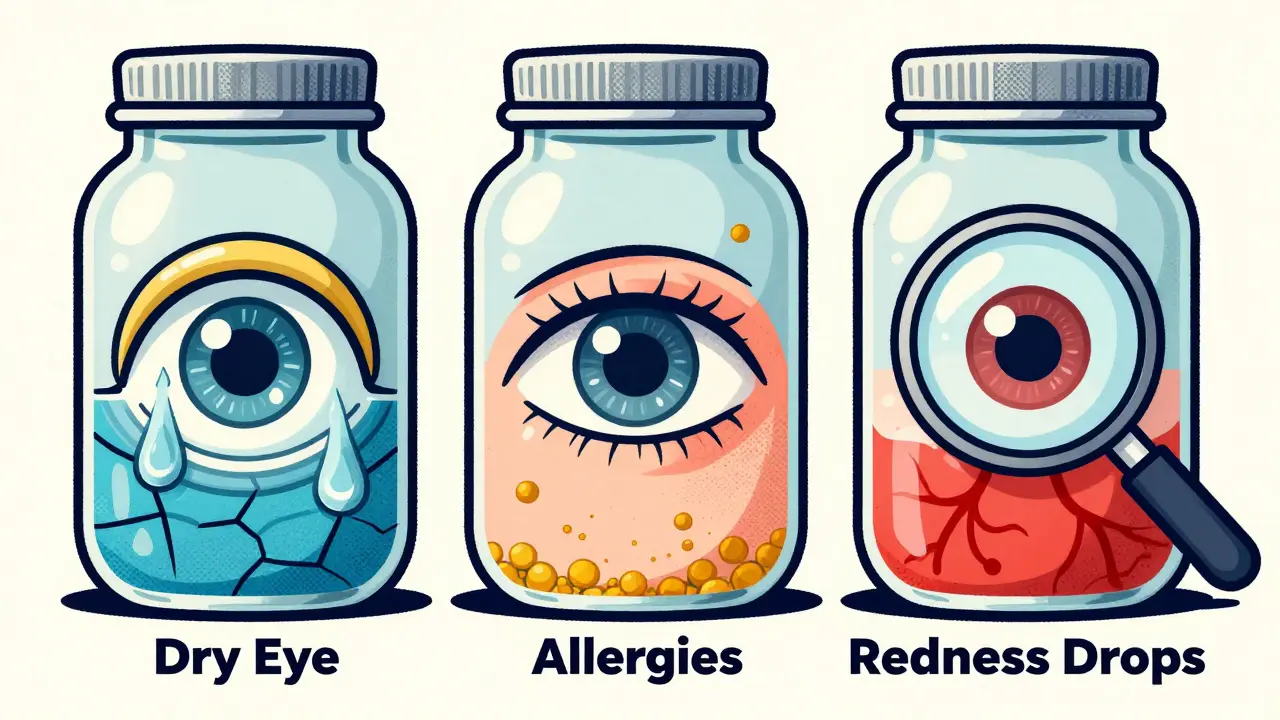
Choosing the right over-the-counter (OTC) eye drops isn't just about grabbing the brightest bottle on the shelf. It's about matching the product to what's actually going on in your eyes. Too many people reach for redness-relief drops when their eyes are dry, or use allergy drops daily for screen fatigue. That doesn't fix the problem-it can make it worse. The key is knowing whether your eyes are reacting to allergens, lacking moisture, or both. And that changes everything about what you should buy.
Understand What’s Really Causing Your Eye Discomfort
Your eyes aren’t just irritated-they’re sending you a signal. If your eyes feel gritty, burn after staring at a screen for an hour, or get worse in dry air or air-conditioned rooms, you likely have dry eye. This happens when your tear film breaks down. It’s not just about water; your tears have three layers: oil, water, and mucus. If the oil layer is thin, tears evaporate too fast. If the water layer is low, your eyes just don’t stay moist.
If your eyes itch, water, swell, or feel like they’re full of dust-especially during spring or fall-you’re probably dealing with allergies. Pollen, pet dander, or even dust mites trigger histamine release. That’s what causes the itch and redness. It’s not dryness. It’s an immune response.
And if your eyes look bloodshot but don’t itch or feel dry? You might be reaching for anti-redness drops. But here’s the catch: those drops don’t treat the cause. They shrink blood vessels temporarily. That’s why they work so fast. But if you use them too often, your eyes get dependent. The blood vessels bounce back bigger and redder than before. That’s called rebound redness, and it affects 68% of people who use drops like Visine daily for more than two weeks.
Know the Three Main Types of OTC Eye Drops
Not all eye drops are created equal. There are three main categories, each designed for a specific problem. Mixing them up is the most common mistake.
- Artificial Tears - These are lubricants. They replace missing moisture. Look for ingredients like polyethylene glycol, propylene glycol, or sodium hyaluronate. Brands like Systane Ultra, Refresh Optive, and TheraTears fall here. They’re safe for daily use, even with contact lenses.
- Allergy Relief Drops - These block histamine. Active ingredients include ketotifen (Zaditor) or olopatadine (Pataday). They’re the only OTC drops that actually stop the allergic reaction. Pataday gives up to 24 hours of relief with one daily dose. Generic ketotifen usually needs two doses a day.
- Anti-Redness Drops - These contain vasoconstrictors like tetrahydrozoline (Visine) or brimonidine (Lumify). They shrink blood vessels. Great for quick fixes-like before a photo-but dangerous for daily use. They mask symptoms, not fix them.
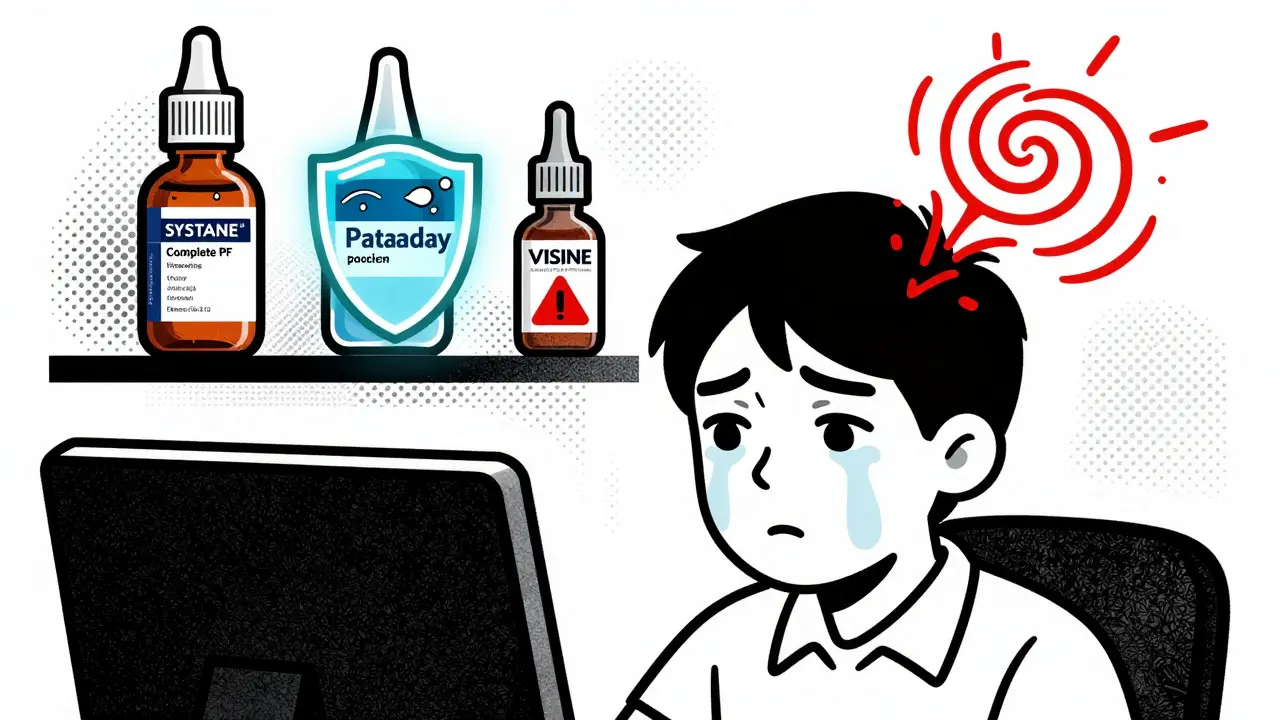
There’s also a fourth category you might not know about: gel-based and lipid-based drops. Gels like Systane Gel Drops have thicker formulas that last longer-up to 6 hours-but blur vision for a few minutes after use. Lipid-based drops like Systane Complete PF add oils (mineral oil, castor oil) to seal in moisture. They’re made for evaporative dry eye, which is common in people who stare at screens all day.
Preservatives Can Make Things Worse
Most multi-dose eye drops contain preservatives like polyquaternium-1 to keep them sterile. Sounds good, right? Not for frequent users. If you’re putting drops in your eyes more than four times a day, those preservatives can irritate your cornea. Studies show 22% of chronic users develop punctate keratitis-tiny, painful scratches on the eye’s surface.
That’s why preservative-free options matter. These come in single-use vials. No preservatives. No buildup. You open one, use it, toss it. They’re ideal if you use drops often, wear contacts, or have sensitive eyes. Brands like Refresh Optive Preservative-Free or Thealoz Duo cost a bit more ($12-$22 for 30 vials), but they’re worth it if you’re using them daily.
One thing to watch: not all preservative-free drops are the same. Thealoz Duo uses trehalose and sodium hyaluronate-a powerful combo that improves corneal healing by 40% in clinical trials. That’s not just lubrication. It’s repair.
What Works Best for Each Condition?
Let’s cut through the noise. Here’s what experts and real users say works.
For Dry Eyes from Screens
If you work on a computer, scroll on your phone, or watch TV for hours, your tear film evaporates. You need hydration and oil.
- Use Systane Complete PF or Refresh Optive GEL-they contain oils that rebuild the tear’s protective layer.
- Apply 2-3 times a day. Gel drops last longer but blur vision briefly-use them before leaving work or at night.
- Avoid redness drops. They reduce blood flow to your eyes, which cuts off tear production. The American Optometric Association says they worsen dry eye in 83% of cases.
Real user feedback on Reddit’s r/dryeye community says: “Refresh Relieva PF doesn’t blur my vision. Lasts 5 hours at my desk. The only one that works.”
For Allergies
Itchy, watery, swollen eyes? You need an antihistamine. Not just lubrication.
- Choose Pataday (olopatadine 0.1%)-it’s FDA-approved for 24-hour relief. One drop, once a day.
- Generic ketotifen (Zaditor) works too, but you’ll need to use it twice daily.
- Don’t use redness drops for allergies. They don’t touch the itch. And they make your eyes more sensitive over time.
On Trustpilot, 89% of Pataday users say they get all-day relief. One user wrote: “I used to take antihistamines orally. Now I just use Pataday. No drowsiness. Just clear eyes.”
For Redness (Without Dryness or Allergies)
If your eyes are red but not dry or itchy-maybe from tiredness, smoke, or chlorine-then a redness-relief drop might help. But pick carefully.
- Avoid Visine (tetrahydrozoline). It causes rebound redness in 68% of users within two weeks.
- Choose Lumify (brimonidine 0.025%). It reduces redness for 8 hours with only a 5.2% rebound risk.
- Use it once, maybe twice. Never daily. It’s for emergencies, not maintenance.
Even Lumify has side effects. 31% of users report headaches. If you get headaches or your eyes feel worse after using it, stop.
How to Apply Eye Drops Correctly
Most people apply drops wrong. That’s why they feel like they don’t work.
- Tilt your head back slightly-not all the way.
- Pull down your lower eyelid to make a small pocket.
- Hold the bottle over your eye, but don’t touch the tip to your skin or eyelashes.
- Squeeze one drop into the pocket. Close your eye gently. Don’t blink hard.
- Press the inner corner of your eye (near your nose) with your finger for 30 seconds. This keeps the drop from draining into your nose and throat.
- Wait 5 minutes before applying another drop. Mixing drops too fast washes them out.
68% of first-time users blink right after applying. That pushes the drop out. You’re wasting half your dose.
What to Avoid
Here are the biggest mistakes people make:
- Using redness drops for dryness - They cut off blood flow, which reduces tear production. Your eyes get drier.
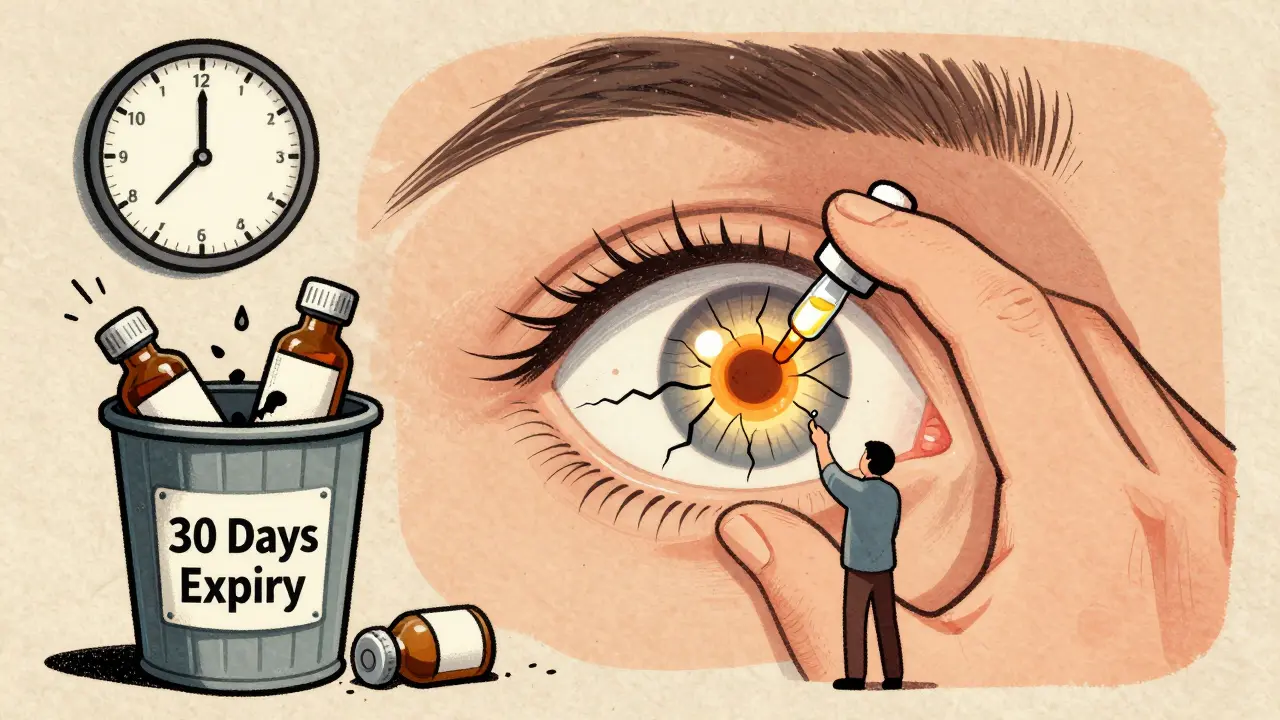
- Using the same bottle for months - Even if it looks full, preservatives break down. After 30 days, bacteria can grow. Toss it.
- Touching the dropper to your eye - You introduce germs. That’s how infections start.
- Storing drops in the bathroom - Humidity and heat ruin the formula. Keep them in a cool, dry place.
- Using drops past their expiration date - They lose potency. Worse, they can become unsafe.
When to See a Doctor
OTC drops help with symptoms. They don’t fix root causes. See an eye doctor if:
- Your symptoms last more than two weeks despite proper use.
- You have pain, vision changes, or light sensitivity.
- You’re using redness drops more than twice a week.
- You wear contacts and still feel gritty or irritated.
Chronic dry eye can be linked to autoimmune conditions, medications, or Meibomian Gland Dysfunction. Allergies might need prescription-strength treatment. OTC drops are a tool-not a cure.
What’s New in 2026
The market is evolving. New formulas are designed for modern life.
- Systane Complete PF - Launched in 2024, it’s the first OTC drop with both mineral oil and castor oil to target evaporative dry eye. Clinical data shows 52% better relief than standard tears.
- Thealoz Duo - Uses trehalose and sodium hyaluronate to repair corneal damage. Approved for severe dry eye. Requires refrigeration after opening.
- Preservative-free growth - Now 28% of OTC eye drop sales. Projected to hit 35% by 2027.
Companies are also linking drops to devices. Alcon’s Systane iLux lets you use drops after a thermal treatment for blocked oil glands. This isn’t just drops anymore-it’s a system.
Can I use allergy eye drops every day?
Yes, if they’re antihistamine drops like Pataday (olopatadine) or Zaditor (ketotifen). These are designed for daily use during allergy season. But don’t use them if you don’t have allergies-they won’t help dryness or redness from screens. Stick to artificial tears for those.
Why do my eyes feel blurry after using gel eye drops?
Gel drops are thicker than regular tears. They coat the eye longer, which is great for lasting relief-but it blurs vision for 2-3 minutes. That’s normal. Use them before bedtime or when you don’t need sharp vision, like during a lunch break. Avoid using them right before driving or reading.
Are preservative-free eye drops worth the extra cost?
If you use eye drops more than 4 times a day, yes. Preservatives in multi-dose bottles can damage your cornea over time. Single-use vials cost more per drop, but they’re safer and more effective for frequent users. They’re also better for contact lens wearers and people with sensitive eyes.
Can I use eye drops while wearing contacts?
Only if they’re labeled “for contact lens wearers.” Most artificial tears are safe, but gels and redness drops aren’t. Look for terms like “compatible with contacts” or “non-preserved.” Blink Contacts and Refresh Optive PF are two top choices. Always wait 15 minutes after inserting drops before putting lenses in.
How long do OTC eye drops last once opened?
Multi-dose bottles with preservatives last 30 days after opening. Single-use vials are good for one use only-throw them away after opening. Always check the label. Some, like Thealoz Duo, require refrigeration after opening and must be used within 7 days.
Jesse Hall
March 23, 2026 AT 04:52Namrata Goyal
March 24, 2026 AT 07:12Zola Parker
March 24, 2026 AT 12:32florence matthews
March 26, 2026 AT 10:48Kenneth Jones
March 28, 2026 AT 08:43Mihir Patel
March 28, 2026 AT 12:33Kevin Y.
March 29, 2026 AT 01:39Grace Kusta Nasralla
March 30, 2026 AT 04:46Aaron Sims
March 31, 2026 AT 11:50Elaine Parra
April 2, 2026 AT 11:34Natasha Rodríguez Lara
April 2, 2026 AT 20:54Kevin Siewe
April 4, 2026 AT 08:35Chris Farley
April 4, 2026 AT 22:46