
Why Authorized Generics Confuse Everyone
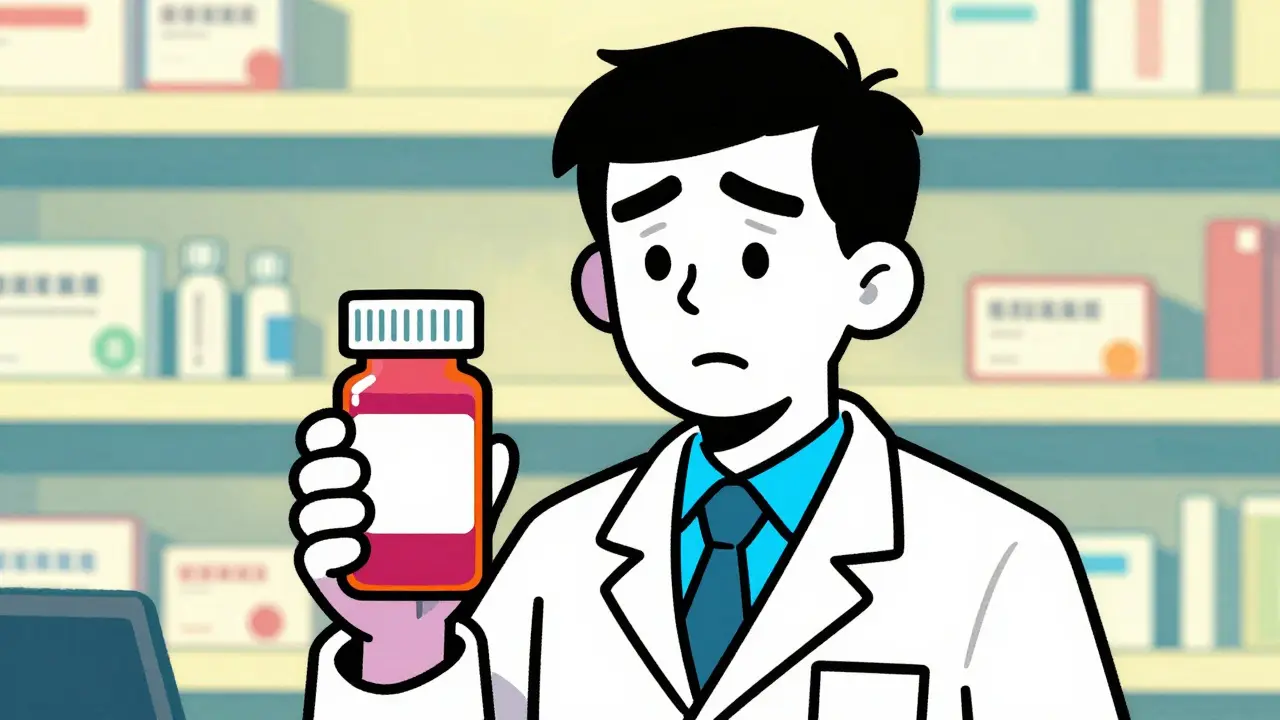
You pick up your prescription, scan the box, and notice something odd. The medicine inside looks exactly like the brand-name version you usually get, yet the company printed on the label isn't the one you expect. Or perhaps you see a price tag that sits somewhere between the high cost of the brand drug and the rock-bottom price of standard generics. This scenario usually involves an authorized generic. These products often create a headache for pharmacists and patients because they mimic the brand product almost perfectly while technically belonging to a generic category.
The core problem isn't the medicine itself-it is identical to the brand. The issue lies entirely in the paperwork and the packaging. In the United States, the Federal Food, Drug, and Cosmetic (FD&C) Act defines these drugs with very specific legal wording, but in practice, they look suspicious to the untrained eye. You need to understand exactly what makes them unique to avoid worrying that you have received the wrong medication or, worse, a counterfeit product.
What Exactly Is an Authorized Generic?
Authorized Generics are a listed drug that has been approved under section 505(c) of the FD&C Act and is marketed with packaging or labeling that differs from the brand-name version. They are not new formulations created by competitors. Instead, they are the original brand-name drug manufactured in the exact same facility, using the same recipe, but sold under a different label.
This concept emerged clearly after the Medicare Prescription Drug, Improvement, and Modernization Act of 2003 passed. Before then, companies relied solely on patent protection. Once patents expired, competitors could flood the market with their own generic versions via the Abbreviated New Drug Application (ANDA) process. Authorized generics allow the original maker to compete against those competitors directly. For instance, when AstraZeneca launched an authorized generic of Prilosec in 2004, they weren't changing the chemistry; they were simply repackaging their own production line to meet lower-price demands.
Because they are the "original" formula, they do not need to prove bioequivalence through clinical trials in the same way standard generics do. They are marketed under the original New Drug Application (NDA). This is a crucial distinction. Standard generics must prove they behave like the brand. Authorized generics just are the brand, essentially wearing a different mask. This means the active ingredients, the inactive fillers, and even the manufacturing processes are typically identical.
How Packaging Reveals the Truth
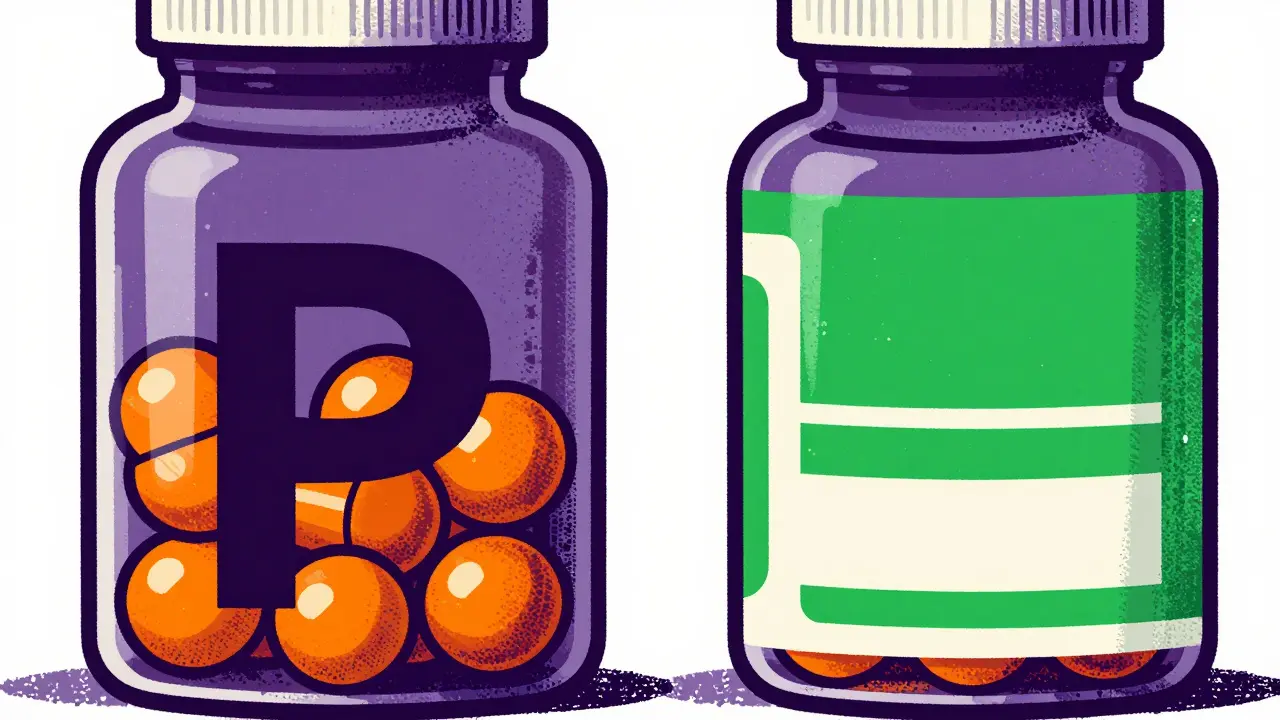
If you hold two boxes-one for the brand and one for the authorized generic-they might feel eerily similar. However, regulatory requirements force certain differences to appear. You cannot rely on the look of the pill alone, as tablets often share colors and markings due to trademark laws preventing total duplication, even if authorized generics technically come from the same factory.
The most reliable clue is found on the labeler information. While standard generics often feature a completely different manufacturer, authorized generics usually list a partner company or a subsidiary. For example, when Pfizer sold an authorized generic of Lyrica, the bottle did not say "Pfizer." It displayed "Greenstone LLC" as the manufacturer instead. The capsule inside remained the exact same shape and color.
Another visual marker is the absence of trademarks. The branding elements-logos, specific proprietary colors tied to the company identity-are stripped away. Instead, you will see functional language required by federal regulations, such as the place of business address mandated by 21 CFR § 201.1. You might also find a statement saying "Distributed by [Company Name]" rather than "Manufactured by." This subtle shift in verbs tells you that the supply chain handles the distribution differently, even if the pills came off the same assembly line.
Decoding the National Drug Code
For professionals, the National Drug Code (NDC) is the ultimate tool for identification. This number is a fingerprint for every medication package. It consists of three parts. When comparing an authorized generic to its brand counterpart, you will see a specific pattern of difference that does not occur with standard generics.
| NDC Segment | Brand Name | Authorized Generic | Traditional Generic |
|---|---|---|---|
| Labeler Code (1st) | Original Manufacturer | Different Distributor | Different Manufacturer |
| Product Code (2nd) | Specific Drug/Salt | Identical to Brand | Different Number |
| Package Code (3rd) | Size/Strength | Identical to Brand | Different Size/Strength Format |
Look closely at the middle and last segments. On an authorized generic, these remain the same as the brand name. The only thing that changes is the first segment, the labeler code. This confirms that the actual product inside hasn't changed, only who is legally selling it at that moment. Standard generics will have different numbers across the board because they are produced by a different company with their own batch codes.
Data shows that the FDA maintains a quarterly list of these drugs. As of late 2023, the list contained nearly 150 active products. Cross-referencing the NDC against this official database removes all guesswork. While pharmacy software systems like First Databank have incorporated these identifiers, manual verification remains a skill pharmacists must practice.
Differences From Standard Generics
It is vital to distinguish these from the generics you buy at discount chains. Traditional generics go through a different approval pathway known as the ANDA (Abbreviated New Drug Application). That path requires a generic manufacturer to test their version to prove it works exactly like the brand. They often swap out inactive ingredients-the starch or binding agents-because those recipes are trade secrets. An authorized generic does not do this. It uses the brand's recipe book.
This creates a distinct market position. Authorized generics typically cost 15% to 25% less than the brand name, but they sit slightly higher in price-about 5% to 15%-above traditional generics. This pricing strategy protects the brand owner's margins while still undercutting the competition. Patients might notice that switching from a branded pill to an authorized generic feels seamless because the taste, texture, and absorption rate are literally the same.
Despite the similarities, confusion remains high. A survey of community pharmacists indicated that nearly 37% struggled to tell them apart from traditional generics in blind tests. This highlights why packaging scrutiny matters. Misidentification can lead to inventory errors where stock is counted incorrectly or patients receive counseling on the wrong product type.
Why Do Manufacturers Do This?
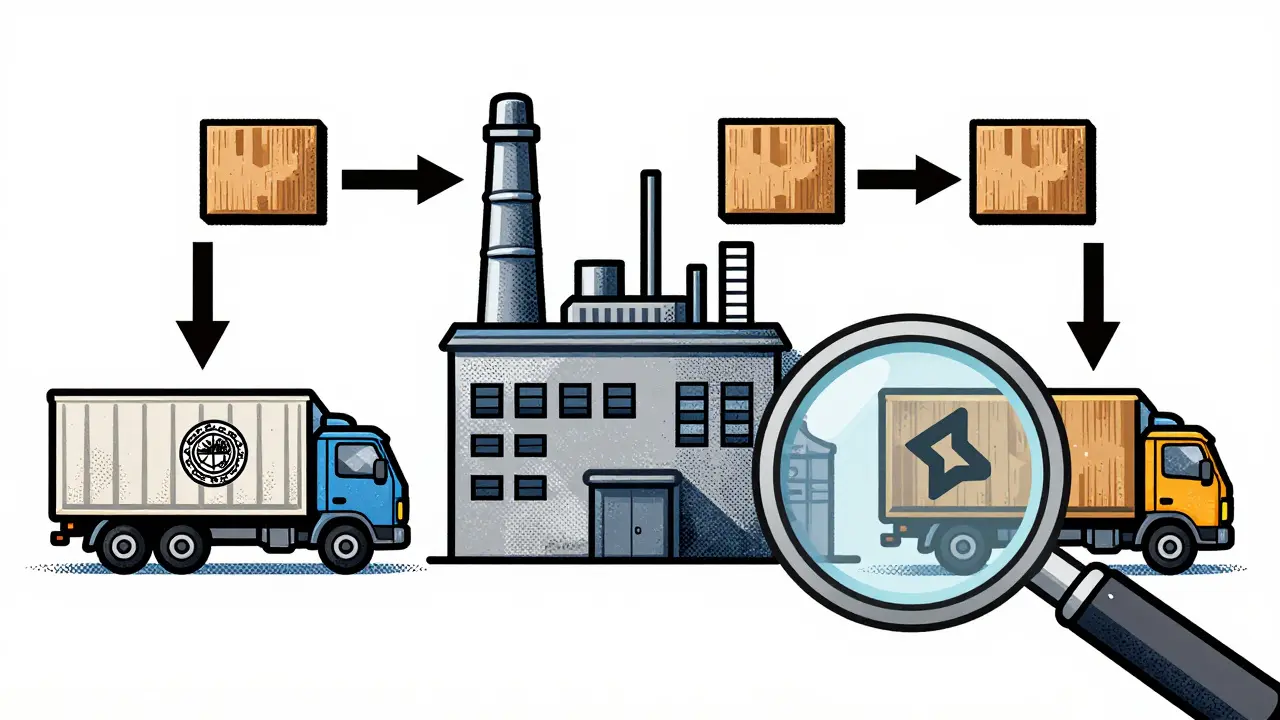
The motivation behind authorized generics is strategic market defense. When a drug patent expires, the brand loses its monopoly. Competitors immediately launch cheaper versions. To fight this, the brand company launches their own "cheap" version. This keeps some of the revenue in-house rather than ceding 100% of the generic market volume to third-party rivals.
Regulatory frameworks like the Generic Drug User Fee Amendments support this ecosystem by requiring transparency in reporting. The FDA tracks these sales separately. This transparency helps regulators monitor the impact of these products on overall drug costs and availability. It ensures that while the company owns the rights to the formula, they aren't bypassing safety standards when they repackage the drug for a different price tier.
Pitfalls and Common Errors
Mistakes happen, often due to assumption. One common error involves reading the labeler code and assuming the drug is counterfeit because the name doesn't match the expected brand. Another frequent mix-up is assuming that an authorized generic lacks the rigorous safety updates of the brand. In reality, they inherit the brand's safety updates automatically since they share the NDA holder.
Pharmacists report spending significantly more time verifying these prescriptions compared to standard ones. Independent pharmacies noted an average of 2.7 minutes spent checking authorization status per script. This delay often stems from needing to verify the relationship between the listed manufacturer and the original NDA holder. Patients should ask questions if the box looks familiar but the logo is unfamiliar, ensuring they know exactly what they are taking.

Rod Farren
April 1, 2026 AT 03:59The labeler code variance indicates the shift in distribution rights rather than manufacturing changes.
Cara Duncan
April 1, 2026 AT 23:06Check the box closely before buying! 🧐 The pill looks same but paper work differs 📄💊
Christopher Beeson
April 3, 2026 AT 14:58The essence remains constant beneath the shifting veil of corporate identity.
What we perceive as a new entity is merely the original soul wearing borrowed clothes.
This duality confuses the modern consumer seeking absolute purity in commerce.
We mistake the vessel for the liquid it holds entirely too often.
The branding strips away the familiar comfort of known logos yet preserves truth within.
Molly O'Donnell
April 4, 2026 AT 03:54Labeler codes confirm product origin definitively.
Eleanor Black
April 5, 2026 AT 07:01It truly fascinates me how packaging dictates value perception among patients today. People trust the logo more than the formula hidden inside the bottle. The regulations actually help consumers identify authenticity though in complex scenarios. You see the same chemical composition regardless of the wrapper used. However, the cost difference creates real anxiety for budget constrained individuals. Pharmacists struggle to explain the nuance during particularly busy hours. Inventory counts get messy when distributors change labels silently without warning. That NDC middle segment staying identical proves consistency across batches. We cannot ignore the safety updates inherited automatically by the generic partner. Patients might feel safer knowing the actual source hasn't moved factories. Marketing tactics obviously aim to maximize shareholder returns in competitive markets. Generic competitors lose significant ground through this strategic pricing approach clearly. Transparency in reporting keeps markets honest and fair for everyone involved. Regulatory frameworks demand separate sales tracking now for compliance purposes. We must appreciate the balance between innovation and access in healthcare.
Sharon Munger
April 5, 2026 AT 16:49I totally see your point about the inventory issues Sharon. Its hard to track when partners switch things around quietly.
Jenny Gardner
April 6, 2026 AT 07:59The distinction remains clear when observing the National Drug Code segments. Precision in observation prevents costly errors in medication dispensing. Clarity ensures that safety protocols function effectively throughout the supply chain.
Owen Barnes
April 6, 2026 AT 08:30Thats right Jenny! cant find the diffrence easily sometimes tho. respect the rules on checks please.
Rocky Pabillore
April 7, 2026 AT 14:13Most people simply fail to understand the sophistication required here. It demands a certain level of education to grasp the legal nuances. Common ignorance leads to unnecessary panic regarding pharmaceutical products.
Russel Sarong
April 7, 2026 AT 23:12This is absolutely true!!! Seriously!!!!! The complexity is immense!! You have to read every line!!! Do not ignore the warnings!!!! It matters so much!!!!! Never stop paying attention!!!!!
James DeZego
April 9, 2026 AT 08:25Use the FDA database list to double check everything :) Keep the receipts handy 💡📋
Julian Soro
April 11, 2026 AT 06:52That is super helpful advice thanks for sharing! Great insight on the database tools!
Arun Kumar
April 12, 2026 AT 03:44We observe similar regulatory patterns in other regions globally. Knowledge empowers communities to navigate these healthcare transitions safely.
Callie Bartley
April 12, 2026 AT 10:38Our laws keep standards high unlike elsewhere.