
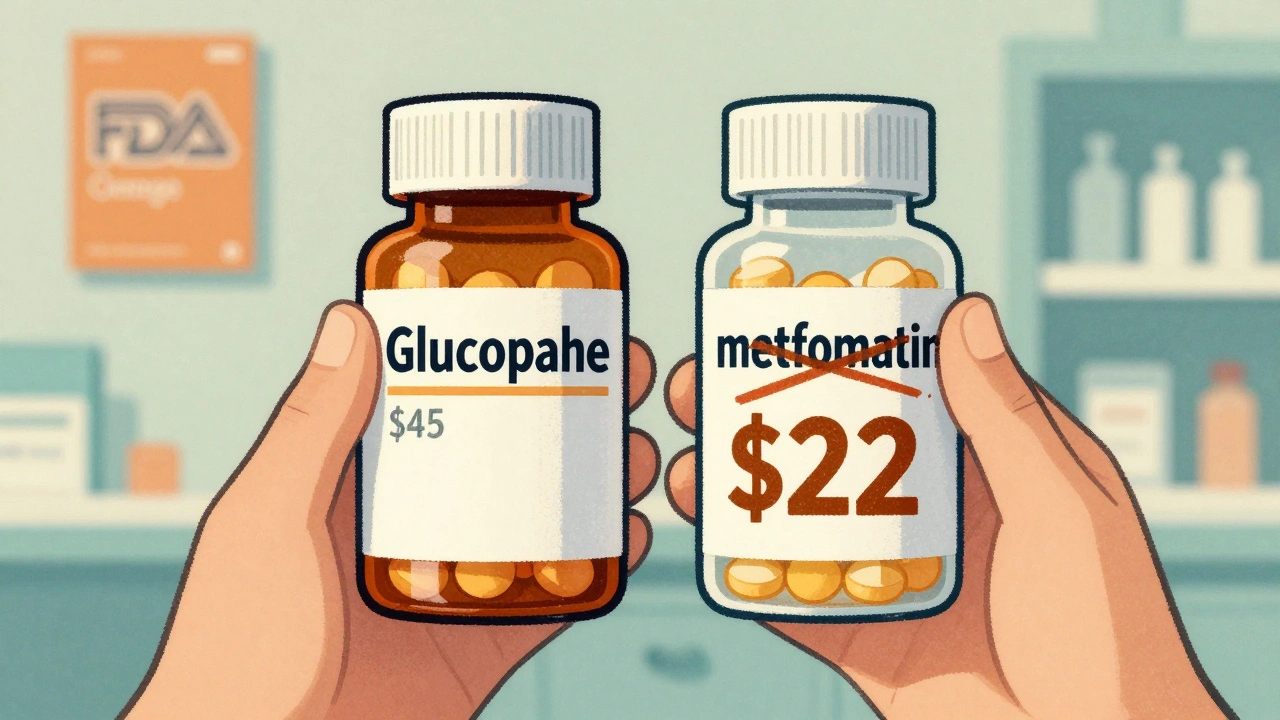
When your doctor prescribes a brand-name drug, you might expect to pay a lot. But what if you could get the exact same medicine - same active ingredients, same factory, same results - for half the price? That’s what an authorized generic offers. It’s not a copy. It’s not a look-alike. It’s the real thing, just without the brand name on the bottle.
What Exactly Is an Authorized Generic?
An authorized generic is the same drug your doctor prescribed, made by the same company that makes the brand-name version. It’s not a generic that went through a separate approval process. It’s the exact same pills, capsules, or liquids, just packaged differently and sold under a different label. The FDA requires these to be identical in every way: active ingredient, dosage, strength, shape, color, and even the inactive ingredients like fillers and dyes. You won’t find the brand name on the bottle. Instead, you’ll see the generic name - like “metformin” instead of “Glucophage.” But if you check the FDA’s Orange Book, you’ll see that the manufacturer listed is the same one that makes the brand-name version. That’s the key difference between an authorized generic and a traditional generic. Traditional generics are made by other companies and must prove they work the same. Authorized generics don’t need to prove anything - because they’re the same product.Why Do Authorized Generics Exist?
They came about because of a 1984 law called the Hatch-Waxman Act. It was meant to speed up generic drug approvals and lower prices. But brand-name companies found a loophole: they could launch their own generic version right when the patent expired. This lets them stay in the market while undercutting their own brand price. The result? Prices drop faster. The Federal Trade Commission found that when an authorized generic enters the market, retail prices fall by 4% to 8%, and wholesale prices drop by 7% to 14%. In some cases, patients save $15 to $30 per prescription. That’s not a small amount, especially if you’re on a long-term medication. And here’s the catch: brand companies launch authorized generics in about 42% of cases within six months of a generic competitor entering the market. That’s not random. It’s a strategy. But for you, the patient, it’s a win - you get lower prices without losing quality.How to Know If You’re Getting an Authorized Generic
Not every generic is an authorized generic. Many look similar, but only one kind is the real thing. Here’s how to tell:- Check the manufacturer name on the bottle. If it matches the brand-name maker, it’s likely an authorized generic.
- Look up the drug in the FDA’s Orange Book. Search for your brand name. If there’s a listing with the same manufacturer under “Authorized Generic,” you’ve found it.
- Ask your pharmacist. They can check the FDA’s quarterly authorized generic list, which is updated and publicly available.
Will Your Insurance Cover It?
Most insurance plans, including Medicare Part D, automatically switch you to the lowest-cost option - and that’s often the authorized generic. In fact, 80% to 90% of prescriptions for drugs with authorized generics are filled with them because of formulary rules. But here’s what you need to do: check your plan’s formulary. If your brand-name drug is still listed as preferred, you might be paying more than you need to. Call your insurer or log into your member portal. Look for the generic version of your drug. If you see “authorized generic” listed as a preferred option, you’re likely eligible for the lower price. Some specialty medications require prior authorization. If your doctor prescribes the brand and your plan denies it, ask them to switch you to the authorized generic. Most of the time, they’ll approve it right away - because it’s the same drug.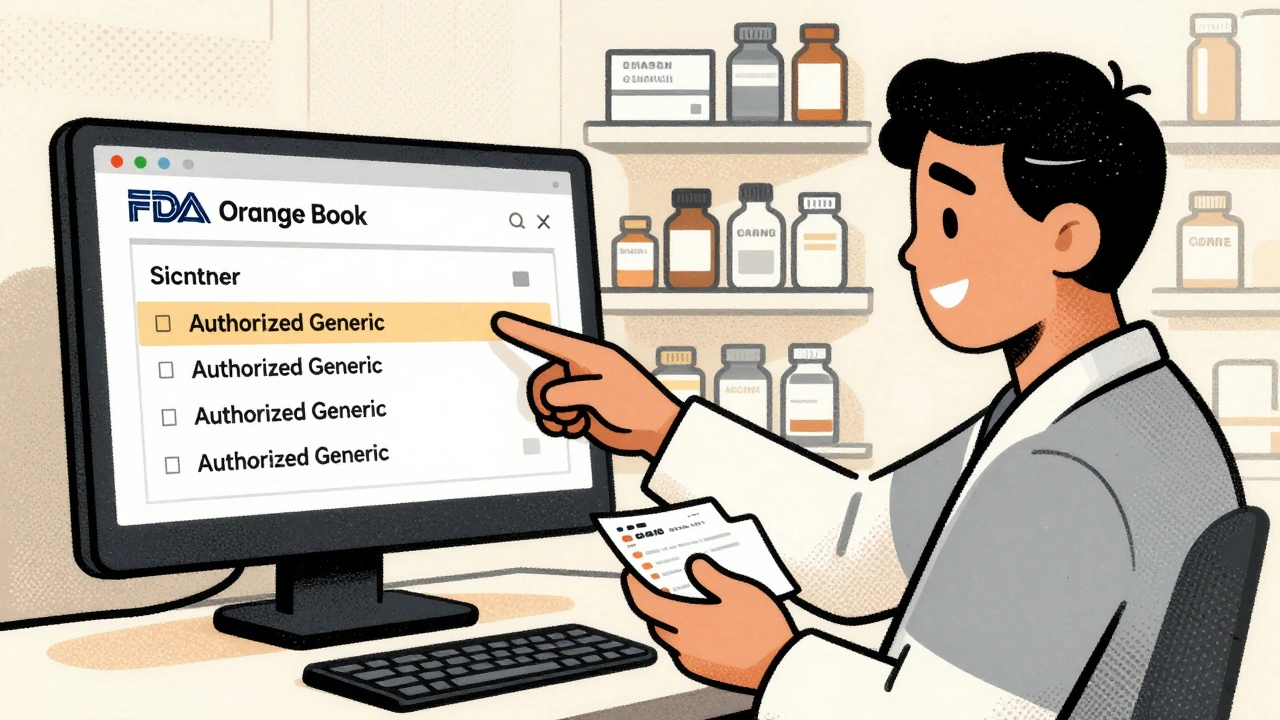
What If the Pill Looks Different?
This is the most common concern. You’ve been taking a blue oval pill for years. Now you get a white round one. You panic. Is it the same? Is it weaker? Is it fake? It’s the same. Authorized generics often look different because the brand company doesn’t need to keep the same shape or color. The FDA doesn’t require matching appearance. So even though the medicine inside is identical, the pill might be a different color, size, or shape. Pharmacists report that 65% of patient questions about generics are about appearance. The fix? Ask your pharmacist to explain the difference. They can show you the manufacturer name on the bottle and confirm it’s the same company that made your brand. That usually eases the worry. If you’re really uneasy, ask for the brand name again. But know this: studies show no difference in how well patients stick to their medication after switching to an authorized generic. Adherence rates stay around 85%, the same as with the brand.When Should You Switch?
You don’t need to wait for your next refill. As soon as your pharmacy starts carrying the authorized generic, you can ask for it. Many pharmacies will automatically substitute it - especially if your insurance requires it. But here’s a tip: don’t wait until your prescription runs out. Talk to your pharmacist before your next refill. Ask: “Is there an authorized generic for this drug?” If yes, they can switch it immediately. If you’re on a long-term medication like blood pressure, cholesterol, or diabetes drugs, switching early means you start saving right away. Some patients worry about switching mid-treatment. But since the drug is identical, there’s no risk of side effects or reduced effectiveness. The FDA doesn’t require any special monitoring when switching from brand to authorized generic.What If Your Doctor Doesn’t Know About It?
Doctors aren’t always up to speed on authorized generics. They know the brand. They know generics. But the distinction between a traditional generic and an authorized one? That’s less common knowledge. If you want to switch, bring the info to them. Say: “I found out there’s an authorized generic for my drug - made by the same company. Can we switch?” Most will say yes. If they hesitate, ask if they’ve checked the FDA’s Orange Book. That’s the official source. If they’re unsure, suggest they look it up. It takes two minutes. You’re not asking for a change in treatment. You’re asking for a better price on the same treatment. That’s a smart, informed decision.
Long-Term Impact: Is This Really Better?
Some critics say authorized generics discourage competition. Why? Because if the brand company launches its own generic, other companies might not bother filing to make one. That could mean fewer generic options later. But here’s what the data shows: even with authorized generics, prices still drop. The FTC found that markets with authorized generics had lower prices than those without. And for patients, that’s what matters. You’re getting the same medicine, at a lower cost, with no risk. A 2018 study in Health Affairs found no major difference in hospitalizations or medication discontinuation rates between patients on authorized generics and those on traditional generics. In other words: you’re not trading safety for savings. The real win? Transparency. The FDA now integrates its authorized generic list into pharmacy systems. When your pharmacist fills your prescription, they might get an alert: “Authorized generic available - save $22.” That’s new. That’s helpful. And it’s getting better.Next Steps: How to Make the Switch Today
Here’s your simple action plan:- Find out what drug you’re taking - brand name and generic name.
- Go to the FDA’s Orange Book website and search for your brand name.
- Look under “Authorized Generic” for the manufacturer name. If it matches your brand’s maker, you’ve found it.
- Call your pharmacy and ask: “Do you carry the authorized generic for [drug name]?”
- If yes, ask them to switch your next refill.
- If no, ask them to order it - most pharmacies can get it within 24 hours.
- Check your next insurance statement. You should see a lower copay.
Frequently Asked Questions
Are authorized generics safe?
Yes. Authorized generics are made in the same facility, with the same ingredients, and under the same quality controls as the brand-name drug. The FDA requires them to be identical. There is no increased risk of side effects or reduced effectiveness.
Can I switch back to the brand if I don’t like the authorized generic?
Yes. If you feel uncomfortable or notice any unusual reaction (which is rare), you can ask your pharmacist or doctor to switch you back. But remember - the medicine inside is the same. Any difference you feel is likely psychological, not chemical.
Why do authorized generics cost less if they’re the same drug?
Because they don’t carry the marketing, advertising, and brand-building costs of the original drug. The company saves money on packaging, promotions, and sales teams - and passes those savings to you. It’s not a discount on quality - it’s a discount on branding.
Do authorized generics work the same for all conditions?
Yes. Whether you’re taking it for high blood pressure, depression, diabetes, or cholesterol, the active ingredient is unchanged. Studies show identical outcomes across all conditions. The only difference is the price.
Is there a list of all authorized generics?
Yes. The FDA updates a public list quarterly. You can find it on their website under “Approved Drug Products with Therapeutic Equivalence Evaluations.” Search for your brand name, and if an authorized generic exists, it will be listed with the manufacturer’s name.
pallavi khushwani
December 5, 2025 AT 14:10Wow, I never realized authorized generics were the exact same pills just repackaged. My grandma’s blood pressure med switched last month and she was freaking out because the pill looked different - now I’ll show her this. Such a simple win for patients.
Billy Schimmel
December 6, 2025 AT 18:08So you’re telling me I’ve been overpaying for a sticker this whole time?
Kay Jolie
December 7, 2025 AT 09:56As a pharmacoeconomist with dual degrees in bioethics and regulatory policy, I must emphasize the profound epistemological implications of authorized generics within the neoliberal pharmaceutical ecosystem. The FDA’s Orange Book, while ostensibly transparent, remains a hegemonic artifact of capitalist commodification - yet paradoxically, it’s the only tool that empowers the lay patient to subvert brand monopolies. The fact that 80–90% of prescriptions are now filled with authorized generics represents not merely cost-saving, but a quiet revolution in therapeutic autonomy. The pharmaceutical-industrial complex, having internalized Hatch-Waxman’s loopholes, now weaponizes its own IP to maintain market dominance - yet the patient, armed with this knowledge, becomes the ultimate disruptor. This isn’t just about savings; it’s about ontological sovereignty over one’s own physiology.
Dan Cole
December 8, 2025 AT 13:20Of course it’s the same drug - the FDA requires bioequivalence for generics, but authorized generics are literally the same batch. You don’t need a PhD to understand that if the manufacturer is identical and the NDC code matches, you’re not getting a ‘generic,’ you’re getting the original product with a cheaper label. Stop calling it a ‘generic’ - it’s not. It’s the real thing. And if your doctor doesn’t know this, they’re not keeping up with FDA guidance from 2018. Go to the Orange Book yourself. It’s not hard. Stop outsourcing your health literacy to people who think ‘pharmacy’ is a place where you get free samples.
Shayne Smith
December 8, 2025 AT 20:32I switched my cholesterol med last year and saved $40/month. My pharmacist just handed me a new bottle and said, ‘Your insurance made the switch.’ I didn’t even notice until I saw the pill was white instead of blue. Now I ask every time. Best money-saving habit I’ve ever picked up.
Katie O'Connell
December 10, 2025 AT 14:53It is, of course, a matter of considerable academic and regulatory interest that the FDA permits the marketing of therapeutically equivalent pharmaceutical products under non-branded nomenclature - particularly when such products are manufactured under identical Good Manufacturing Practices and within the same physical facility. The absence of proprietary branding, however, constitutes a significant epistemological dislocation for the patient-consumer, who has been conditioned to associate pharmaceutical efficacy with visual and linguistic cues of prestige. One must question whether the psychological impact of packaging dissimilarity constitutes a clinically relevant variable - or merely a manifestation of placebo-driven cognitive dissonance.
Clare Fox
December 11, 2025 AT 20:48my dr never even mentioned this. i just thought my pills changed because they were cheap. i thought the company was cutting corners. turns out they were just saving me money. who knew? anyway, i’ve been on this med for 5 years and nothin changed. except my wallet. lol
Akash Takyar
December 12, 2025 AT 23:53Dear fellow citizens, I am delighted to see this insightful and meticulously researched article. It is imperative that we, as conscientious users of the healthcare system, embrace informed decision-making. Authorized generics represent not merely a cost-saving measure, but a moral imperative in the pursuit of equitable access to essential medicines. I encourage each of you to approach your pharmacist with humility and curiosity - for knowledge is the most potent medicine of all. Let us not be passive recipients, but active participants in our own well-being.
Arjun Deva
December 14, 2025 AT 20:00They’re lying. This is all a scam. The FDA is owned by Big Pharma. The ‘same factory’? They just rotate batches between plants and label them differently. You think they’d let you save money? No. They want you hooked on the brand. This is how they control you. Look at the tiny print on the bottle - it says ‘Manufactured for [Brand Name]’ - that’s code. They’re still charging you the same, just hiding it. Don’t trust this. I’ve seen it happen. My cousin’s blood pressure spiked after switching. They covered it up.
Inna Borovik
December 15, 2025 AT 05:58Let’s be real - authorized generics are a corporate trick. The brand company doesn’t launch them to help you. They do it to crush independent generic manufacturers before they even get started. They flood the market with their own ‘cheap’ version, and then the real generics never come. You think you’re saving? You’re just being manipulated into accepting a monopoly disguised as competition. This isn’t patient empowerment - it’s market consolidation with a smiley face.
Jackie Petersen
December 15, 2025 AT 11:39Why are we letting foreign countries make our medicine? I don’t care if it’s the same pill - if it’s made in India or China, it’s not American. This is why our healthcare is broken. We need to bring production back home. Stop buying these ‘authorized generics’ - they’re probably full of contaminants. My uncle got sick from a ‘generic’ from Bangladesh. Don’t be stupid.
Annie Gardiner
December 16, 2025 AT 03:57Wait - so you’re saying the brand-name drug isn’t better? That’s just… sad. I like knowing I’m taking the ‘real’ thing. It makes me feel like I’m worth more than some cheap version. I don’t care if it costs $100 more - I’m not sacrificing my dignity for a $20 copay. This isn’t about money. It’s about identity.
Rashmi Gupta
December 16, 2025 AT 07:44Interesting. But if the authorized generic is the same, why does the brand still exist? Why not just sell it as a generic from the start? Something’s off. This feels like a loophole they want you to think is a gift. It’s not. It’s a trap.
Andrew Frazier
December 17, 2025 AT 15:03you guys are so dumb. the real issue is that the fda lets companies make drugs in the same factory but label them differently. that’s not transparency - that’s corporate trickery. and why are you all so happy about this? you’re being played. the drug’s the same, sure - but the company still owns the patent, the factory, the supply chain. you think you’re saving? you’re just letting them keep all the profit while pretending to be nice. america is a joke.
brenda olvera
December 19, 2025 AT 00:50Just switched my diabetes med last week - saved me $35. My abuela was scared but I showed her the bottle and said ‘mismo medicamento, menos dinero.’ She cried. Then she hugged me. This isn’t just about money - it’s about dignity. We deserve to know what we’re taking. Thank you for writing this.