
Why Your Body Feels Out of Sync
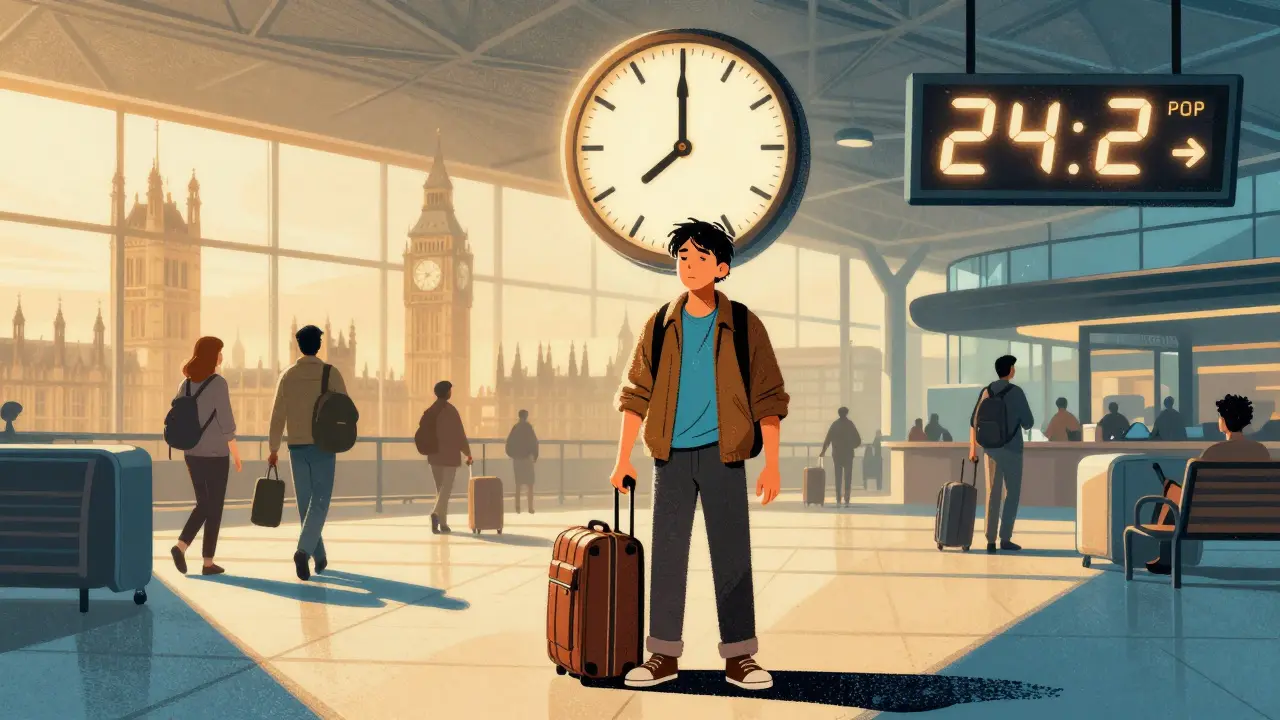
You just landed in Sydney after a 14-hour flight from London. It’s 8 a.m. local time. You’re wide awake. But your body screams for sleep. You drag yourself through the day, sluggish and foggy. That’s not exhaustion from the flight. That’s jet lag-your internal clock stuck in London time while the world around you has moved forward 10 hours.
Or maybe you’re the opposite. You’re not traveling. You’re just stuck. Every night, you don’t feel tired until 3 a.m. You fall asleep easily then, but waking up for work at 8 a.m. feels impossible. You’re tired all day. You skip breakfast. You nap at your desk. You’re not lazy. You have delayed sleep-wake phase disorder-your body’s clock is naturally set hours behind society’s schedule.
These aren’t just "bad sleep habits." They’re biological mismatches. Your brain has a master clock, tucked deep in the hypothalamus, that runs on a 24.2-hour cycle. It’s not broken. It’s just out of sync with the world. And you’re not alone. About 1 in 4 adults show signs of circadian rhythm disruption, yet fewer than 1 in 25 get diagnosed.
Jet Lag: When Time Zones Fight Your Clock
Jet lag hits hardest when you fly east. Why? Because your body finds it harder to go to sleep earlier than it’s used to. Going west? Staying up later is natural. Your internal clock already runs a bit slow-about 20 minutes longer than 24 hours. So when you fly from Perth to New York (15-hour time difference), eastbound, you’re asking your body to compress its cycle. That’s like trying to rewind a tape that’s designed to play forward.
Research shows you lose about 1.5 hours of circadian alignment for every time zone crossed eastward. That means crossing five time zones? You’ll likely feel off for 7 to 8 days. Symptoms? Not just tiredness. Your digestion slows. Your focus drops by 20-30%. You might feel dizzy, nauseous, or emotionally flat. A 2022 survey of 1,200 business travelers found 68% reported worse work performance for three or more days after long-haul flights.
Here’s what actually helps:
- For eastbound travel: Get bright light in the morning at your destination. Avoid bright light in the evening. This tells your brain it’s time to shift earlier.
- For westbound travel: Seek light in the late afternoon and evening. Avoid morning light. This pushes your clock later.
- Start adjusting your sleep schedule 3-5 days before departure. Shift bedtime 1 hour earlier (east) or later (west) each day.
- Use the "rule of 15": 15 minutes of bright light exposure per day helps reset your clock. Natural sunlight works best.
Don’t rely on sleeping pills. They may help you fall asleep, but they don’t fix your clock. They just mask the problem. And if you use them too often, you risk dependency-and worse sleep long-term.
Delayed Sleep Phase: The Night Owl Who Can’t Wake Up
Imagine waking up naturally at 11 a.m. and feeling great. Now imagine being forced to wake at 6 a.m. for work. That’s the daily reality for someone with delayed sleep-wake phase disorder (DSWPD). It’s not laziness. It’s biology.
People with DSWPD have a sleep onset that’s consistently 2-6 hours later than what’s socially expected. Their melatonin-the sleep hormone-doesn’t rise until 2 a.m. or later. Their body temperature peaks hours after most people’s. They sleep just fine if left to their own schedule. But when forced to wake early, they get less than 5 hours of rest. Chronic sleep debt piles up. Mood tanks. Concentration fades. School and work suffer.
It’s common in teens and young adults. Studies show 7-16% of adolescents have it. And it’s not just "staying up late on TikTok." Genetics play a big role. Variants in the PER3 and CRY1 genes make some people naturally wired to be night owls. One 2020 study found that melatonin onset in DSWPD patients was delayed by nearly two full hours compared to people without the disorder.
Here’s how to fix it-without pills:
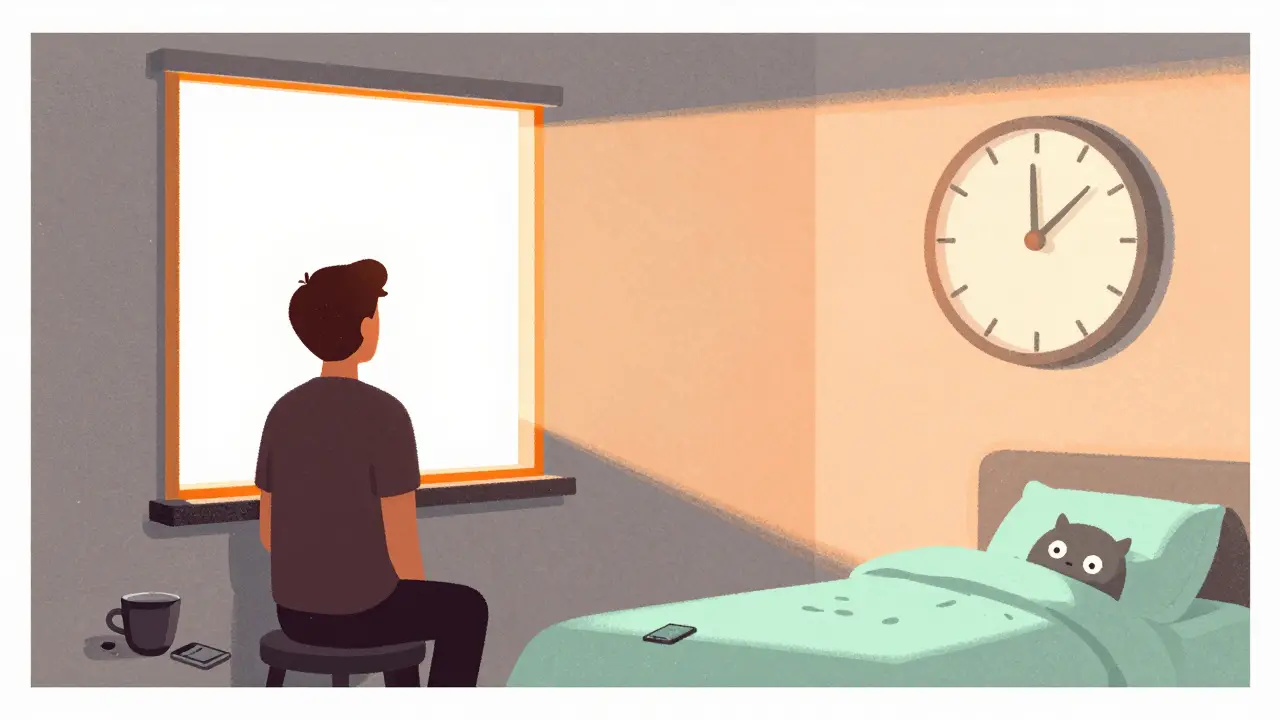
- Morning light therapy: Sit in bright light (10,000 lux) for 30-60 minutes within an hour of waking. Even on cloudy days, sitting near a window helps. A lightbox works too.
- Evening melatonin: Take 0.5 mg, 5-7 hours before your target bedtime. Not 3 mg. Not 5 mg. Half a milligram. Higher doses don’t help-they just make you groggy.
- Consistency: Sleep and wake at the same time every day, even on weekends. Yes, even Saturday. Your clock needs routine more than you think.
- Darkness after sunset: Avoid screens after 9 p.m. Blue light blocks melatonin. Use night mode, but better yet-put your phone in another room.
It takes 4-6 weeks to see real change. Most people give up by week 2. But those who stick with it? 73% report major improvement, according to the Sleep Foundation.
Why Melatonin Isn’t a Magic Pill
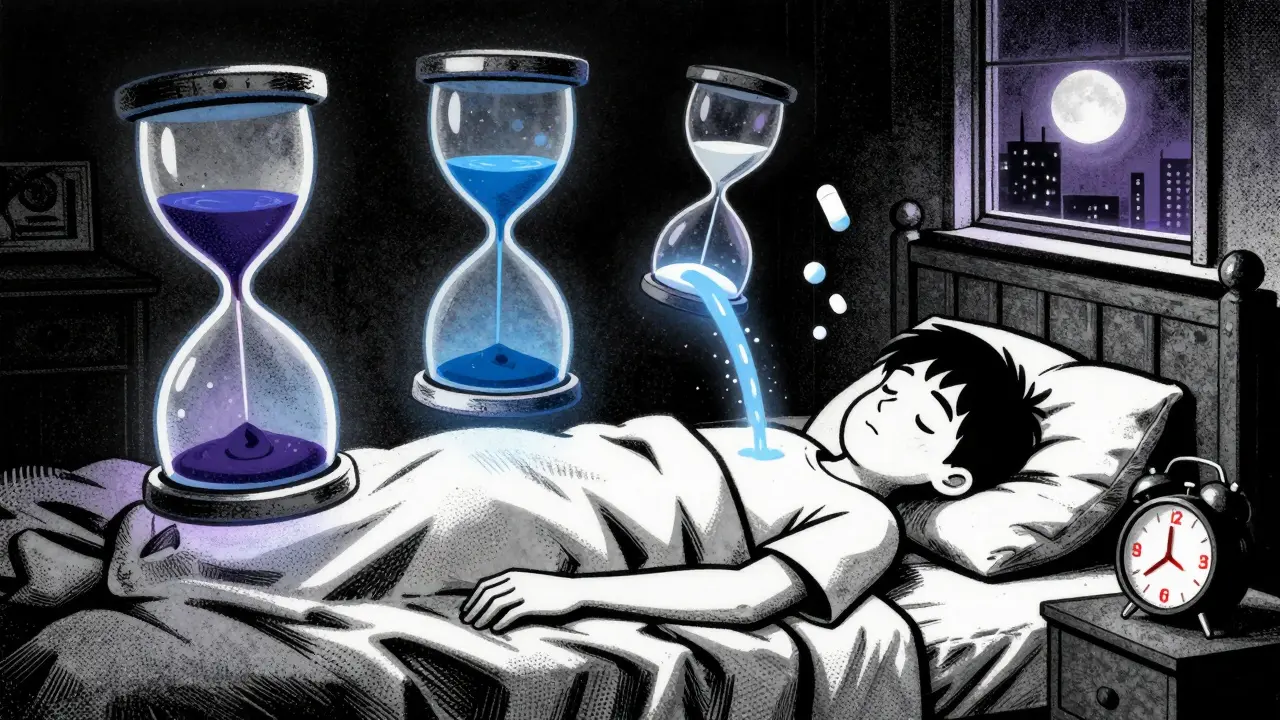
Most people think melatonin is a sleeping pill. It’s not. It’s a timing signal. Think of it like a clock hand you gently nudge forward. Taking 3 mg at midnight won’t make you sleepy faster. It might even throw your clock off more.
Studies show the optimal dose for circadian adjustment is 0.3-0.5 mg. That’s less than what’s in most store-bought supplements. In fact, a 2021 survey found that 82% of people with DSWPD were taking 3-5 mg-far above the effective range. That’s like trying to fix a watch with a sledgehammer.
Take melatonin too early? You’ll feel sleepy too soon. Too late? You’ll delay your clock even more. The sweet spot is 5-7 hours before your desired bedtime. For someone who wants to sleep at 11 p.m., take it at 4-6 p.m.
And don’t expect it to work alone. Melatonin + morning light + strict schedule = the gold standard. One 2022 review found this combo produced a 2.1-hour phase advance. Melatonin alone? Just 1.3 hours.
What Doesn’t Work (And Why)
People try everything to fix this. Some take modafinil to stay awake during the day. Others drink caffeine until 7 p.m. Some force themselves to bed at 10 p.m. and lie awake for hours.
Here’s what backfires:
- Caffeine late in the day: Even if you think you can fall asleep, your sleep quality drops. Deep sleep shrinks. You wake up tired.
- Forcing yourself to bed early: If you’re not sleepy, lying in bed awake trains your brain to associate bed with frustration-not sleep.
- Weekend "catch-up" sleep: Sleeping until noon on Saturday resets your clock back to square one. Your Monday morning becomes even harder.
- Screen time before bed: Your phone’s blue light delays melatonin by up to 90 minutes. That’s like pushing your clock back an hour every night.
One Reddit user, a 22-year-old student, wrote: "I took modafinil for six months to stay awake for 8 a.m. classes. I ended up with insomnia so bad I couldn’t sleep at all-even when I was exhausted. My DSWPD got worse." That’s not rare. A 2021 study found 22% of people with circadian disorders misuse stimulants or sedatives, making their condition worse.
The Bigger Picture: Why This Matters
Ignoring circadian rhythm disorders isn’t just about feeling tired. It’s about long-term health.
Research from the UK Biobank shows people with untreated circadian misalignment have a 29% higher risk of type 2 diabetes and a 23% higher risk of heart disease. Why? Your liver, pancreas, and immune system run on circadian rhythms too. When your sleep-wake cycle is off, so are your hormones, metabolism, and inflammation levels.
Shift workers know this. They average 4 hours less sleep per week than day workers. Their diabetes risk is 40% higher. But they’re not the only ones. Students with DSWPD miss more classes. Employees with jet lag make more mistakes. Parents with disrupted sleep struggle with mood and patience.
And here’s the quiet crisis: 28% of adults show symptoms of circadian rhythm disorders. Only 4% have been diagnosed. Most think they’re just "night owls" or "bad sleepers." They’re not. Their biology is telling them something.
What’s New in 2026
Things are changing. The latest version of the International Classification of Sleep Disorders (ICSD-4), released in 2023, now requires objective proof-like dim light melatonin onset (DLMO) testing-to diagnose DSWPD. No more guesswork.
Apps like Timeshifter use algorithms to build custom jet lag plans based on your flight path, sleep history, and light exposure. A 2023 trial showed users recovered 63% faster than those following generic advice.
More employers are waking up too. Sixty-seven percent of Fortune 500 companies now offer flexible hours or circadian-friendly shift designs. Some even provide light therapy boxes in the office.
And in 2024, the European Biological Rhythms Society predicted that by 2027, nearly half of family doctors will screen patients for circadian issues. This isn’t fringe science anymore. It’s becoming part of mainstream medicine.
Where to Start Today
If you think you have jet lag or DSWPD, don’t wait for it to "get better." Here’s your 7-day starter plan:
- Track your sleep for 3 days. Note when you feel sleepy and when you actually fall asleep.
- Get 15-30 minutes of natural sunlight within 30 minutes of waking. Even if it’s cloudy.
- Stop using screens 90 minutes before your natural bedtime.
- If you want to shift earlier, try 0.5 mg melatonin 5-7 hours before your target bedtime.
- Set a consistent wake-up time-even on weekends.
- Don’t nap after 3 p.m.
- Write down how you feel each day. Energy. Mood. Focus.
It’s not about perfection. It’s about consistency. Your body doesn’t care if you’re "trying hard." It cares if you show up at the same time, every day, with light and darkness in the right places.
Change won’t happen overnight. But in 30 days? You might finally wake up feeling like you’re in sync-with your body, your day, and your life.
Is jet lag worse when flying east or west?
Jet lag is worse when flying east because your body has to advance its internal clock-going to sleep earlier than it’s used to. The human circadian rhythm naturally runs slightly longer than 24 hours, so delaying sleep (flying west) is easier than advancing it. Studies show eastward travelers experience up to 37% more sleep disruption than westward travelers.
Can you outgrow delayed sleep phase disorder?
Many adolescents with delayed sleep-wake phase disorder see improvement by their late 20s, but not everyone. Genetics play a strong role, and for some, the delay persists into adulthood. The key isn’t waiting to outgrow it-it’s managing it with light, melatonin, and schedule consistency. Left untreated, it can lead to chronic sleep debt and long-term health risks.
Is melatonin safe for long-term use?
At the right dose (0.3-0.5 mg), melatonin is considered safe for long-term use in circadian rhythm disorders. It’s not a sedative-it’s a timing signal. High doses (3 mg or more) can cause grogginess, headaches, or even disrupt your natural rhythm. Always use the lowest effective dose and pair it with morning light and consistent sleep times.
Why do I feel fine when I sleep late but exhausted when I wake early?
If you have delayed sleep-wake phase disorder, your body’s natural rhythm is shifted. When you sleep on your own schedule-say, 3 a.m. to 11 a.m.-you get full, restorative sleep. But when you force yourself to wake at 6 a.m., you’re cutting off the last few hours of deep sleep your body needs. That’s why you feel exhausted, not because you’re lazy, but because your biology is being ignored.
Can light therapy help with jet lag?
Yes, light therapy is one of the most effective tools for jet lag. For eastward travel, expose yourself to bright light in the morning at your destination to advance your clock. For westward travel, get light in the late afternoon and evening to delay your clock. Avoid bright light at the wrong times-this can make jet lag worse. Natural sunlight works best, but lightboxes (10,000 lux) are a good alternative.
Do I need a sleep study to diagnose delayed sleep phase?
Not always, but objective testing improves accuracy. The latest guidelines (ICSD-4) recommend measuring dim light melatonin onset (DLMO) to confirm a delay of at least 2 hours. However, many doctors diagnose based on sleep logs and symptom history. If your sleep pattern is consistently delayed for 3+ months and you’re struggling to adjust, you likely have it. A sleep specialist can confirm with a simple blood or saliva test for melatonin timing.



Lisa Cozad
January 10, 2026 AT 18:02I used to think I was just lazy until I learned about DSWPD. Now I use a 10,000 lux lightbox every morning and it’s changed everything. No more 3 p.m. crashes. I still sleep at 2 a.m., but now I wake up at 10 a.m. feeling human. Consistency is everything.
Saumya Roy Chaudhuri
January 12, 2026 AT 03:04OMG this is SO TRUE. I’m from India and everyone thinks I’m a night owl because I’m ‘on my phone too much’ but nooo-it’s my genes. My melatonin hits at 3 a.m. like clockwork. I took 5 mg of melatonin for months and nearly died of grogginess. Then I dropped to 0.5 mg at 4 p.m. and suddenly my brain works again. Science wins.
Jay Amparo
January 12, 2026 AT 04:24Man, I wish more people understood this. I’m a night shift nurse and I’ve seen coworkers wreck their health trying to force 9-to-5 schedules. One guy started taking modafinil like candy-ended up with panic attacks. Meanwhile, I just use sunlight at dawn and a 0.5 mg melatonin at 5 p.m. and I’m fine. It’s not about willpower. It’s about biology. Stop blaming people for being wired differently.
Also, weekend sleep-ins? Big mistake. Your clock resets like a broken watch. I used to sleep until noon on Sundays. Now I wake at 7 a.m. even if I worked till 7 a.m. Saturday. My body hates me for it… but my liver loves me.
Ian Cheung
January 13, 2026 AT 13:52Jet lag is brutal when you fly east I’ll never forget flying from LA to Tokyo and trying to sleep at 7 p.m. local time while my body was screaming for coffee at 3 a.m. I started using Timeshifter app and it gave me a custom plan-light at 6 a.m. no screens after 8 p.m. and melatonin at 3 p.m. I was functional by day 2 instead of week 2. Why do people still wing it
And melatonin isn’t a sleeping pill it’s a nudge. Like gently turning a steering wheel not slamming the brakes. Dose matters. Timing matters. Everything matters.
anthony martinez
January 14, 2026 AT 05:50Wow. A whole article about why you can’t sleep and not one mention of coffee. Shocking.
Christine Milne
January 14, 2026 AT 17:20While the article presents a compelling narrative, it is critically flawed in its implicit endorsement of biological determinism. The notion that societal schedules are somehow at fault for circadian misalignment ignores the foundational principles of discipline, adaptation, and the moral imperative to conform to the natural order of daylight. In America, we do not adjust our institutions to accommodate individual chronotypes-we adjust the individual to the institution. This is not oppression. This is civilization.
Bradford Beardall
January 15, 2026 AT 23:40As someone who grew up in Nigeria and now lives in Seattle, I’ve lived both sides. In Lagos, people nap in the afternoon and stay up late. Here, everyone’s on 9-to-5. I tried forcing myself to wake at 6 a.m. for years. Then I got a lightbox. Now I wake at 8 a.m. and feel like I’ve been asleep for a week. It’s not about changing who you are. It’s about giving your biology a fighting chance.
McCarthy Halverson
January 16, 2026 AT 15:31Light first thing. No screens after 9. Melatonin 0.5mg at 4pm. Same wake time every day. That’s it. No magic. Just consistency. Do this for 30 days. You’ll thank yourself.
Ashlee Montgomery
January 16, 2026 AT 23:03What’s interesting is how little we talk about the emotional toll. It’s not just fatigue. It’s shame. You feel broken because you can’t wake up like everyone else. But you’re not broken. You’re just out of phase. The real tragedy isn’t the sleep-it’s the silence. Nobody talks about this until they’re drowning in it.