
When you pick up a generic pill at the pharmacy, chances are it got there because of ANDA approval, a streamlined process the U.S. Food and Drug Administration uses to approve generic versions of brand-name drugs without repeating costly clinical trials. Also known as Abbreviated New Drug Application, it’s the backbone of affordable medicine in America. Without it, most generic drugs wouldn’t exist—or would cost as much as the brand name.
ANDA approval doesn’t mean lower quality. The FDA requires generics to have the same active ingredient, strength, dosage form, and route of administration as the original. They must also prove they work the same way in your body—same absorption, same effect. But here’s the catch: they don’t need to retest safety from scratch. That’s because the brand drug already did. The generic maker just has to show their version is bioequivalent. This is where the Hatch-Waxman Act, a 1984 law that created the modern framework for generic drug approval in the U.S. comes in. It balanced patent protection for innovators with a faster path for generics. It gave brand companies a little extra patent time to make up for delays in FDA review, while letting generics enter the market as soon as patents expired or were challenged. That’s why you now have cheap versions of everything from blood pressure pills to antidepressants.
But ANDA approval isn’t just about cost. It’s about access. Millions of people rely on generics because they can’t afford brand drugs. A 2023 study from the FDA found that over 90% of all prescriptions filled in the U.S. are for generics. And that’s thanks to ANDA. Still, not every drug gets a generic. Some are too complex to copy—like biologics—or the patent holder fights hard to delay competition. That’s why you’ll still see some medications with no cheaper alternative. But when a generic does get approved, it usually drops the price by 80% or more. That’s not a rumor. That’s what happens when the system works.
Behind every generic pill is a paper trail of chemistry, testing, and regulatory review—all built on the foundation of ANDA approval. And while you might never see the paperwork, you feel the impact every time you fill a prescription. The posts below dive into real-world examples: how the Hatch-Waxman Act shaped today’s drug market, how generic versions of antibiotics and antivirals compare to brand names, and why some drugs still cost too much even after generics arrive. You’ll also find guides on drug interactions, safety, and alternatives—all tied back to the same system that made those generics possible.
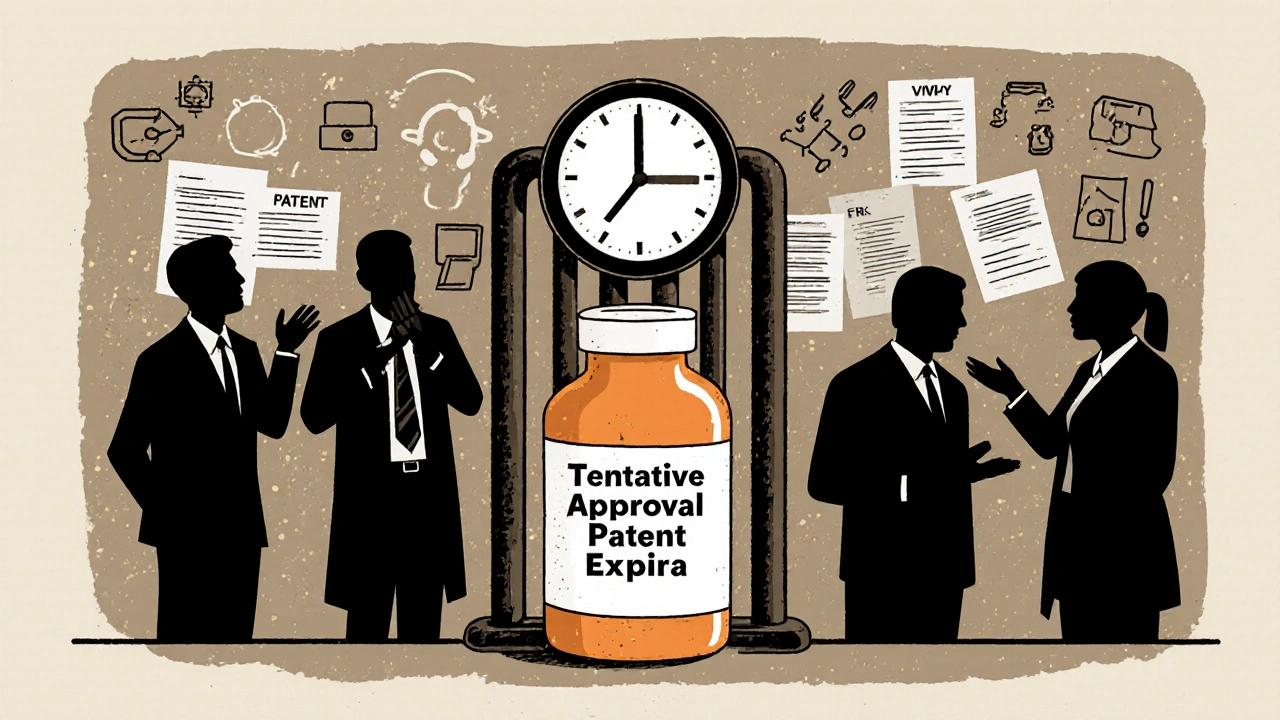
Tentative approval from the FDA means a generic drug is scientifically ready-but not legally allowed to sell. Common delays include patent lawsuits, slow paperwork, manufacturing issues, and profit-driven market decisions. Here’s why these drugs sit on the shelf.
View More