
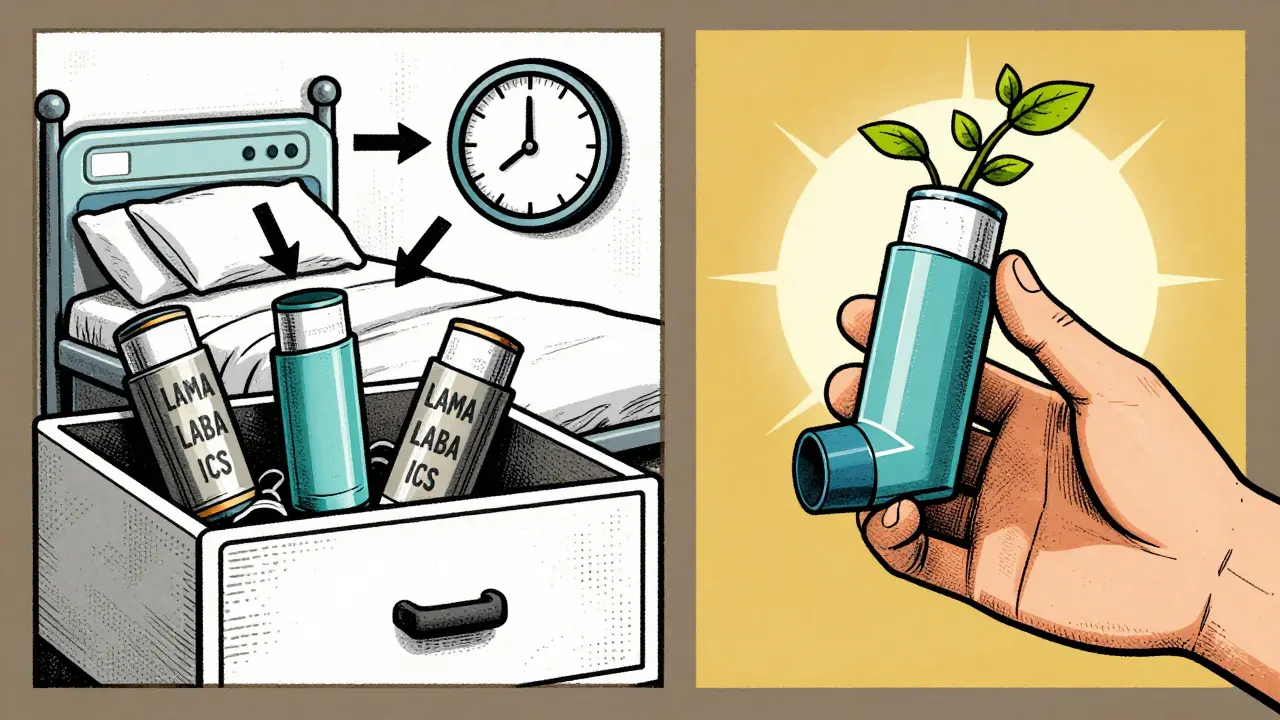
For people living with moderate to severe COPD, frequent flare-ups - or exacerbations - can mean hospital visits, lost days at work, and a steady decline in quality of life. The good news? A specific type of maintenance treatment has been shown to cut these flare-ups significantly, but only for certain patients. Triple inhaler therapy, which combines three medications in one or two devices, is now a key tool in COPD management - but it’s not for everyone. Understanding who it helps, how it works, and what the real risks are can make all the difference.
What Exactly Is Triple Inhaler Therapy?
Triple inhaler therapy means using three types of medications together to control COPD symptoms: a long-acting muscarinic antagonist (LAMA), a long-acting beta-agonist (LABA), and an inhaled corticosteroid (ICS). Each plays a different role:- LAMA opens airways by relaxing the muscles around them.
- LABA also relaxes airway muscles, but works through a different pathway.
- ICS reduces inflammation in the lungs - the root cause of mucus buildup and swelling.
- Single-inhaler triple therapy (SITT): All three drugs in one device. Examples: Trelegy Ellipta (fluticasone furoate/umeclidinium/vilanterol), Trimbow (budesonide/glycopyrronium/formoterol).
- Multiple-inhaler triple therapy (MITT): Two or three separate inhalers. More complicated, less adhered to.
Who Actually Benefits?
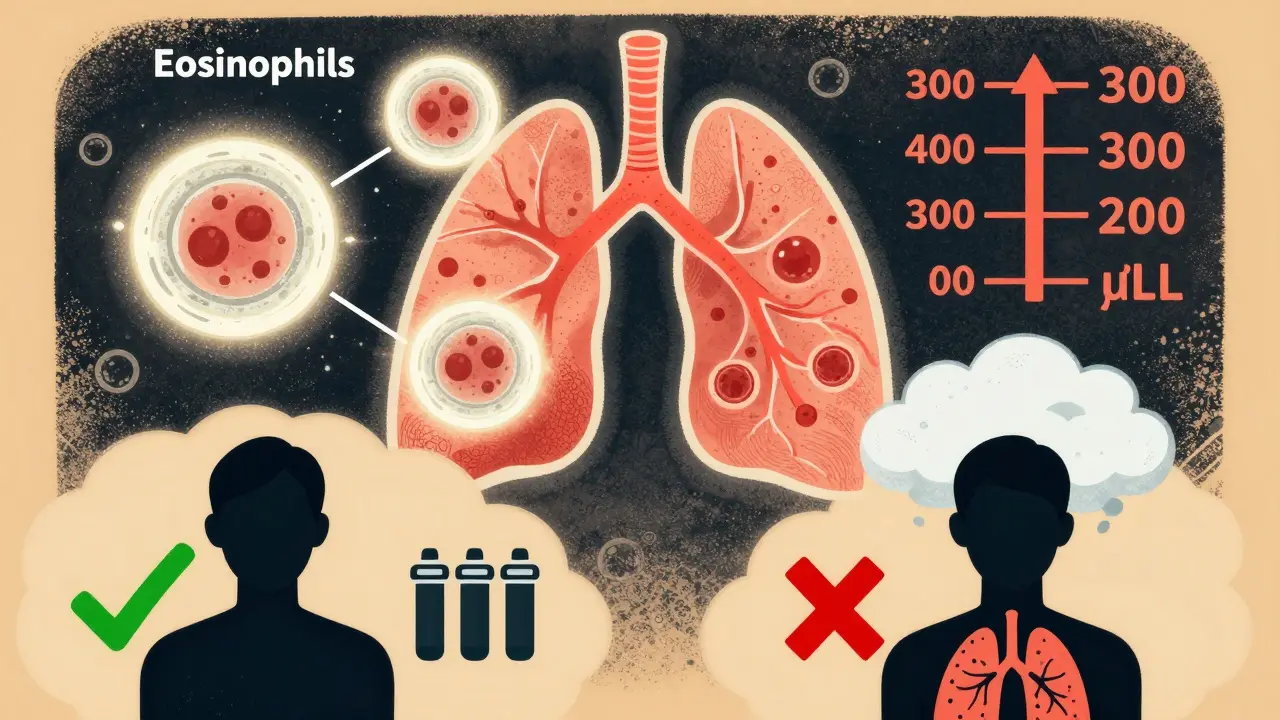
Not every COPD patient needs or should use triple therapy. The 2024 GOLD guidelines made this crystal clear: triple therapy is meant for a specific group - those with:- ≥2 moderate exacerbations in the past year, OR ≥1 severe exacerbation (requiring hospitalization or steroids),
- AND a blood eosinophil count of 300 cells/µL or higher.
Single vs. Multiple Inhalers: Adherence Matters
If you’re prescribed triple therapy, the device you use makes a big difference in whether you stick with it. Real-world data from the TARGET study shows:- 78.4% of patients using single-inhaler therapy (like Trelegy) stayed on it after 12 months.
- Only 62.1% of those using multiple inhalers did.
The Controversy: Is It Really Better Than Dual Therapy?
Not all experts agree. Some argue the benefits seen in clinical trials are inflated. The IMPACT and ETHOS trials compared triple therapy to dual therapy - but many participants were already on triple therapy before the study started. When they were switched to dual therapy for the trial, they were essentially being taken off a steroid. That drop in steroid use may have made the dual therapy group look worse - not because triple therapy was super powerful, but because stopping steroids suddenly made things worse. A 2022 UK study of 31,000 real-world COPD patients found no significant difference in first exacerbation risk between triple therapy and LAMA/LABA alone. The researchers believe this more accurately reflects what happens outside controlled trials. Dr. John Blakey from the University of Western Australia puts it bluntly: “The assumed benefit of triple therapy might just be the harm of abruptly withdrawing steroids.” So what’s the truth? The data says: if you have frequent flare-ups AND high eosinophils, triple therapy works. If you don’t, it doesn’t - and could hurt you.Real Risks: Pneumonia and Cost
The biggest safety concern with triple therapy is pneumonia. Inhaled steroids suppress the immune system in the lungs. This makes infections more likely. Fluticasone (used in Trelegy) carries a higher risk than budesonide (used in Trimbow). That’s why some doctors prefer budesonide-based options - especially in patients with a history of lung infections. Cost is another barrier. In the U.S., brand-name SITT can cost $75-$150 per month out-of-pocket. A 2022 study in the Journal of Managed Care & Specialty Pharmacy found 22.3% of Medicare beneficiaries skipped doses because they couldn’t afford it. That’s not just financial stress - it’s a direct path back to hospitalization. In Australia, PBS subsidies help, but not everyone qualifies. Some patients still pay $30-$50 per script. If cost is a problem, talk to your doctor about generic alternatives or patient assistance programs.
How It’s Done Right
Getting triple therapy right isn’t just about the prescription. It’s about:- Testing eosinophils before starting - not guessing.
- Checking inhaler technique every 3-6 months. Poor technique causes 50-70% of apparent “treatment failure.”
- Monitoring for pneumonia - coughing more, fever, green mucus? Get checked.
- Using spirometry quarterly to measure lung function improvement.
- Reassessing every year - if you haven’t had a flare-up in 12 months, your doctor may consider stepping down to dual therapy.
What’s Next?
The future of COPD treatment is personal. Researchers are testing whether other biomarkers - like fractional exhaled nitric oxide (FeNO) - can better predict who will respond to steroids than eosinophils alone. A study called EXACT (NCT04877882) is underway. Meanwhile, new biologics like dupilumab (used for asthma and eczema) are showing promise in phase 3 trials for high-eosinophil COPD patients. These injectable drugs target inflammation more precisely - and may eventually replace steroids for some. But for now, triple inhaler therapy remains the most effective tool we have to prevent flare-ups in the right patients. It’s not a cure. It’s not for everyone. But for those who qualify - frequent exacerbators with high eosinophils - it can mean fewer hospital visits, more active days, and a better quality of life.Is triple inhaler therapy right for all COPD patients?
No. Triple therapy is only recommended for patients with moderate-to-severe COPD who have had at least two moderate flare-ups or one severe flare-up in the past year, and who have a blood eosinophil count of 300 cells/µL or higher. For patients with low eosinophil counts or infrequent exacerbations, triple therapy offers no benefit and may increase the risk of pneumonia.
What’s the difference between Trelegy and Trimbow?
Trelegy Ellipta contains fluticasone furoate, umeclidinium, and vilanterol. It’s taken once daily at 100/62.5/25 mcg. Trimbow contains budesonide, glycopyrronium, and formoterol, and is taken twice daily at 320/18/9 mcg. Budesonide (in Trimbow) has a lower pneumonia risk than fluticasone (in Trelegy). Trimbow also uses extrafine particles, which may penetrate deeper into the lungs.
Can I stop using my triple inhaler if I feel better?
Don’t stop without talking to your doctor. Even if you feel better, stopping suddenly can lead to rebound inflammation and a flare-up. Your doctor may consider stepping down to dual therapy (LAMA/LABA) if you’ve been flare-up free for a year and your eosinophil count has dropped. This decision should be based on lung function tests and symptom tracking, not how you feel on a given day.
Why is single-inhaler therapy better than multiple inhalers?
Single-inhaler therapy improves adherence. Patients using one device are 15-20% more likely to take their medication consistently than those juggling two or three inhalers. Fewer devices mean less confusion, fewer missed doses, and fewer exacerbations. Studies show switching from multiple to single inhalers reduces flare-ups by up to 37% in six months.
Does triple therapy reduce COPD mortality?
No. Neither the U.S. FDA nor the European Medicines Agency has approved triple therapy for reducing death risk. Clinical trials showed no statistically significant improvement in mortality. The proven benefit is reducing exacerbations - not extending life. This is why experts emphasize using it only for patients who clearly benefit: those with frequent flare-ups and high eosinophils.


Scott Easterling
March 8, 2026 AT 08:12Mantooth Lehto
March 8, 2026 AT 09:18Melba Miller
March 10, 2026 AT 06:19Katy Shamitz
March 11, 2026 AT 11:17Nicholas Gama
March 11, 2026 AT 15:27Mary Beth Brook
March 11, 2026 AT 22:00Neeti Rustagi
March 12, 2026 AT 07:25Dan Mayer
March 12, 2026 AT 07:43Janelle Pearl
March 13, 2026 AT 06:00Ray Foret Jr.
March 14, 2026 AT 21:21Samantha Fierro
March 15, 2026 AT 21:11Robert Bliss
March 17, 2026 AT 20:32Leon Hallal
March 18, 2026 AT 14:33Stephen Rudd
March 19, 2026 AT 20:21Erica Santos
March 20, 2026 AT 21:20