Getting a generic drug to market isn't just about copying a formula; it's a high-stakes regulatory game where a single mistake in a bioequivalence study can cost millions. While brand-name drugs have to prove they work through years of clinical trials, generics take a shortcut. But don't let the word "abbreviated" fool you-the FDA generic drug approval is a rigorous process that demands absolute precision in chemistry and manufacturing. If you can nail the equivalence, you unlock a market where generics make up 90% of all prescriptions filled in the U.S.
Key Takeaways for Developers
- The Core Pathway: Generic drugs use the Abbreviated New Drug Application (ANDA) process.
- The Golden Rule: You must prove the generic is bioequivalent to the Reference Listed Drug (RLD).
- Timeline: Expect a 3-4 year development cycle, with a standard 10-month FDA review for complete applications.
- Cost: Typically ranges from $1 million to $5 million per application, far cheaper than the billions spent on new drugs.
- Key Hurdle: CMC (Chemistry, Manufacturing, and Controls) data is the most frequent cause of filing deficiencies.
The Foundation: What is the ANDA Process?
The entire system is governed by the Hatch-Waxman Act of 1984. This law did something brilliant: it allowed generic companies to skip the expensive animal and human clinical trials that the original brand-name company already performed. Instead of proving the drug works from scratch, you only have to prove your version is the same as the original.
This is managed by the Center for Drug Evaluation and Research (CDER), specifically the Office of Generic Drugs. To get through the door, you need an Abbreviated New Drug Application (ANDA). Think of the ANDA as a massive dossier that tells the FDA, "Here is the original drug, here is my version, and here is the data proving they are identical in performance."
Step 1: Selecting the Reference Listed Drug (RLD)
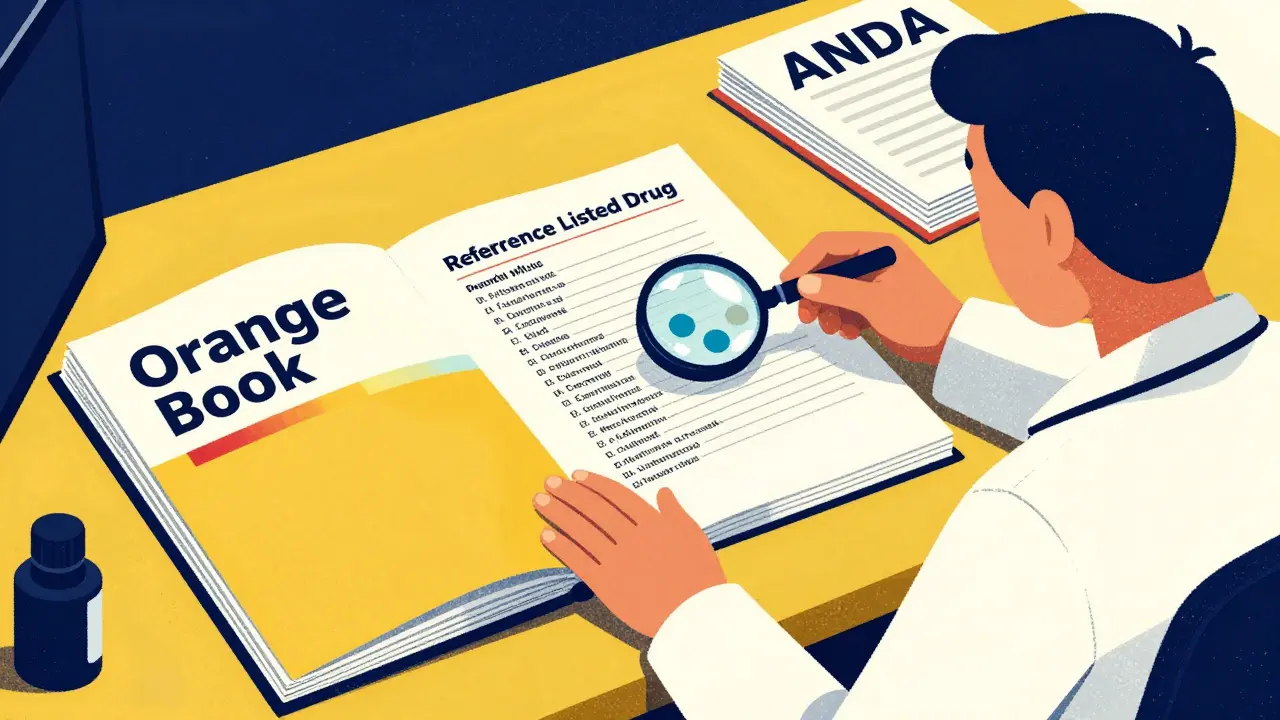
You can't just pick any drug to copy. You need a Reference Listed Drug (RLD), which is the brand-name drug the FDA has already approved. To find the right one, companies use the Orange Book (Approved Drug Products with Therapeutic Equivalence Evaluations). This is the industry's bible; it lists all approved drugs and their patent information.
Before you spend a dime on manufacturing, you have to check the patents. Most brand-name drugs have about 20 years of protection. If you file too early, you might trigger a lawsuit. Some companies use a "Paragraph IV certification," which basically says, "The brand's patent is invalid or we aren't infringing on it." If you're the first to successfully challenge a patent, the FDA rewards you with 180 days of marketing exclusivity-a massive financial win. For example, the first generic version of Humira pulled in over $1.2 billion during its exclusivity window in 2023.
Step 2: Proving Pharmaceutical Equivalence and Bioequivalence
This is where the science happens. The FDA doesn't care if your pill is a different color, but they care deeply about what's inside. You must meet two strict standards:
- Pharmaceutical Equivalence: Your drug must have the same active ingredient, the same strength, the same dosage form (e.g., tablet vs. capsule), and the same route of administration.
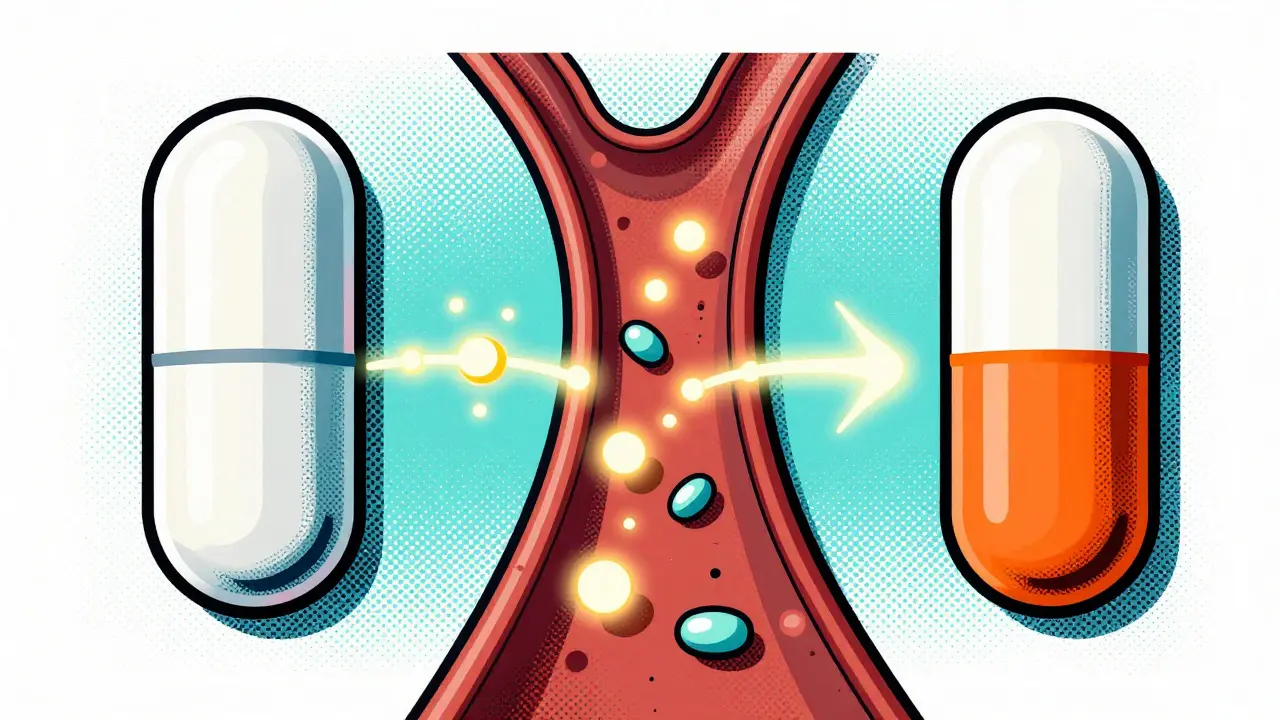
- Bioequivalence: This is the hard part. You have to prove your drug delivers the same amount of active ingredient into the bloodstream at the same rate as the RLD. This is usually done with studies involving 24 to 36 healthy volunteers.
If you're dealing with a "complex generic"-like an inhaler or an ointment-bioequivalence is much harder to prove. About 15% of applications involve these complex products, and they often face more "Complete Response Letters" (CRLs), which are essentially the FDA saying, "Not yet; we need more data." One quality specialist on Reddit noted that a complex nasal spray project suffered three CRLs over 28 months, adding $2.3 million in unexpected testing costs.
Step 3: CMC Development and cGMP Compliance
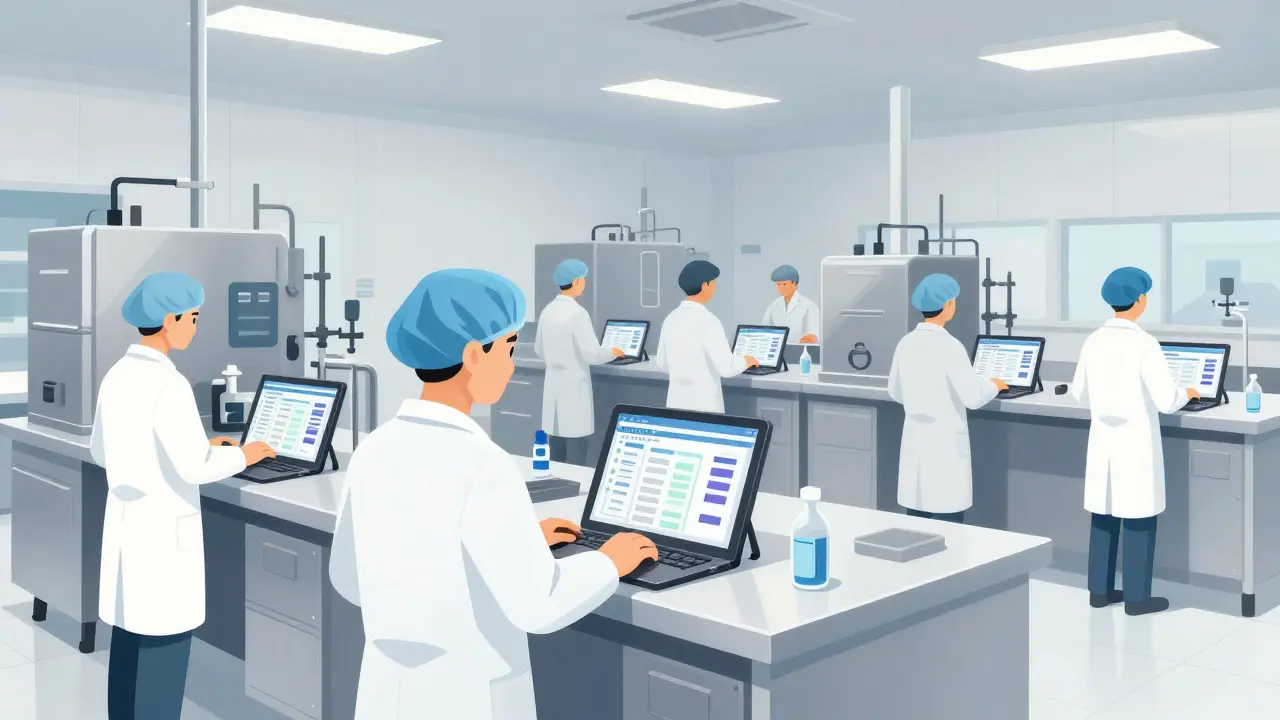
Even if the drug works, the factory must be flawless. Chemistry, Manufacturing, and Controls (CMC) data is the backbone of your application. You must prove that every single batch of the drug is identical. This means following Current Good Manufacturing Practices (cGMP).
The FDA will inspect your manufacturing, packaging, and evaluation sites. If the facility is messy or the record-keeping is poor, the whole application stalls. In fact, 32% of ANDA deficiencies are tied to inadequate CMC sections. You can't just be a good chemist; you have to be a great documentarian.
Step 4: Preparing the eCTD Submission
You don't mail a stack of papers to the FDA. Everything must be submitted in the electronic Common Technical Document (eCTD) format. This is a highly structured digital folder system:
| Module | Focus Area | What's Inside? |
|---|---|---|
| Module 1 | Administrative | Application forms, labels, and regional admin info. |
| Module 2 | Summaries | High-level overviews of the quality and non-clinical data. |
| Module 3 | Quality | Detailed CMC data, stability tests, and manufacturing logs. |
| Module 5 | Labeling | The final patient insert and prescribing information. |
Step 5: The FDA Review Cycle and GDUFA
Once you hit submit, you enter the review phase. This is funded by the Generic Drug User Fee Amendments (GDUFA). Basically, the industry pays a fee, and in exchange, the FDA agrees to strict timelines. Currently, the goal is to review 90% of original ANDAs within 10 months.
The process usually looks like this:
- Filing Review (First 60 Days): The FDA checks if you missed any sections. If you did, they'll send a deficiency letter.
- Technical Review: FDA scientists dive into your bioequivalence and CMC data.
- Information Requests (IRs): The FDA will likely ask questions. A mid-sized manufacturer recently reported an 11.2-month approval process for metformin ER that included two IRs requiring responses in 17 and 28 days.
- Final Decision: You either get an approval letter or a Complete Response Letter (CRL).
About 75% of ANDAs get approved on the first cycle. If you're in the other 25%, you'll need to provide more data or fix manufacturing issues before you can try again.
ANDA vs. NDA: Which Pathway is Which?
It's easy to confuse the ANDA (Generic) with the NDA (Brand-name). The difference is mostly about risk and money. An NDA is for a brand-new molecule; an ANDA is for a known molecule.
| Feature | ANDA (Generic) | NDA (Brand Name) |
|---|---|---|
| Clinical Trials | Not required (uses RLD data) | Full Phase I, II, and III trials |
| Development Time | 3-4 years | 10-15 years |
| Average Cost | $1M - $5M | ~$2.6 Billion |
| Primary Goal | Prove equivalence | Prove safety and efficacy |
Avoiding Common Pitfalls
If you want to avoid a CRL, focus on these areas. Most failures happen because companies rush the bioequivalence protocol or overlook a small detail in the CMC section. Make sure your cross-functional team includes not just scientists, but a dedicated regulatory affairs specialist who knows the current "mood" of the FDA reviewers. Reviewer expectations change, and staying updated on the latest draft guidances is the only way to stay predictable.
Also, remember that biologics (large, complex molecules) don't use the ANDA process. They use the Biosimilars pathway, which is more like a "mini-NDA" because it requires some clinical data. As we move toward 2026, expect more biologics to enter the market, but the small-molecule ANDA process remains the fastest way to scale a pharmaceutical business.
How long does the FDA generic drug approval process actually take?
From the initial design of bioequivalence studies to final approval, it typically takes 3 to 4 years. The actual FDA review of a complete ANDA application usually aims for a 10-month window under GDUFA guidelines, though this can be extended if the FDA issues Information Requests (IRs) or a Complete Response Letter (CRL).
What is a Complete Response Letter (CRL)?
A CRL is a non-approval letter issued by the FDA. It doesn't mean the drug can never be approved, but it means the current application is insufficient. It outlines the specific deficiencies-such as flawed bioequivalence data or manufacturing site issues-that the company must address before the FDA will reconsider the application.
What happens if a generic drug doesn't have the same inactive ingredients as the brand name?
Inactive ingredients (excipients) can differ, but they must be safe and not interfere with the drug's performance. The FDA evaluates these ingredients to ensure they don't affect the bioequivalence or safety of the product. If an inactive ingredient is significantly different or potentially harmful, it could trigger additional safety requests.
How does the 180-day exclusivity work?
The first generic company to successfully file an ANDA that challenges a brand-name drug's patent (via Paragraph IV certification) is granted 180 days of marketing exclusivity. During this time, the FDA will not approve any other generic versions of that drug, allowing the first generic to capture the market and recoup development costs.
Can a generic drug be approved if the manufacturing plant is outside the US?
Yes, but the facility must strictly adhere to cGMP standards. The FDA conducts inspections of foreign manufacturing sites to ensure they meet the same quality and safety requirements as domestic plants. If a site fails inspection, the ANDA will not be approved regardless of how good the drug's chemistry is.