
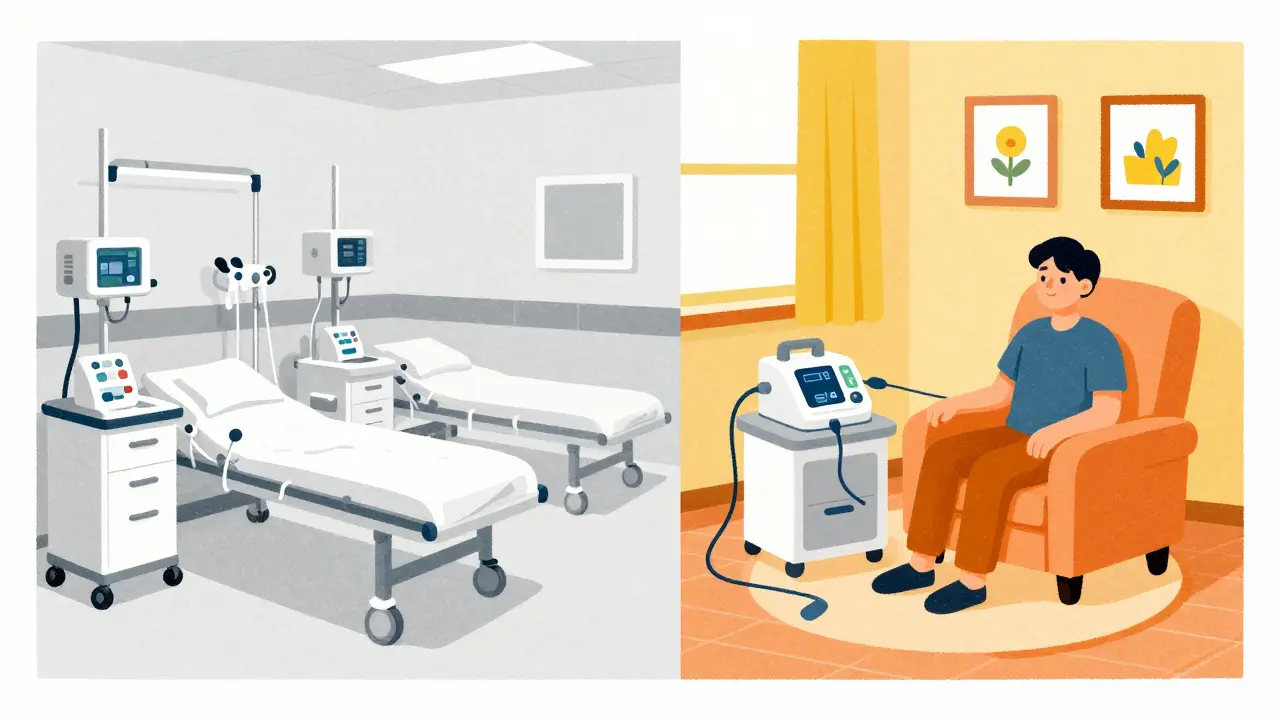
Quick Summary of Home Hemodialysis
- Flexibility: Allows patients to set their own hours and avoid long commutes to clinics.
- Health Gains: More frequent sessions often lead to better blood pressure control and lower phosphorus levels.
- Training: Typically takes 3 to 12 weeks, focusing on machine operation and vascular access.
- Support: Most programs require a trained care partner to be present during all treatments.
- Outcomes: Studies show lower mortality rates and higher quality-of-life scores compared to in-center care.
Choosing Your Treatment Schedule
One of the biggest draws of home care is that you aren't locked into the "three times a week" clinic grind. Depending on your health needs and lifestyle, you can choose from three primary rhythms. Each one impacts your body differently.Conventional home hemodialysis is the most straightforward. You follow a schedule similar to the clinic-three treatments per week, each lasting three to four hours. The main benefit here is the environment; you're in your own home, but the clinical impact is similar to standard care.
For those looking for better physiological results, short daily hemodialysis is a game-changer. This involves treating five to seven days a week for two to three hours per session. Because the blood is cleaned more frequently, it's gentler on the heart. In fact, research shows this approach can reduce left ventricular mass and provide much tighter control over blood pressure.
Then there is nocturnal home hemodialysis. As the name suggests, this happens while you sleep, usually three to seven times a week for six to ten hours. Because the sessions are so long, the machine can remove "middle molecules" and phosphorus much more effectively. Some patients find they can significantly reduce the number of phosphate-binding tablets they have to take daily because the slow, steady cleaning is so efficient.
| Schedule Type | Frequency | Duration | Primary Benefit |
|---|---|---|---|
| Conventional | 3x per week | 3-4 hours | Maximum flexibility and familiarity |
| Short Daily | 5-7x per week | 2-3 hours | Better blood pressure and heart health |
| Nocturnal | 3-7x per week | 6-10 hours | Superior phosphorus and toxin removal |
The Learning Curve: What Training Actually Looks Like
You don't just get a machine and a manual; you go through a rigorous certification process. Training for home dialysis usually lasts between 3 and 12 weeks. The timeframe varies because some people pick up the technical skills faster than others. For example, if you've already learned how to "needle" your access while at a clinic, you might breeze through the process in a few weeks.The training isn't just about pushing buttons. You and your care partner must demonstrate competency in several high-stakes areas:
- Vascular Access: Learning how to safely insert needles into the fistula or graft. This is often the most nerve-wracking part for trainees.
- Fluid Calculations: Determining exactly how much water needs to be removed from your blood to avoid hypotension (low blood pressure).
- Machine Maintenance: Setting up the Reverse Osmosis System and ensuring the water quality meets strict AAMI standards to prevent contamination.
- Emergency Response: Knowing exactly what to do if a line leaks or if you feel faint during a session.
Some modern programs are moving toward "simulator-first" training. Using virtual reality for cannulation practice has been shown to increase competency rates from 78% to 92%, helping patients overcome the initial fear of self-needling before they ever touch a real patient.
The Essential Role of the Care Partner
Here is the reality: in most traditional home hemodialysis setups, you cannot do this alone. Safety regulations often mandate that a trained partner or spouse be present during every single treatment. This isn't just a suggestion; it's a safety requirement to ensure that if a patient loses consciousness or a machine fails, there is someone there to intervene.Your care partner goes through the same training you do. They learn how to set up the equipment, monitor your vitals, and troubleshoot alarms. While this partnership can strengthen a relationship, it can also create strain. Some users report that the dependency on a partner can lead to tension, as the partner essentially becomes a part-time nurse.
However, the landscape is changing. Portable systems, like those from NxStage Medical, are making it easier to manage treatments. While solo dialysis is still exceptional and requires specific ancillary devices, the technology is moving toward greater independence.
Real-World Outcomes: Is it Better Than the Clinic?
If we look at the hard data, the answer is generally yes. Patients using home hemodialysis often report a 37% higher quality-of-life score than those who stay in centers. The biggest driver here is time. By avoiding the commute and the rigid clinic hours, some patients save 10 or more hours a week.From a clinical perspective, the survival rates are encouraging. Data from the United States Renal Data System (USRDS) suggests a 15-20% lower mortality rate for home patients compared to matched in-center patients. This advantage is most pronounced when patients opt for frequent (daily or nocturnal) schedules, which mimic the natural continuous function of a kidney much better than a three-times-a-week "crash" dialysis.
But it's not without its headaches. The most common complaints aren't about the medical side, but the logistics. Machine alarms, managing the constant stream of supplies, and the sheer amount of space required (usually a 6x6 foot dedicated area) can make a home feel more like a clinic than a sanctuary.
Technical Requirements for Your Home
Before you can bring a machine home, your house needs to be "dialysis-ready." This usually involves a few specific modifications to your plumbing and electrical systems.First, you need a dedicated 120-volt, 20-amp electrical circuit to ensure the machine doesn't trip your breakers. Second, the plumbing needs to be precise. You'll typically need a dedicated drain line and a water supply line that maintains a pressure between 40 and 80 psi.
Water quality is the most critical safety factor. Because you are pumping large amounts of fluid into your bloodstream, the water must be incredibly pure. This requires regular chemical analysis and monthly cultures of the dialysate and water to ensure no bacteria have entered the system.
Can I travel while doing home hemodialysis?
It depends on your equipment. Standard large HD machines are not portable, meaning you'll need to coordinate with clinics at your destination. However, portable systems like the NxStage System One allow for travel, provided you plan your supply transport and water access in advance.
How long does it take to feel comfortable with self-needling?
Self-cannulation is the most challenging skill for about 45% of trainees. Most patients require 20 to 30 supervised treatments before they feel fully confident. Using simulators during training can significantly speed up this process.
Is home hemodialysis covered by insurance?
In the U.S., Medicare has significantly expanded coverage since 2011, paying for up to 25 training sessions for home HD. Many private insurers follow similar patterns, but you should always verify your specific policy's coverage for equipment and supplies.
What happens if I don't have a care partner?
Lack of a partner is a major barrier for about 30% of candidates. While some advanced portable systems are designed to reduce this dependency, most standard programs still require a partner for safety. If you don't have one, you may need to explore Peritoneal Dialysis or look for a program that allows solo-dialysis with extra monitoring devices.
Does home dialysis really improve survival?
Yes, data indicates a lower mortality rate compared to in-center care, particularly for those using more frequent schedules (short daily or nocturnal). This is largely due to better cardiovascular stability and more effective toxin removal.
Next Steps and Troubleshooting
If you are considering this path, your first move should be a candid conversation with your nephrologist about your "psychological readiness." Technical skills can be taught, but the mental discipline to manage your own care is what determines long-term success.For the Patient: Start by auditing your home space. Do you have a quiet area with the required electrical and plumbing access? If not, start planning those renovations now, as they can be a bottleneck for starting treatment.
For the Care Partner: Be honest about your capacity. Home dialysis is a commitment that affects the whole household. Discuss how you will balance caregiving with your own work and personal life to avoid burnout.
If you struggle with training: Don't panic. If self-needling feels impossible, ask your clinic about "simulator-first" tools or if you can spend more time practicing under supervision at the center before transitioning fully to home. It is better to extend your training by two weeks than to experience a complication at home.