
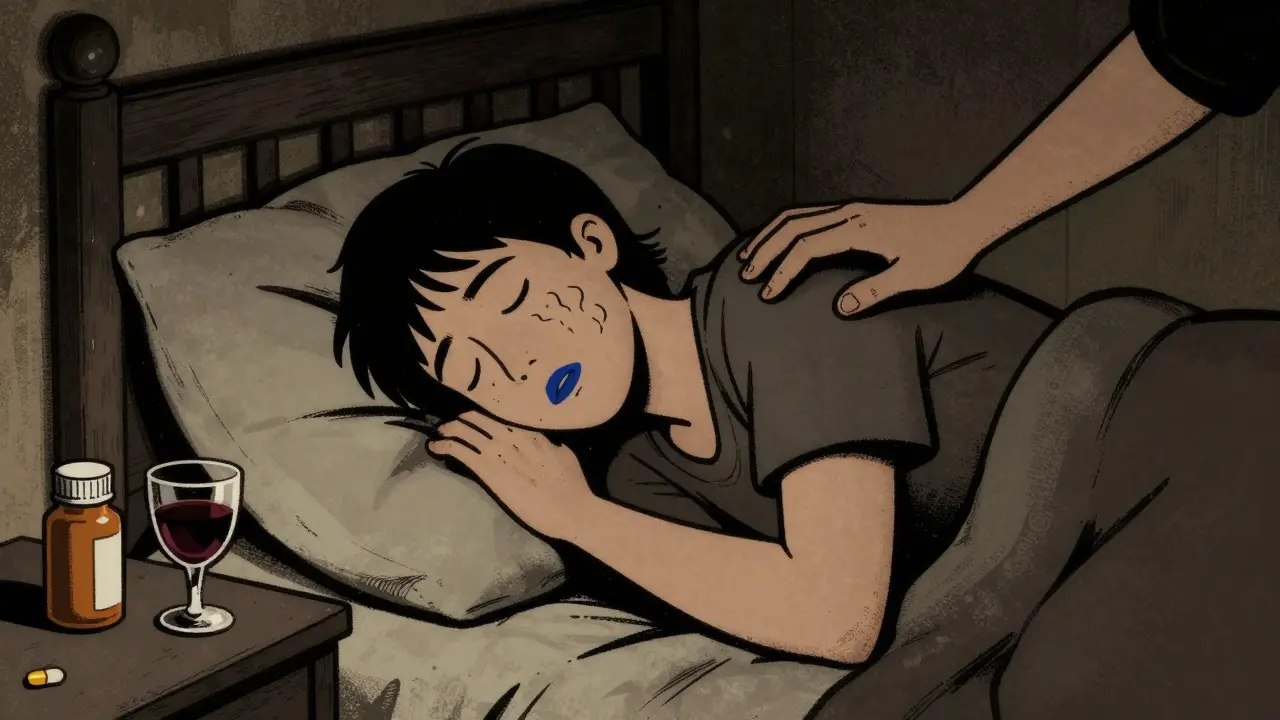
Every year, thousands of people overdose on sedatives and sleep medications-often because no one recognizes the warning signs until it’s too late. These drugs, prescribed to help with anxiety or insomnia, can turn deadly when taken in excess, mixed with alcohol, or used long-term. The problem isn’t just about taking too many pills. It’s about missing the subtle, creeping signs that someone’s body is shutting down. If you’ve ever seen a loved one fall into deep, unshakable sleep after taking a sleeping pill, you’ve seen the first stage of an overdose. What comes next can kill in minutes.
What Happens When Sedatives Overdose?
Sedatives and sleep medications work by slowing down your central nervous system. That’s why they help you relax or fall asleep. But when too much enters your bloodstream, your brain stops sending the right signals to your lungs and heart. Breathing slows. Heart rate drops. Oxygen levels fall. The body doesn’t fight back-it just shuts down.
Common drugs in this category include benzodiazepines like alprazolam (Xanax), temazepam (Restoril), and clonazepam (Klonopin), as well as non-benzodiazepine "Z-drugs" like zolpidem (Ambien) and eszopiclone (Lunesta). Even over-the-counter sleep aids like diphenhydramine (Tylenol PM, Benadryl) can cause overdose at high doses. The risk isn’t just in pills you take on purpose. It’s in accidentally doubling up, mixing with alcohol, or taking them after your body has built tolerance.
According to the CDC, over 12,500 people died from benzodiazepine overdoses in 2021 alone. That’s a 218% increase since 2010. Most of these deaths happened at home, with bystanders unaware they were witnessing an emergency.
Key Signs of Sedative Overdose
Recognizing an overdose isn’t about spotting one symptom. It’s about seeing a pattern. The most dangerous signs come in stages.
- Unresponsiveness: Can you wake them up? Shout their name. Shake their shoulder. Try a sternal rub (rub your knuckles hard on the center of their chest). If they don’t open their eyes, move, or respond at all-even to pain-they’re in serious danger. This isn’t deep sleep. This is unconsciousness.
- Slowed or shallow breathing: Count their breaths for 30 seconds. Normal breathing is 12 to 20 breaths per minute. If they’re taking fewer than 8 breaths in a full minute, they’re in respiratory arrest. Shallow, irregular breaths-like they’re barely moving-are just as bad. Cyanosis (blue lips, fingertips, or nails) means their blood isn’t getting enough oxygen.
- Slurred speech and confusion: If they can’t form sentences, repeat simple phrases, or answer basic questions like "Where are you?" or "What day is it?"-this isn’t normal drowsiness. It’s brain suppression. Studies show 87% of benzodiazepine overdose cases involve slurred speech.
- Loss of coordination: They might stumble, drop things, or can’t stand without support. This isn’t intoxication from alcohol. It’s ataxia-a loss of muscle control caused by the drug directly affecting the brain’s motor centers.
- Cold, clammy skin and low body temperature: Their skin may feel cool to the touch. Normal body temperature is around 98.6°F. If it drops below 95°F, their metabolism is slowing dangerously. This is a late but critical sign.
- Coma: If they’re completely unresponsive and their Glasgow Coma Scale score drops below 8, they’ve lost all awareness and reflexes. This is a medical emergency.
Some people mistake these signs for "just being really tired." That’s the most dangerous myth. A 2022 study found that 68% of bystanders delayed calling 911 because they thought the person was "just asleep." Every minute counts.
Different Drugs, Different Risks
Not all sedatives act the same way. Knowing the difference can help you spot the danger faster.
Benzodiazepines (Xanax, Valium, Klonopin) and Z-drugs (Ambien, Lunesta) typically cause deep sedation without immediate heart or blood pressure drops. Vital signs may look normal until breathing stops. This makes them harder to spot early. But once breathing slows below 8 breaths per minute, death can follow fast.
Barbiturates (like phenobarbital) are older, rarely prescribed today, but still used in some cases. They cause more severe respiratory depression at lower doses and carry a higher death risk than benzodiazepines.
Over-the-counter sleep aids with diphenhydramine (Benadryl, Tylenol PM) are a hidden danger. At high doses, they cause extreme drowsiness, dry mouth, urinary retention, and even hallucinations or seizures. These aren’t "safe" just because they’re available without a prescription. A single 200mg dose can be toxic.
Melatonin is different. Even at doses 60 times higher than normal (like 240mg), it rarely causes breathing problems. It might cause nausea or dizziness, but not coma or respiratory failure. If someone took melatonin and passed out, something else is likely involved.

The Deadly Mix: Alcohol and Opioids
Most fatal overdoses aren’t from one drug alone. They’re from combinations.
Alcohol is the most common partner. It’s a depressant too. When mixed with sedatives, the effect isn’t additive-it’s multiplied. The CDC found that 41% of fatal sedative overdoses involved alcohol. The same goes for opioids. In 2021, 23% of benzodiazepine-related deaths also involved fentanyl. The combination shuts down breathing faster and more completely than either drug alone.
If you find someone unconscious with an empty pill bottle and a glass of wine nearby, don’t assume it’s just "too much wine." Assume it’s a life-threatening overdose.
What to Do If You Suspect an Overdose
There’s no time to wait. Don’t try to wake them by splashing water. Don’t give them coffee. Don’t leave them to "sleep it off."
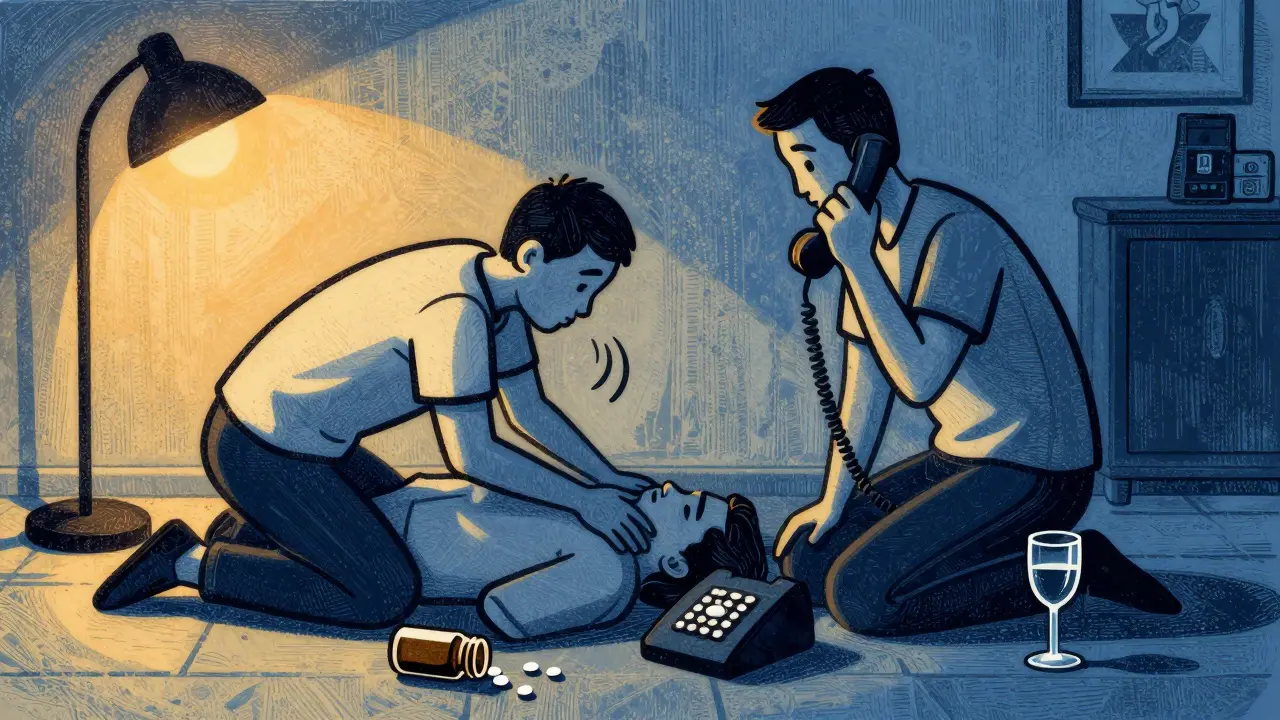
- Check responsiveness: Shout their name. Shake them. Rub your knuckles hard on their sternum. If no response, move to step two.
- Check breathing: Look at their chest. Count breaths for 30 seconds. Multiply by two. If it’s less than 12 breaths per minute, call emergency services immediately.
- Call for help: Dial 911 (or your local emergency number). Say: "I think someone is overdosing on sleep medication. They’re not waking up, and their breathing is very slow."
- Start rescue breathing if needed: If they’re not breathing or taking fewer than one breath every 5 seconds, begin rescue breaths. Tilt their head back, pinch their nose, give one breath every 5 seconds. Don’t stop until help arrives.
- Stay with them: Don’t leave them alone. If they vomit, turn them onto their side to prevent choking. Keep them warm.
Do not give them flumazenil (the antidote for benzodiazepines). It’s not available over the counter. It can trigger seizures in people who are dependent on these drugs. Only trained medical staff should use it.
Why People Miss the Signs
Many overdoses go unnoticed because the symptoms look like something else.
People think:
- "They’re just really tired from work."
- "They must’ve had a few drinks."
- "They’re sleeping it off. I’ll check on them in the morning."
- "They’ve taken these pills before. It’s probably fine."
These assumptions cost lives. A study in the Western Journal of Emergency Medicine found that bystanders delayed calling 911 by an average of 47 minutes. By then, brain damage or death was likely.
And it’s not just strangers. It’s family members, partners, caregivers. Someone you love may be taking more than prescribed. They may be hiding it. They may not even realize how dangerous it is.
How to Prevent It
Prevention starts with awareness.
- Keep medications locked up. Don’t leave pills on the nightstand.
- Never mix sedatives with alcohol or opioids.
- Follow the prescribed dose. Never take "just one more" to help you sleep.
- Ask your doctor about non-drug options for insomnia-cognitive behavioral therapy (CBT-I) is more effective long-term than pills.
- If someone you know is using sedatives long-term, talk to them about the risks. Don’t wait for a crisis.
Some states, like California, now give out free overdose recognition cards at pharmacies. These cards list the signs and what to do. Ask your pharmacist for one.
Final Warning
Sedative overdose doesn’t always look dramatic. There’s no screaming. No convulsions. Just silence. A person who was fine an hour ago is now unresponsive. Their chest barely moves. Their lips are turning blue. That’s not sleep. That’s the body giving up.
If you see those signs, act. Don’t wait. Don’t hope. Call emergency services now. Start rescue breathing if they’re not breathing. Stay with them. Your quick action could be the only thing that brings them back.
One mistake can cost a life. One moment of awareness can save it.
Can you overdose on sleeping pills even if you take them as prescribed?
Yes. Overdose can happen even with prescribed use, especially if the person develops tolerance and increases their dose without medical advice, or if they combine the medication with alcohol, opioids, or other depressants. Some people also accidentally take a second dose because they don’t remember taking the first one. Prescription doesn’t mean safe in excess.
How long does it take for sedative overdose symptoms to appear?
It depends on the drug and how it was taken. Oral pills usually take 30 minutes to 2 hours to cause symptoms. If someone crushes and snorts or injects the medication, effects can start in under 15 minutes. The more potent the drug and the higher the dose, the faster the onset. Never assume you have time to wait.
Is it safe to let someone sleep it off after taking too many sleeping pills?
No. Letting someone "sleep it off" is one of the most dangerous myths about sedative overdose. These drugs suppress the brain’s breathing control center. A person who seems asleep may be slipping into respiratory arrest. Their breathing can stop without warning. Always assume it’s an emergency if they’re unresponsive or breathing slowly.
Can you reverse a sedative overdose at home?
No. There is no home remedy or over-the-counter antidote. Flumazenil, the only specific reversal agent for benzodiazepines, requires medical supervision because it can trigger seizures in people who are dependent. The only safe way to reverse an overdose is through emergency medical care-oxygen, breathing support, and monitoring in a hospital.
What should I do if I find an empty pill bottle next to an unresponsive person?
Call emergency services immediately. Don’t wait to identify the drug. Bring the empty bottle with you to the hospital-it helps medical staff choose the right treatment. Even if you’re unsure what was taken, assume it’s a life-threatening overdose. Time is critical.

christian Espinola
January 18, 2026 AT 09:42Let me guess - the CDC just woke up after 12,000 people died because nobody wanted to admit Big Pharma was pushing these pills like candy. Of course they didn’t mention that 80% of these prescriptions come from telehealth docs who never even saw the patient. This is just the tip of the iceberg. The real story? The government’s been letting pharma companies write their own guidelines since 2008. You think this is about safety? Nah. It’s about liability shields and insurance loopholes.
And don’t get me started on ‘over-the-counter’ diphenhydramine. That stuff’s been a silent killer since the ‘90s. You can buy it next to gum and condoms. Meanwhile, the FDA sits on their hands while people turn into zombies in their living rooms. Wake up, people. This isn’t an accident - it’s corporate negligence dressed up as healthcare.
Chuck Dickson
January 20, 2026 AT 05:54This is exactly the kind of information that saves lives - thank you for laying it out so clearly.
I used to work in ER and saw too many cases where family members waited too long because they thought, ‘They’re just sleeping.’ One guy? His daughter called 911 after he stopped breathing for 45 seconds. He’s alive today because she didn’t wait. Don’t second-guess your gut. If something feels off, act. Call 911. Start breathing. Stay with them. You’re not overreacting - you’re being a hero.
And if you’re taking these meds? Talk to your doctor about CBT-I. It’s not magic, but it works better long-term than any pill. You’ve got this.
Dayanara Villafuerte
January 21, 2026 AT 21:30OMG I just read this and my jaw dropped 😱
My aunt took 3 Ambien + a glass of wine and ‘slept it off’ for 6 hours. We thought she was just exhausted from work. Turned out she had a near-fatal overdose. They had to intubate her. Now she’s on therapy, no pills, and she won’t even touch a wine glass near bedtime. 🙌
Also - if you’re still using Benadryl as a sleep aid? Honey, that’s not a sleep aid, that’s a one-way ticket to confusion city. I’ve seen grandmas wandering the aisles of Walmart at 3 a.m. muttering about ‘the aliens in the cereal boxes.’ Not cute. Not safe.
PS: Ask your pharmacist for those free cards. They’re literally lifesavers. I printed one and taped it to my fridge. Just in case.
Andrew Qu
January 23, 2026 AT 00:47Just wanted to add something practical: if you live with someone who takes sedatives, keep a notepad by the bed. Have them write down what they took and when. Memory lapses are common with these drugs - and doubling up happens more than you think.
Also, set a phone alarm labeled ‘PILL CHECK’ for 90 minutes after they take it. Just to make sure they’re breathing normally. It sounds extreme, but I’ve seen it prevent disaster. You’re not being controlling - you’re being caring.
And yes, melatonin is safe. But if someone’s passed out after taking it? Look for other drugs. Melatonin doesn’t do that. Something else is involved. Always assume the worst until proven otherwise.
Jay Clarke
January 24, 2026 AT 15:22THIS IS WHY WE CAN’T HAVE NICE THINGS.
People think medicine is a vending machine. Pop a pill, feel better. No consequences. No responsibility. Meanwhile, the entire system is built to keep you dependent. Doctors get paid to prescribe. Pharmacies make money selling. Insurance doesn’t cover therapy because it’s cheaper to keep you medicated.
And now we’re supposed to believe this post is about ‘awareness’? Please. It’s damage control. They knew this was coming. They let it happen. Now they’re handing out pamphlets like it’s a public service.
Wake up. This isn’t about you. It’s about profit.
And if you’re still taking Xanax because ‘it helps you chill’ - you’re not calm. You’re chemically sedated. There’s a difference.
Selina Warren
January 26, 2026 AT 06:42Let me tell you something - silence kills. Not the drugs. Not the pills. The silence.
How many of you have seen someone nod off after dinner and just… let it go? You think they’re tired. You think it’s normal. You think, ‘They’ll wake up.’
But what if they don’t?
What if that’s the last time you ever hear their voice?
This isn’t a post about medicine. It’s a post about love. About showing up. About not being too lazy, too scared, too ‘polite’ to act. You don’t need a degree to save a life. You just need courage.
So next time you see someone unresponsive? Don’t wait. Don’t hope. Don’t whisper, ‘Maybe they’re just tired.’
Shout. Shake. Call 911. Start breathing. Stay with them.
Because the alternative? Is worse than any drug.
Robert Davis
January 26, 2026 AT 23:14Interesting how they list all these signs but don’t mention that 90% of these overdoses happen in people with untreated trauma or chronic pain. You don’t just wake up one day and decide to take 10 Xanax. You take them because the world broke you and no one offered a better way.
And now we’re supposed to blame the patient for not knowing the difference between ‘sleeping’ and ‘overdosing’? What about the doctors who wrote those scripts without asking about mental health? What about the therapists who couldn’t get insurance to cover sessions?
This isn’t ignorance. It’s systemic failure.
Also - flumazenil isn’t the issue. The issue is that we don’t have enough naloxone for benzodiazepines. We’ve got a whole infrastructure for opioids. Nothing for sedatives. That’s not an oversight. That’s a choice.
Eric Gebeke
January 27, 2026 AT 21:07I’m not saying this is wrong, but I’ve got to call out the hypocrisy.
You’re telling people not to mix sedatives with alcohol… but you don’t say anything about how many people are on antidepressants and still drink. Or how many are on gabapentin and still take Xanax for ‘anxiety.’
And why is it always the patient’s fault? Why isn’t there a national campaign telling doctors: ‘Stop prescribing this crap like it’s candy’?
I’ve seen my uncle take 30mg of Ambien because his ‘sleep schedule was off.’ He didn’t know it was lethal. He thought it was like Tylenol.
So who’s really responsible here? The guy who didn’t read the label? Or the system that let him believe it was safe?
Also - why no mention of insurance barriers to CBT-I? It’s more effective, sure. But it costs $150/session. Most people can’t afford it. So they take the pill.
This post is like a fire alarm that only tells you to run - but won’t tell you why the building is on fire.
Jake Moore
January 28, 2026 AT 04:31Biggest thing people miss: sedative overdose doesn’t look like a movie. No screaming. No thrashing. Just stillness. That’s what makes it so dangerous.
My cousin was found in her chair, eyes open but not seeing anything. Breathing so slow we counted 6 breaths per minute. We called 911. Paramedics said she’d been like that for over an hour. She’s fine now - thanks to her roommate who didn’t assume she was just ‘zoned out.’
Bottom line: If they’re not responding to a sternal rub, it’s not sleep. It’s a medical emergency.
And yes - if you’re on these meds, talk to your doctor about tapering. There’s hope. But only if you ask for it.
Max Sinclair
January 29, 2026 AT 08:52Thank you for writing this with such care. The tone is urgent but not alarmist - which is rare.
I especially appreciated the breakdown of different drugs. I used to think all sleep meds were the same. Now I know why mixing Z-drugs with alcohol is like playing Russian roulette with your brainstem.
One small addition: if you’re helping someone recover from sedative dependence, don’t try to force them into detox alone. Withdrawal can be deadly. Medical supervision is non-negotiable.
And if you’re reading this and thinking, ‘This doesn’t apply to me’ - maybe it’s because you’ve never seen someone die quietly in their sleep. I have. It’s not peaceful. It’s terrifying.
Knowledge isn’t power. Action is.
Praseetha Pn
January 29, 2026 AT 22:39Okay but let’s be real - this whole thing is a distraction. The real problem? The government is poisoning us with fluoride in the water, 5G is frying our brains, and Big Pharma is using sedatives to keep us docile while they steal our data through our smart fridges. You think Ambien is dangerous? Wait till you find out how many people are being mind-controlled via TikTok algorithms synced with their sleep cycles. I’ve seen the documents. They’re in a hidden folder on the CDC website called ‘Project Somnus.’
And why do you think melatonin is safe? Because it’s not a drug - it’s a natural hormone. But even that’s been genetically modified by Monsanto to make us sleepy so we don’t protest. I’m not paranoid. I’m informed.
Also - if you’re not using a Faraday cage to sleep? You’re already compromised. The pills are just the tip. Wake up. The system is watching. And they’re using your sleep to program you.
Nishant Sonuley
January 31, 2026 AT 16:27Look - I get it. You’re trying to save lives. And I appreciate that. But let’s not pretend this is just about individual responsibility. The truth? Most people who overdose on sedatives are people who’ve been failed by the system - single parents working two jobs, veterans with PTSD, people with chronic pain who’ve been told ‘just take something’ for 15 years straight.
And then you get a post like this that says, ‘Call 911 if they’re not breathing.’
But what if they live in a rural town where EMS takes 45 minutes to arrive? What if they’re undocumented and scared to call? What if they’re elderly and live alone with no one to check on them?
This isn’t just about knowing the signs. It’s about building community. It’s about neighbors checking in. It’s about free mental health clinics. It’s about housing. It’s about dignity.
Yes, act fast. But also - fix the system that made this necessary in the first place.
And hey - if you’re reading this and thinking, ‘I’m not the problem,’ you might be part of it. We all are. Until we stop treating symptoms and start treating people, we’re just rearranging deck chairs on the Titanic.
So yes - call 911.
But also - call your rep. Demand better care. Because no pamphlet will fix a broken world.
christian Espinola
February 1, 2026 AT 15:30And here’s the kicker - the CDC’s 2021 stats? They’re outdated. The real number is higher because they don’t count poly-drug overdoses where sedatives are the ‘secondary’ cause. You think they’re tracking fentanyl + Xanax? Nah. They count it as ‘opioid overdose.’ The sedative part? Erased. Like it never happened. That’s how they keep the numbers ‘manageable.’