
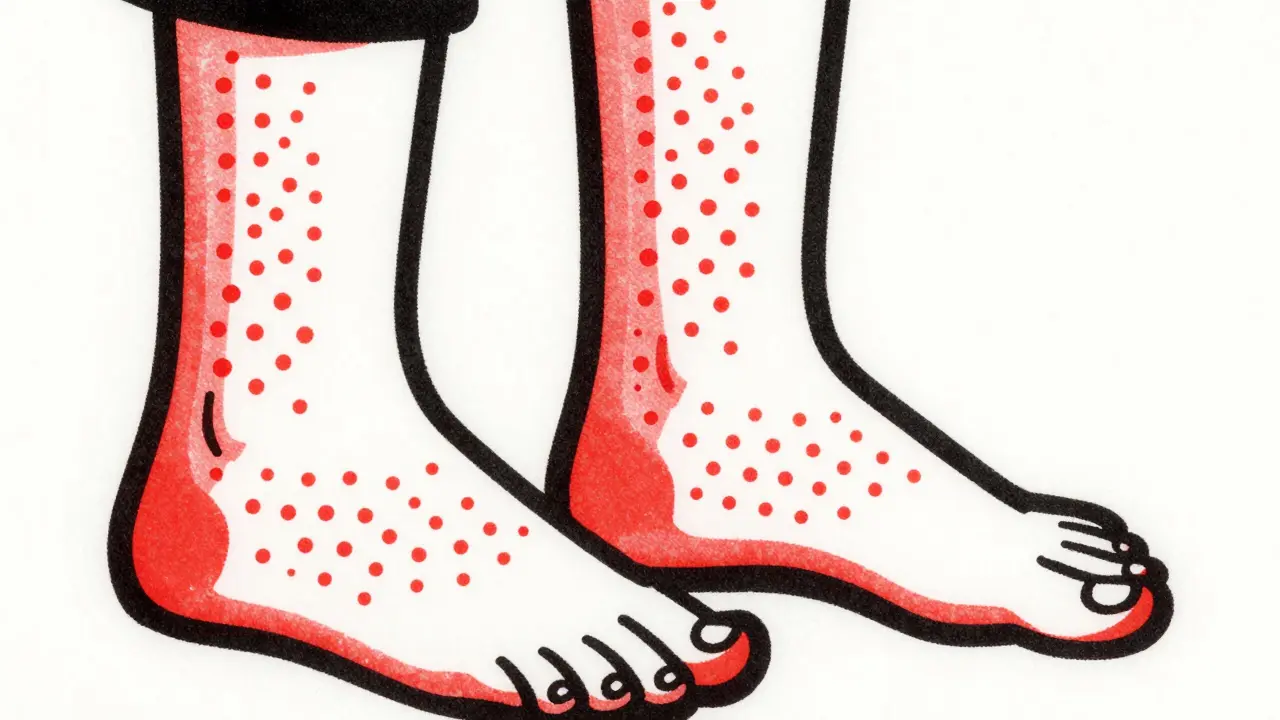
When medications damage nerves, it’s called medication-induced neuropathy. This condition affects about 4% of all neuropathy cases, but for people on chemotherapy, that number jumps to 60%. These symptoms often start small-like a mild tingling in your feet-but can worsen quickly if ignored. The good news? Early detection can prevent permanent damage. Let’s break down what you need to know.
What is medication-induced neuropathy?
Drug-induced peripheral neuropathy (DIPN)A condition where medications damage the peripheral nervous system, causing symptoms like tingling and numbness, typically starting in the hands and feet. happens when certain drugs harm the nerves connecting your brain and spinal cord to the rest of your body. You might feel tingling, burning, or numbness in a "glove and stocking" pattern-meaning it spreads like a glove over your hands and a stocking over your feet. A 2020 review in PMC confirms DIPN is a leading cause of neuropathy in cancer patients. The key takeaway? It’s often reversible if caught early.
Which medications cause these symptoms?
Not all drugs cause nerve damage, but some common ones do. OxaliplatinA chemotherapy drug for colon cancer, causing acute neuropathy in 85-95% of patients. (used for colon cancer) causes acute neuropathy in 85-95% of patients. PaclitaxelA chemotherapy drug for breast cancer, affecting 60-70% of users. (for breast cancer) affects 60-70% of users. Antibiotics like isoniazidAn antibiotic for TB treatment, causing neuropathy in 10-20% of users. (for TB) can cause issues in 10-20% of people. Statins, often used for cholesterol, are controversial-only 1-2% of users report symptoms, and some experts think it’s more about reporting bias than actual causation. Other culprits include metronidazoleAn antibiotic that can cause neuropathy in 2-10% of patients after prolonged use. (an antibiotic), amiodarone (for heart rhythm), and certain HIV medications like stavudine. The severity varies: oxaliplatin neuropathy can worsen for months after stopping the drug, while paclitaxel symptoms usually improve after discontinuation.
Why early detection matters
Mild symptoms like tingling or numbness are your body’s warning system. If left unchecked, they can progress to severe nerve damage, making recovery harder. Dr. Norman Latov, a neurology expert at Weill Cornell Medicine, says, "Early recognition is critical because many drug-induced neuropathies are reversible if the offending agent is discontinued promptly." The American Academy of Physical Medicine and Rehabilitation (AAPMR) notes that these mild symptoms often represent the earliest detectable stage of neurotoxicity. Catching them early gives you a window to adjust treatment before irreversible damage occurs. Ignoring them could lead to permanent loss of sensation or mobility.
Recognizing the early signs
Symptoms usually start in your extremities. You might feel tingling in your toes, numbness in your fingers, or a "pins and needles" sensation. These often spread gradually-first in one foot, then the other, then hands. The NHS reports 78% of DIPN cases begin with these mild sensory symptoms. A key detail: symptoms typically worsen with continued exposure to the medication. For example, oxaliplatin users might notice tingling after each infusion, while isoniazid users might see symptoms after 3 months of use. Pay attention to when symptoms start and how they change. If they’re getting worse, don’t wait-talk to your doctor.
What to do if you notice symptoms
If you feel tingling or numbness, don’t ignore it. Contact your healthcare provider immediately. They might adjust your dose, switch medications, or add supplements like vitamin B6 for isoniazid-related neuropathy. The Foundation for Peripheral Neuropathy recommends monthly neurological assessments for high-risk patients. For chemo patients, tools like the Total Neuropathy ScoreA clinical tool used to assess neuropathy severity in patients. or EORTC QLQ-CIPN20 questionnaire help track symptoms. Simple safety steps can help too: check your feet daily for injuries, use non-slip mats in the shower, and wear shoes indoors to prevent falls. Remember, many patients can continue essential medications with dose adjustments-studies show 60-70% of cases improve with careful management.

Real patient experiences
Patient stories highlight the importance of acting fast. On CancerCare forums, a user named ChemoSurvivor42 shared, "My first sign was tingling in my toes after my second oxaliplatin treatment. My oncologist said it was normal, but by cycle 4, I couldn’t button my shirts." On Reddit’s r/neuropathy, NeuroNewbie described numbness in fingers after isoniazid for TB: "My doctor increased my B6 but didn’t stop the meds. Now 6 months later, still have tingling despite stopping." Meanwhile, PatientsLikeMe data shows 73% of users who stopped the offending drug at first symptoms saw complete or near-complete resolution within 6 months. The takeaway? Early action makes a huge difference.
How doctors manage it
Doctors use specific tools to assess neuropathy. Nerve conduction studies can detect reduced sural nerve amplitude before motor symptoms appear. Newer tech like the SudoScan deviceAn FDA-approved device measuring electrochemical skin conductance for early neuropathy detection., FDA-approved in 2021, measures electrochemical skin conductance to catch early small fiber damage. The Peripheral Nerve Society’s 2023 guidelines include quantitative sensory testing thresholds for subclinical neuropathy. For chemo patients, clinical trials are exploring neuroprotective agents like acetyl-L-carnitine, which reduced symptom severity by 40% in a recent phase III trial. Future advancements may include genetic testing to identify high-risk patients before starting neurotoxic drugs.
Frequently Asked Questions
What causes tingling and numbness from medications?
Medications can damage peripheral nerves through various mechanisms. Chemotherapy drugs like cisplatin and oxaliplatin cause dorsal root ganglion toxicity. Antibiotics such as isoniazid disrupt nerve function, while statins may affect nerve membranes. The exact mechanism depends on the drug, but all lead to abnormal nerve signaling, resulting in tingling or numbness.
Which medications are most likely to cause neuropathy?
Chemotherapy drugs top the list: oxaliplatin (85-95% acute neuropathy), paclitaxel (60-70%), and cisplatin. Antibiotics like isoniazid (10-20% of users) and metronidazole (2-10%) also carry risks. Certain heart medications like amiodarone (5-10% of long-term users) and HIV drugs like stavudine (25-35%) are additional culprits. Statins are controversial, with only 1-2% of users reporting symptoms.
Can medication-induced neuropathy be reversed?
Yes, in many cases. If caught early and the medication is adjusted or stopped, symptoms often improve. For example, 73% of patients who discontinued the drug at first symptoms saw complete or near-complete resolution within 6 months. However, prolonged exposure can lead to permanent damage, so acting quickly is crucial.
How do doctors diagnose early neuropathy?
Doctors use tools like nerve conduction studies to check nerve function, the Total Neuropathy Score for symptom tracking, and newer devices like SudoScan for electrochemical skin conductance. Quantitative sensory testing can detect subclinical neuropathy before symptoms appear. Regular assessments help catch issues early.
What should I do if I notice tingling while on medication?
Contact your healthcare provider immediately. They may adjust your dose, switch medications, or add supplements like vitamin B6 for isoniazid-related cases. Don’t wait-early intervention prevents progression. Simple safety steps like daily foot checks and fall prevention measures can also help manage symptoms.

Jennifer Aronson
February 5, 2026 AT 19:24Medication-induced neuropathy is a serious concern, especially for patients on chemo. It's crucial to monitor symptoms like tingling early on. As a healthcare professional, I've seen many cases where early intervention prevented permanent damage. Awareness is key.
Kate Gile
February 6, 2026 AT 08:09Great post! Early detection really makes a difference. It's reassuring that many symptoms can be managed with the right adjustments. Thanks for sharing this info!
Jenna Elliott
February 8, 2026 AT 02:06US healthcare handles this way better than other countries. We need more awareness here. Other nations are lagging behind.
anjar maike
February 9, 2026 AT 17:46Very informative 🌟 But why does oxaliplatin cause such severe neuropathy? Any new treatments on the horizon? 🤔
Sam Salameh
February 10, 2026 AT 02:03America's system is top-notch for managing this. Other countries should take notes. Great info!
Arjun Paul
February 10, 2026 AT 14:23Many patients ignore symptoms until it's too late. They need to be more proactive. Doctors should be stricter with monitoring.
divya shetty
February 12, 2026 AT 04:30It is imperative that patients adhere strictly to medical advice. Failure to report symptoms promptly is negligence. The healthcare system must enforce accountability.
Lana Younis
February 12, 2026 AT 23:23Jargon-heavy but useful. The SudoScan device is a game-changer for early detection.
Also, B6 supplementation for isoniazid is crucial. Gotta keep an eye on those small fiber changes.
New tech like SudoScan helps catch issues before symptoms worsen. Doctors should integrate these tools into routine check-ups.
Patient on chemo need regular assessments. Vitamin B6 helps with isoniazid-related neuropathy. But it's not just about supplements-dose adjustments matter too. For example, oxaliplatin users might need breaks between infusions. The Total Neuropathy Score is a great tool for tracking. Early intervention can reverse symptoms in many cases. Studies show 73% of patients improve if they stop the drug early. It's all about catching it before permanent damage. Let's push for better awareness and monitoring.
Samantha Beye
February 13, 2026 AT 18:24Early detection is key. Simple steps like daily foot checks can prevent serious issues. Stay vigilant and talk to your doctor.
one hamzah
February 13, 2026 AT 18:44Such important info! 🌈 Early intervention makes a huge difference. Let's keep pushing for better awareness and care. 🙌
Matthew Morales
February 14, 2026 AT 04:53Thanks for this!
Diana Phe
February 14, 2026 AT 12:34Big Pharma is pushing these drugs to make money.
Andre Shaw
February 16, 2026 AT 00:46Most of this is common knowledge. The real issue is that doctors don't listen to patients. Also, statins aren't the problem-people blame them too easily.
jan civil
February 17, 2026 AT 17:08Interesting. Nerve conduction studies are useful but not always accessible. Maybe simpler methods would help more people.
lance black
February 19, 2026 AT 13:19Stay alert!