
TCA Side Effect Checker
Find Your Personal Risk Factors
Select your TCA medication and health factors to see what side effects you might experience.
Tricyclic antidepressants (TCAs) like amitriptyline and nortriptyline aren’t the first go-to for depression anymore, but they’re still used - and often for reasons you might not expect. While newer drugs like SSRIs get most of the attention, TCAs hold their ground in treating chronic pain, migraines, and treatment-resistant depression. But they come with a heavy bag of side effects that can change your daily life. If you’re on one of these meds, or considering it, you need to know what you’re signing up for.
How TCAs Work - And Why They Cause So Many Side Effects
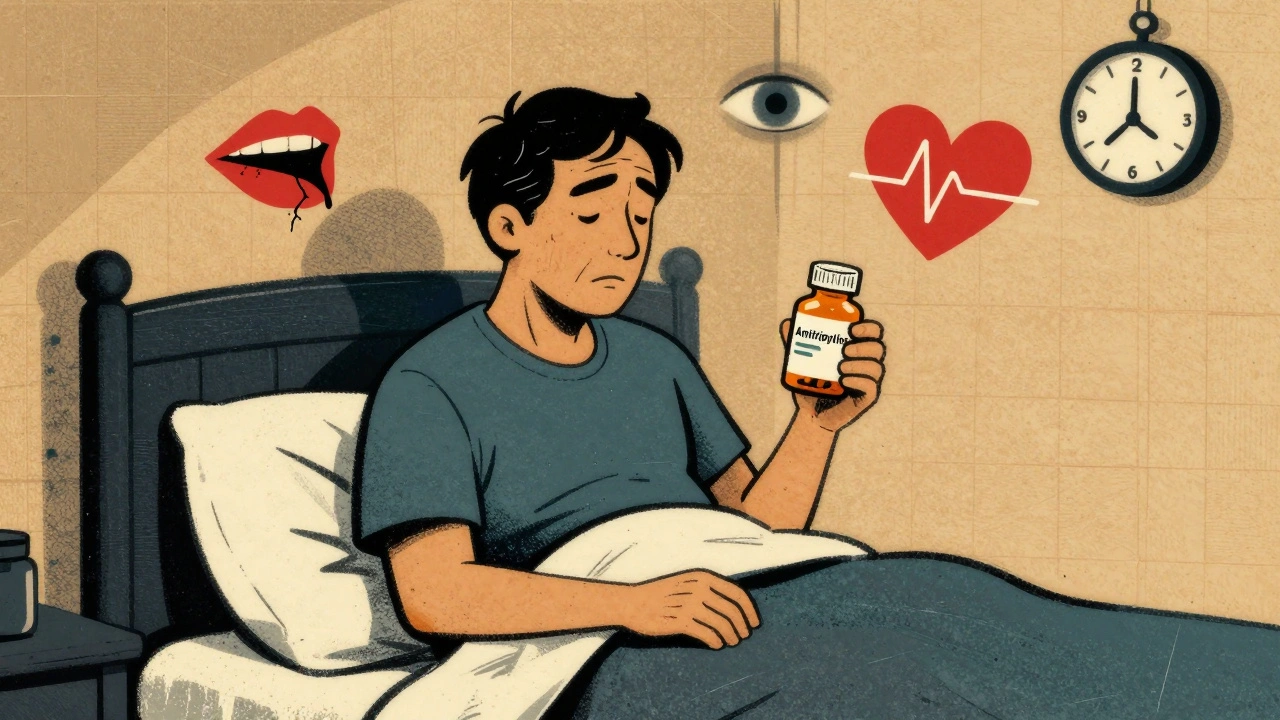
TCAs were developed in the 1950s, long before SSRIs existed. They work by blocking the reuptake of serotonin and norepinephrine, which helps lift mood. But that’s not all they do. These drugs also mess with other receptors in your body - cholinergic, histamine, and alpha-adrenergic ones. That’s why their side effects aren’t just about mood. They’re everywhere: dry mouth, dizziness, blurred vision, constipation, heart rhythm changes, and heavy drowsiness.
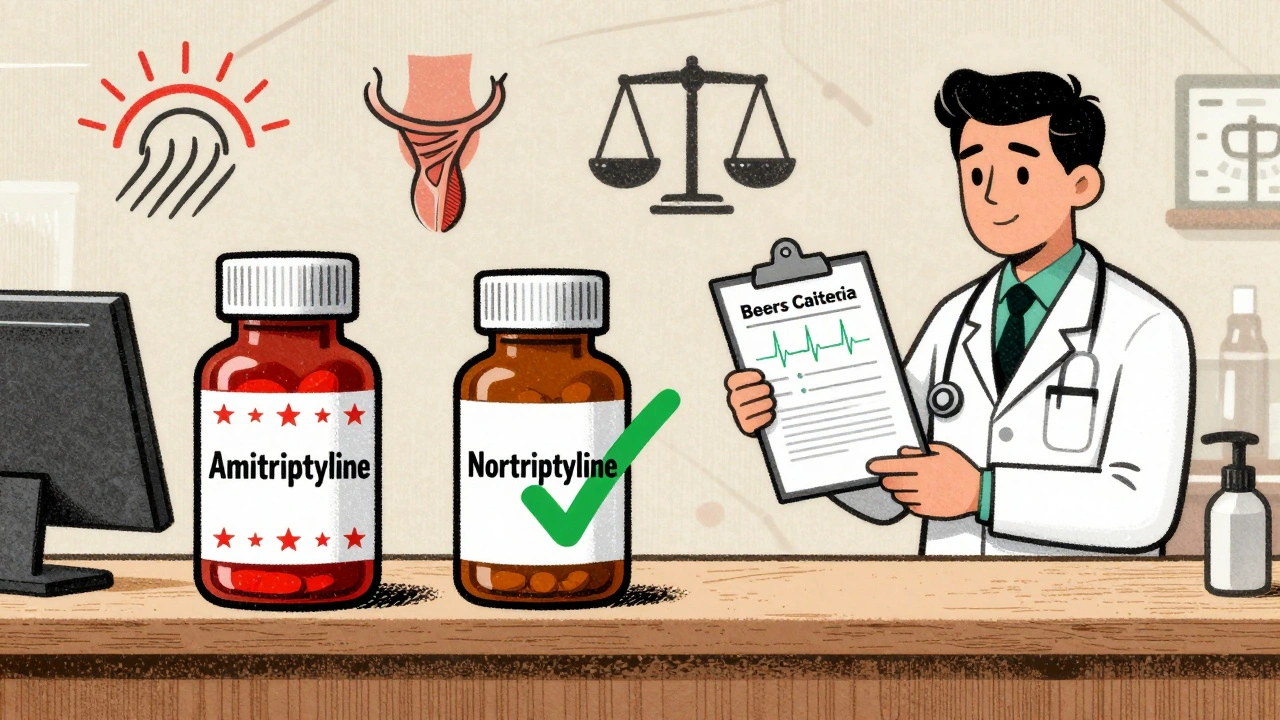
Amitriptyline is the most commonly prescribed TCA today, mostly for nerve pain, not depression. It’s got a high affinity for muscarinic and histamine receptors, which explains why so many people on it feel like they’re walking through molasses. Nortriptyline, its metabolite, is less aggressive on those receptors. That’s why it’s often preferred for older adults or people who can’t tolerate amitriptyline’s foggy, dry-mouthed chaos.
Common Side Effects: The Daily Grind
Most people on TCAs deal with at least one of these everyday annoyances:
- Dry mouth - Affects up to 30% of amitriptyline users. It’s not just uncomfortable. It leads to tooth decay, gum disease, and constant thirst. People report going through multiple bottles of Biotene a week.
- Blurred vision - Happens in 15-20% of users. It usually clears up after a few weeks, but for some, it lingers and makes driving risky.
- Constipation - Up to 25% of users struggle with this. It’s not just a nuisance - severe cases can lead to bowel obstruction, especially in older adults.
- Urinary retention - Especially dangerous for men with enlarged prostates. Some report needing catheters because they couldn’t urinate.
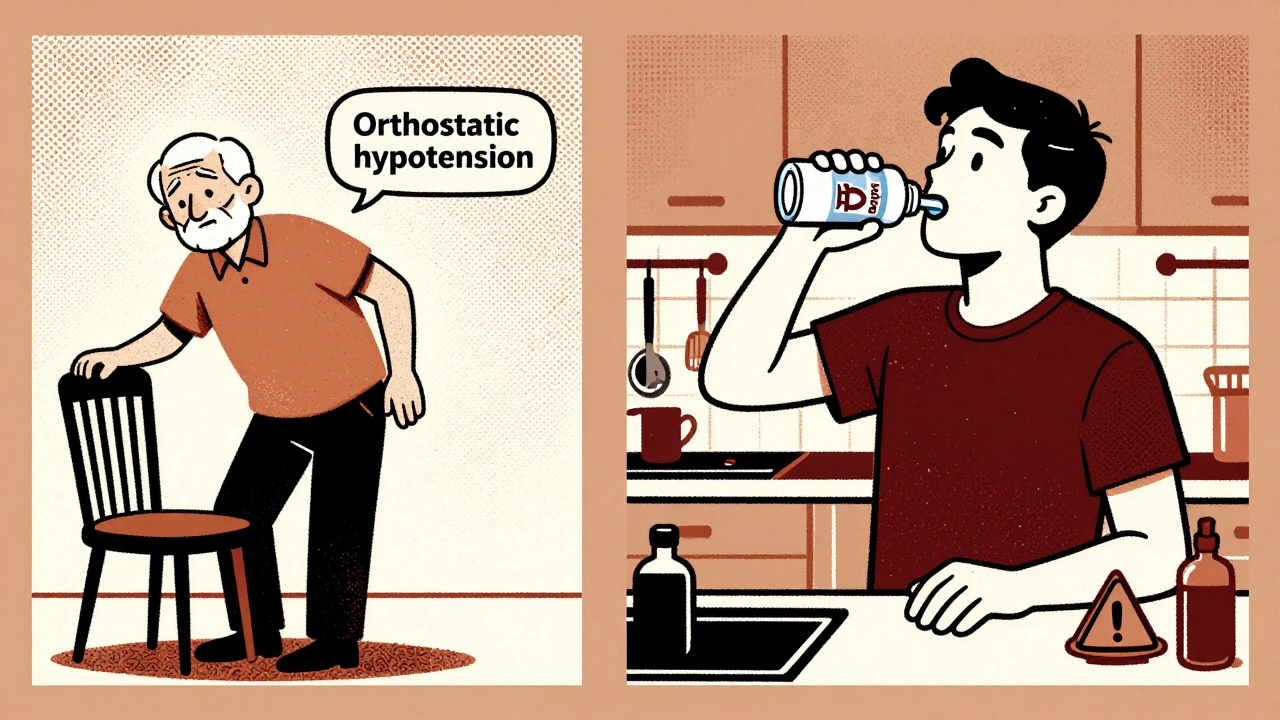
- Orthostatic hypotension - That dizzy, lightheaded feeling when you stand up too fast. Happens in 15-20% of users. It’s a major fall risk, especially for seniors.
- Sedation - Amitriptyline knocks out 40% of users. Nortriptyline hits about 25%. That’s why they’re often taken at bedtime.
These aren’t rare side effects. They’re the norm. If you’re not prepared for them, you’ll quit the medication before it even has a chance to help.
Serious Risks: When TCAs Can Be Dangerous
Beyond the daily discomforts, TCAs carry real, life-threatening risks.
Heart problems are the biggest concern. TCAs can prolong the QTc interval on an ECG - that’s the time it takes your heart to recharge between beats. Amitriptyline can stretch that interval by 20-40 milliseconds. That might sound small, but it increases the risk of dangerous arrhythmias, even at normal doses. People with existing heart disease are at higher risk. The Lancet found TCAs raise cardiovascular event risk by 35% compared to SSRIs.
Overdose is deadly. TCAs have one of the narrowest therapeutic windows of any psychiatric drug. A small overdose - even 3-4 times the daily dose - can cause seizures, severe low blood pressure, wide QRS complexes on ECG, and cardiac arrest. Overdose mortality rates are higher than for any other antidepressant class.
Cognitive decline is another silent danger, especially for older adults. About 25% of people over 65 on TCAs report confusion. Disorientation and memory issues are common. The Beers Criteria - the gold standard for prescribing in seniors - specifically warns against amitriptyline in patients over 65 because it increases the risk of dementia and falls by 70%.
Why Doctors Still Prescribe Them
If TCAs are so risky, why do they still exist?
Because for some people, nothing else works.
For treatment-resistant depression - when SSRIs and SNRIs have failed - TCAs show better results. One meta-analysis found 65-70% of patients responded to TCAs after failing two other antidepressants, compared to 50-55% with SSRIs.
For neuropathic pain, amitriptyline is still the gold standard. A Cochrane Review showed 35-40% of patients with diabetic nerve pain got at least 50% relief on amitriptyline, compared to 20-25% on duloxetine. It’s also used for migraines, interstitial cystitis, and chronic back pain.
Nortriptyline and desipramine - the secondary amine TCAs - are better tolerated. They cause fewer anticholinergic side effects. Many doctors start with these for older patients or those with heart issues.
Real People, Real Experiences
Online forums are full of stories that mirror the clinical data.
One Reddit user, ‘ChronicPainWarrior,’ wrote: ‘Amitriptyline stopped my nerve pain after five other drugs failed. But the dry mouth was so bad I went through three bottles of Biotene a week. I still got two cavities. Switched to nortriptyline - better, but still tired all the time.’
On Drugs.com, amitriptyline has a 6.2/10 rating from over 1,800 reviews. The most common complaints? ‘Cotton mouth,’ ‘blurred vision that made driving impossible,’ and ‘couldn’t pee.’
But there are wins too. ‘MigraineSurvivor’ on Healthgrades said: ‘After 10 years of 15 migraines a month, amitriptyline cut them to three. Yes, I gained weight - but I can finally leave the house.’
Sexual dysfunction affects 35-40% of men. Weight gain averages 10-15 pounds in the first six months. ‘Brain fog’ is mentioned in nearly a third of negative reviews.
How to Use TCAs Safely
If your doctor recommends a TCA, here’s how to reduce the risks:
- Start low, go slow. Begin with 10-25 mg at bedtime. Increase slowly over 4-6 weeks. This cuts down on drowsiness and dizziness.
- Get an ECG before starting. Especially if you have heart disease, high blood pressure, or a family history of arrhythmias.
- Never stop suddenly. Withdrawal can cause electric shock sensations, nausea, and anxiety. Taper over 4-6 weeks.
- Stand up slowly. Give your body time to adjust to changes in blood pressure.
- Brush and floss daily. Use sugar-free gum or saliva substitutes to fight dry mouth. See your dentist every 6 months.
- Watch for urinary trouble. If you can’t pee or feel like you’re full but can’t go, call your doctor immediately.
- Avoid alcohol and sedatives. They make drowsiness and low blood pressure worse.
For seniors, doctors should avoid amitriptyline entirely. Nortriptyline or desipramine are safer options - but even those need careful monitoring.
The Bottom Line
TCAs aren’t outdated - they’re specialized tools. They’re not for everyone. But for some, they’re the only thing that works.
If you’re on one, don’t ignore the side effects. Talk to your doctor. Track how you feel. Don’t assume fatigue or dry mouth is just ‘part of the process.’
If you’re considering one, ask: Is this for depression, or for pain? Have I tried at least two other antidepressants first? Do I have heart issues, glaucoma, or an enlarged prostate? Am I over 65? If you answered yes to any of those, tread carefully.
TCAs can change your life - for better or worse. But only if you know what you’re getting into.
Are tricyclic antidepressants still used today?
Yes, but rarely as a first choice. TCAs like amitriptyline and nortriptyline are now mostly used for treatment-resistant depression, neuropathic pain, migraines, and chronic pain conditions when SSRIs and SNRIs haven’t worked. They account for only 5-7% of antidepressant prescriptions today, down from 30% in the 1990s.
Which TCA has the fewest side effects?
Nortriptyline and desipramine - the secondary amine TCAs - generally have fewer anticholinergic side effects than amitriptyline or imipramine. They’re less likely to cause dry mouth, blurred vision, constipation, and sedation. That’s why they’re often preferred for older adults and patients with heart conditions.
Can amitriptyline cause heart problems?
Yes. Amitriptyline can prolong the QTc interval on an ECG, increasing the risk of dangerous heart rhythms like ventricular fibrillation. It can also cause tachycardia and low blood pressure. People with existing heart disease, a history of arrhythmias, or those taking other QT-prolonging drugs should avoid it or be closely monitored with regular ECGs.
Is nortriptyline safer than amitriptyline?
Generally, yes. Nortriptyline has lower affinity for muscarinic and histamine receptors, meaning fewer dry mouth, blurred vision, and sedation side effects. It’s also less likely to cause orthostatic hypotension and is preferred for elderly patients. However, it still carries the same cardiovascular and overdose risks as other TCAs.
How long does it take for TCAs to work?
It usually takes 2-4 weeks to see any improvement in mood or pain. Some people don’t feel benefits until 6-8 weeks. Many quit too early because they expect instant results. Patience is key - but so is monitoring side effects during this time.
Can TCAs cause weight gain?
Yes. Weight gain is common, averaging 10-15 pounds in the first 6 months. It’s caused by increased appetite and slowed metabolism due to histamine blockade. Amitriptyline is more likely to cause weight gain than nortriptyline. Monitoring diet and activity levels helps, but it’s a known side effect - not a personal failure.
Are TCAs safe for older adults?
Generally, no. The Beers Criteria explicitly recommends avoiding amitriptyline and other high-anticholinergic TCAs in patients over 65. They increase the risk of confusion, memory loss, falls, hip fractures, and dementia. If a TCA is absolutely necessary, nortriptyline or desipramine at the lowest possible dose is preferred - but only after all safer options are exhausted.
What should I do if I miss a dose?
If you miss a dose, take it as soon as you remember - unless it’s close to your next dose. Never double up. Missing doses can trigger withdrawal symptoms like dizziness, nausea, or ‘electric shock’ sensations. If you frequently forget, talk to your doctor about switching to a once-daily formulation or a different medication.
Can I drink alcohol while taking TCAs?
Absolutely not. Alcohol intensifies the sedative effects of TCAs and increases the risk of dizziness, low blood pressure, and falls. It can also worsen liver metabolism of the drug, raising the chance of toxicity. Even one drink can be dangerous.
Are there alternatives to TCAs for nerve pain?
Yes. Duloxetine (Cymbalta), pregabalin (Lyrica), and gabapentin (Neurontin) are FDA-approved for neuropathic pain and have better safety profiles. Topical lidocaine or capsaicin patches may help for localized pain. For some, ketamine infusions or neuromodulation devices are options. But amitriptyline remains the most cost-effective and widely studied option - especially when depression and pain occur together.
TCAs like amitriptyline and nortriptyline are powerful, but they’re not for everyone. They work - but they come at a cost. If you’re on one, know the risks. If you’re considering one, ask the hard questions. Your body will thank you.


kevin moranga
December 14, 2025 AT 02:43Deborah Andrich
December 15, 2025 AT 08:57Lauren Scrima
December 16, 2025 AT 03:09John Fred
December 17, 2025 AT 18:16Harriet Wollaston
December 19, 2025 AT 06:38Tyrone Marshall
December 21, 2025 AT 02:28Emma Sbarge
December 22, 2025 AT 14:53Tommy Watson
December 24, 2025 AT 00:05Bruno Janssen
December 25, 2025 AT 19:25nithin Kuntumadugu
December 27, 2025 AT 02:08Donna Hammond
December 28, 2025 AT 08:58Willie Onst
December 29, 2025 AT 11:39sharon soila
December 29, 2025 AT 12:09Scott Butler
December 31, 2025 AT 09:30