
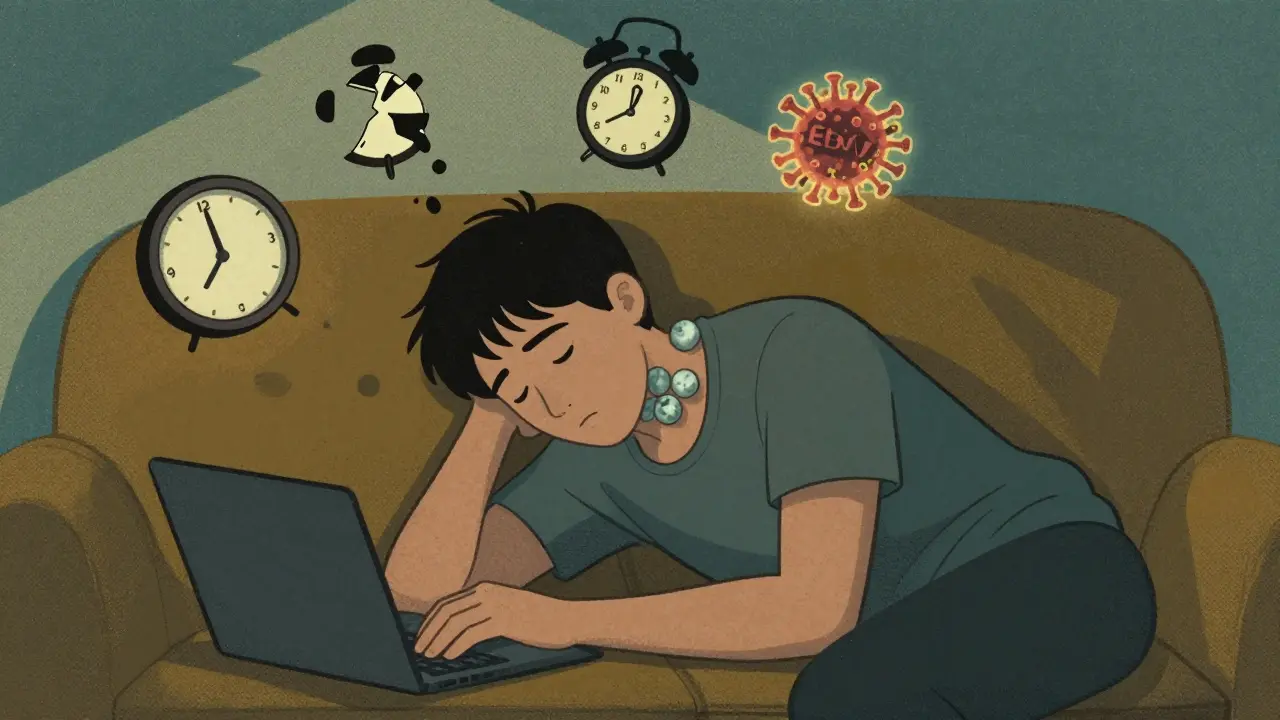
Mononucleosis isn’t just a bad cold that won’t go away. It’s a full-body shutdown triggered by the Epstein-Barr virus (a member of the herpesvirus family that infects over 95% of adults by age 35). Most people never know they had it - kids often get it with mild fever or a sore throat and bounce back fast. But for teens and young adults, especially those in college or sports, it hits hard. The fatigue isn’t laziness. The sore throat isn’t strep. And the exhaustion? It can last months, not weeks.
How EBV Takes Over
The Epstein-Barr virus (also called human herpesvirus 4) doesn’t just cause a runny nose. It targets B-cells in your throat, multiplies, and spreads through your lymph system. That’s why your neck swells, your tonsils turn white, and your glands feel like they’re full of marbles. You don’t feel sick right after exposure - the virus hides for 4 to 6 weeks before symptoms appear. That’s why it spreads so easily: you’re contagious before you even know you’re infected.
It’s called "the kissing disease" for a reason. Saliva is the main carrier - sharing drinks, utensils, or even a lipstick can pass it along. But it’s not just about romance. A teammate sharing a water bottle, a roommate using your fork, or a hug with a lingering cough - all can spread it. And once it’s in your body? It stays. EBV (lives in your immune cells for life) and can reactivate silently, especially if your immune system is stressed. That’s why people with transplants or autoimmune conditions sometimes get reinfected.
The Classic Triad - Fever, Sore Throat, Swollen Glands
When symptoms finally show up, they follow a pattern. Over 90% of cases hit with the classic trio: fever, sore throat, and swollen lymph nodes. The fever usually runs between 101°F and 104°F. It doesn’t break with Tylenol like a normal cold. The sore throat? It’s brutal. It looks like strep - red, swollen, with white patches - but antibiotics won’t touch it. In fact, if you’re given amoxicillin or ampicillin, you’re likely to break out in a full-body rash. That’s not an allergy. It’s a known EBV reaction.
Swollen lymph nodes, especially along the back of your neck, are almost universal. You can feel them before you even see them. And then there’s fatigue. Not "I’m tired" fatigue. The kind where you crawl out of bed, make coffee, and collapse on the couch 10 minutes later. Studies show 98% of people with mono report this level of exhaustion. It’s not in your head. It’s your immune system burning through every ounce of energy to fight the virus.
What Nobody Tells You - The Spleen Risk
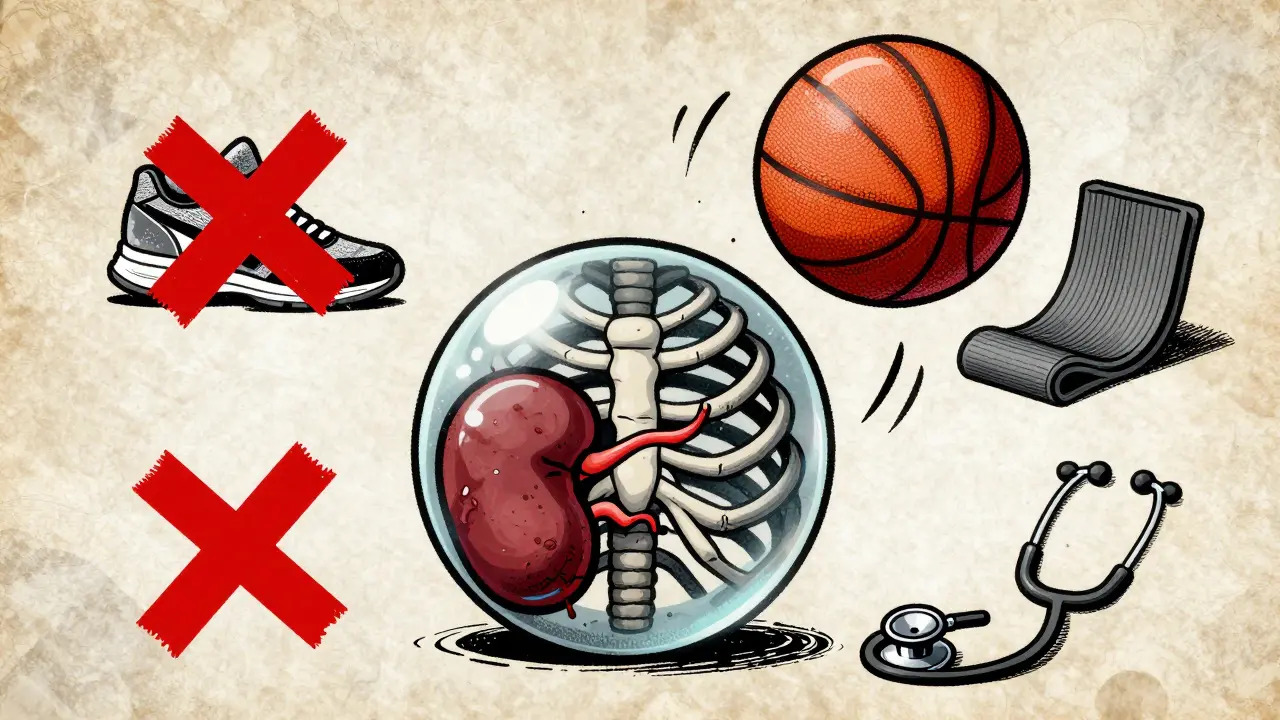
One of the most dangerous parts of mono isn’t the fever or the sore throat. It’s the enlarged spleen (happens in about half of all cases). The spleen sits under your left ribs and helps filter blood. When it swells from the virus, it becomes fragile - like a water balloon. A hard tackle, a fall, even a hard cough can cause it to rupture. That’s a medical emergency. Internal bleeding can kill you within hours.
Doctors don’t always stress this enough. But if you’ve been diagnosed with mono, you need to stop all contact sports immediately. No basketball, no soccer, no wrestling. No heavy lifting. Even yoga poses that compress your abdomen? Skip them. The American College of Sports Medicine says: wait at least four weeks. Better yet? Get an ultrasound to check if your spleen has returned to normal. That’s the only safe way to know. For some, it takes 12 weeks.
Fatigue That Lasts - And Why
Most people think mono lasts 2-4 weeks. That’s the fever and throat part. The fatigue? That’s a different story. Data from health forums and clinical studies show 63% of patients take 4 to 8 weeks just to return to normal school or work hours. Some don’t feel like themselves for 3 to 6 months. One Reddit user, u/MonoWarrior89, wrote: "I thought I was recovering at week 3. Then week 5 hit. Just showering exhausted me. Took 11 weeks to go back to part-time work."
Why does it drag on? Your immune system doesn’t shut off when the virus does. It keeps firing. Your body is still producing cytokines - inflammation signals - long after the virus is under control. That’s why you feel drained even when you’re no longer contagious.
There’s no magic pill. No antiviral that clears it faster. The Infectious Diseases Society of America reviewed 12 trials and found antivirals like acyclovir don’t change the course of mono. Steroids? They might shrink your throat a little faster - but only by about 12 hours - and they come with side effects like mood swings and blood sugar spikes. The real fix? Rest. Not just sleep. Real rest.
Recovery That Works - The Pacing Method
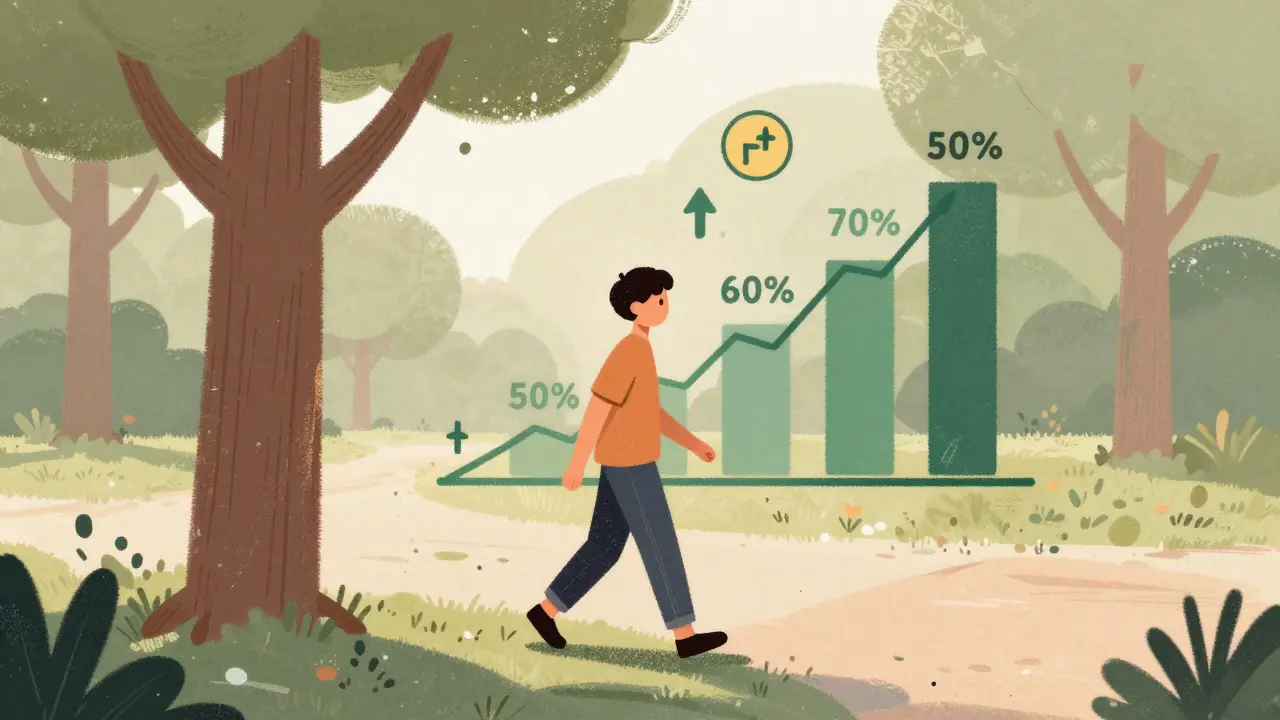
Trying to push through fatigue makes it worse. You can’t "get over it" by powering through. The best strategy comes from Stanford’s Fatigue Management Clinic: Pacing, Prioritizing, Planning (a structured energy budgeting system).
- Pacing: Start at 50% of your pre-illness energy level. If you used to work 8 hours, do 4. If you ran 5 miles, walk 2. Stay there for a week. If you feel worse, go back down. If you feel fine, increase by 10% next week.
- Prioritizing: Only do what absolutely must be done. Cancel non-essential plans. Let people help. You’re not lazy - you’re healing.
- Planning: Keep a simple log. Write down what you did, how you felt, and how long it took to recover. You’ll start seeing patterns. Maybe coffee makes you crash. Maybe afternoon naps help. Track it.
A 2023 study at the University of Toronto found that patients using this method had 40% less fatigue at 12 weeks than those who just rested randomly. One student in Perth told me: "I did the 20-20-20 rule - 20 minutes of activity, 20 minutes resting, 20 ounces of water. It kept me from crashing. Got me through finals."
When to Worry - Red Flags
Most cases of mono are annoying, not dangerous. But watch for these signs:
- Sharp left-sided pain: Could mean spleen rupture. Go to the ER.
- Difficulty breathing: Swollen tonsils can block your airway. Especially if you’re snoring loudly or waking up gasping.
- Yellow skin or eyes: Jaundice means your liver is involved. Happens in 10% of cases.
- Numbness or weakness in limbs: Could signal Guillain-Barré syndrome - rare, but serious.
If you’re still tired after 3 months, get tested for other causes - like chronic fatigue syndrome, Lyme, or thyroid issues. Mono doesn’t cause long-term fatigue in most people, but it can trigger it in a small group.
What About Testing?
Doctors usually start with the Monospot test (a rapid blood test for heterophile antibodies). But it’s not perfect. In the first week, it’s wrong 25% of the time. That’s why some people get negative results and are sent home - only to get sicker days later.
The gold standard is an EBV antibody panel (measures VCA-IgM, VCA-IgG, and EBNA). VCA-IgM shows recent infection. VCA-IgG means you’ve had it before. EBNA appears months later - and confirms you’re in the recovery phase. If you’re still tired after 6 weeks and your doctor says "it’s just mono," ask for this panel. It gives you real answers.
The Bigger Picture - EBV and Long-Term Risks
Here’s something startling: having mono doubles your risk of developing multiple sclerosis (MS) later in life. A 2022 Harvard study of 10 million military personnel found that people who had EBV were 32 times more likely to get MS than those who didn’t. That sounds scary - but remember, MS is still rare. Only 0.03% of people with mono develop it. Still, it’s why scientists are racing to develop an EBV vaccine (Moderna’s mRNA-1189 is in early trials with 92% success in early data).
And there’s new hope. A 2023 trial using a drug called atrasentan (a monoclonal antibody that targets EBV-infected cells) cut new MS lesions by 60% in early patients. That’s not a cure - but it’s a bridge. If we can stop EBV from triggering autoimmune damage, we might prevent MS before it starts.
Final Thoughts - Recovery Is a Process
Mononucleosis isn’t a disease you beat. It’s a condition you recover from - slowly, carefully, and with patience. You can’t rush it. You can’t ignore it. And you definitely can’t power through it.
Listen to your body. Rest when you need to. Say no to plans. Let people help. And if you’re a student, athlete, or parent of one - know this: fatigue isn’t weakness. It’s your immune system working overtime. And it deserves time.
Can you get mono twice?
Technically, yes - but it’s extremely rare. Once you’ve had EBV, your body keeps antibodies for life. Most people never show symptoms again. However, the virus can reactivate silently, especially under stress or in people with weakened immune systems. Even if the virus comes back, you usually don’t get the full mono symptoms again.
Is mono contagious after symptoms are gone?
Yes. The Epstein-Barr virus stays in your saliva for months - sometimes years - after you feel better. You can still spread it through kissing, sharing drinks, or even coughing. That’s why it’s called "the kissing disease." Most people don’t realize they’re contagious. There’s no clear cutoff date. If you’ve had mono, assume you can pass it on for at least 6 months.
Why do some people get mono and others don’t?
It’s mostly about age and immune response. Most kids get EBV without symptoms - their immune systems handle it quietly. But teens and young adults often have a stronger reaction, leading to full-blown mono. That’s why it’s common in college dorms or sports teams. It’s not about hygiene or exposure - it’s about how your body responds to the virus at that stage of life.
Can you exercise with mono?
No - not until your spleen is back to normal. Even light exercise like jogging or cycling can risk spleen rupture. Avoid all physical activity for at least 4 weeks. After that, start with walking and slowly increase. Get an ultrasound before returning to contact sports. Pushing too soon can be life-threatening.
Are antibiotics helpful for mono?
No - and they can make things worse. Mono is caused by a virus, so antibiotics do nothing. In fact, if you take amoxicillin or ampicillin, you’re very likely to develop a full-body rash. That rash isn’t an allergy - it’s a known reaction to EBV. Antibiotics also contribute to resistance and don’t shorten recovery. Focus on rest, fluids, and pain relief - not pills.
How long does fatigue last with mono?
Fatigue typically lasts 2 to 6 weeks, but in 20-30% of cases, it continues for 3 to 6 months. Some people report lingering tiredness for over a year. It varies based on age, overall health, and how well you rest. The key isn’t waiting for it to go away - it’s managing it with pacing. Gradual activity, not rest alone, helps your body rebuild its energy systems.
Can mono lead to chronic fatigue syndrome?
It can be a trigger. About 1 in 10 people who get mono report fatigue lasting longer than 6 months. While not everyone develops chronic fatigue syndrome (CFS), EBV is one of the most common known triggers. If your fatigue lasts beyond 6 months and doesn’t improve with rest, see a specialist. Blood tests can rule out other causes, and pacing strategies have helped many regain function.
Is there a vaccine for EBV?
Not yet - but there’s progress. Moderna’s mRNA-1189 vaccine entered Phase I trials in April 2023 and showed 92% seroconversion in early participants. Other research groups are testing protein-based and viral vector vaccines. The goal isn’t just to prevent mono - it’s to reduce the risk of EBV-linked cancers and MS. A vaccine could change how we think about this virus entirely.
Camille Hall
February 7, 2026 AT 14:59Just finished my 5th week of mono and I can’t believe how much I underestimated this. I thought I’d be back at work by week 3. Nope. Showering left me in bed for 2 hours. My doctor said "rest" but didn’t explain *how* to rest. Pacing saved me. Started at 30% energy, tracked everything. Now I’m at 70% and actually feel like me again. No magic, just patience.
Jonah Mann
February 9, 2026 AT 04:09lol i got mono in college and thought it was just a bad flu. i took amoxicillin because my throat was so sore. next thing i know i’m covered in a full body rash. my mom thought i had measles. turns out it’s a known ebv reaction?? why didn’t anyone tell me this??
THANGAVEL PARASAKTHI
February 9, 2026 AT 16:26From India, here. We call it "kissing disease" too, but no one talks about spleen risks. My cousin collapsed during a cricket match after mono. Spleen rupture. Emergency surgery. He’s fine now, but we never knew the danger. Everyone needs to hear this: no sports for 4 weeks minimum. Even yoga can kill you.
Tricia O'Sullivan
February 10, 2026 AT 11:35Thank you for this meticulously detailed and compassionate overview. It is rare to encounter medical information presented with such clarity and emotional intelligence. I shall share this with my students who are currently navigating recovery from infectious mononucleosis. The pacing method is particularly enlightening.
Scott Conner
February 11, 2026 AT 14:07wait so if ebv is in your body for life… does that mean you’re always contagious? like if i kissed someone 2 years after i had mono… could i still give it to them? also why do some people get symptoms and others don’t? is it just luck?
Brandon Osborne
February 12, 2026 AT 14:35Ugh. Another "just rest" post. Like that’s the only thing that matters. What about boosting your immune system? I took zinc, vitamin C, elderberry, and probiotics. I was back at the gym in 10 days. You people are weak. You think rest is the answer? Nah. You need to fight back. Stop being lazy and start taking control of your health.
Marie Fontaine
February 13, 2026 AT 07:21OMG YES. I had mono last year and thought I was fine at week 4. Went for a walk. Collapsed. Now I do 20-20-20 too 😍 20 min walk, 20 min nap, 20 oz water. Life saver. Also… if you’re tired, nap. No guilt. You’re healing, not lazy. 💪❤️
Lyle Whyatt
February 14, 2026 AT 08:43Let me tell you something about EBV and long-term fatigue. I’m an Australian physiotherapist who’s worked with over 80 mono patients in the last decade. The real issue isn’t the virus-it’s the immune system’s lingering hyperactivation. Cytokines keep firing like a broken alarm. Your body’s still on high alert even when the virus is gone. That’s why pacing works: it doesn’t just rest you, it retrains your nervous system. I’ve seen people go from bedridden to running marathons in 8 months… but only if they stick to the plan. No shortcuts. No "I’ll just do one more workout." One patient, a 19-year-old rugby player, tried to return after 3 weeks. Spleen rupture. He almost died. Now he’s coaching other kids on pacing. It’s not just medicine-it’s a lifestyle shift.
Tatiana Barbosa
February 14, 2026 AT 17:28EBV triggers autoimmunity via molecular mimicry. The viral proteins resemble host antigens-especially in the CNS. That’s why MS risk spikes. Pacing isn’t just about energy management-it’s neuroimmune regulation. Reduce stress load, lower cortisol, dampen cytokine storms. The 2023 Toronto study showed improved vagal tone in paced patients. That’s not anecdotal. That’s autonomic nervous system recalibration. You’re not just resting-you’re reprogramming your immune response.
Ken Cooper
February 16, 2026 AT 09:11My sister had mono last year. She got the EBV panel and it showed VCA-IgM positive, EBNA negative. That meant she was still in active phase. Her doctor just said "take tylenol" and sent her home. She was exhausted for 5 months. Why isn’t this standard? Everyone should get the full panel if fatigue lasts over 4 weeks. Also-yes, you can get mono twice? No. But you can have reactivation. It’s not the same symptoms, but you can still spread it. Don’t kiss your baby if you had it last year.
MANI V
February 17, 2026 AT 08:54People are so soft these days. "Oh I’m so tired, I can’t even shower." That’s not mono-that’s lack of discipline. I worked through flu season in a hospital for 12 years. You don’t get to quit because your body is weak. If you can’t handle a virus, maybe you should stop being a student. This post is just coddling people. Stop enabling laziness.
Sam Dickison
February 17, 2026 AT 09:01Just got my EBV panel back. VCA-IgG positive, EBNA positive. So I had it months ago. That’s why I’ve been dragging since January. My doc never told me to check. Why isn’t this routine? Also-spleen ultrasound? I didn’t even know that was a thing. I’m getting one next week. Thanks for the heads up.
Tom Forwood
February 18, 2026 AT 15:20As a Nigerian-American, I’ve seen this play out differently. In my family, kids get EBV at 3-just a fever for a day. But here in the US, teens get slammed. It’s not about hygiene. It’s about immune timing. Our bodies react differently depending on when we first meet the virus. I’m glad this post highlights that. Also-Moderna’s vaccine? If it works, it’ll be a game-changer. Not just for mono. For MS. For lymphoma. This virus is everywhere. We need to stop treating it like a rite of passage.