
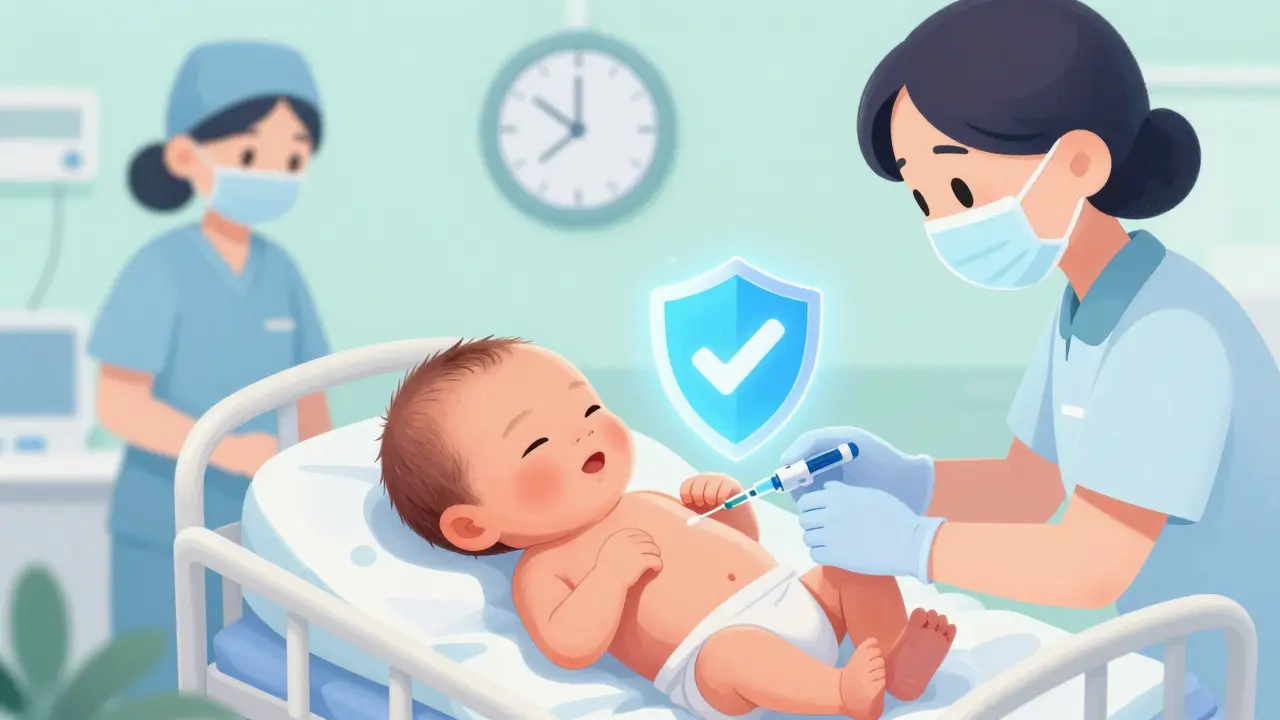
Hepatitis B vaccine is one of the most powerful tools we have to stop liver disease before it starts. Unlike other infections that fade with time, hepatitis B can silently damage your liver for decades-often without symptoms-until it’s too late. The good news? A simple, well-timed shot can prevent it completely. The same goes for hepatitis A, which spreads through contaminated food or water and can cause sudden, severe illness. Both vaccines are safe, effective, and work best when given on the right schedule. But here’s the problem: most people don’t know what that schedule actually is.
When to Get Hepatitis B Vaccine for Babies
The first dose of hepatitis B vaccine should happen within 24 hours after birth. This isn’t optional-it’s critical. Babies born to mothers with hepatitis B are at high risk of becoming lifelong carriers if not protected immediately. Even if the mother doesn’t have the virus, giving the shot right after birth stops transmission from other sources-like family members who might be unaware they’re infected. The CDC recommends this for all healthy newborns weighing at least 2,000 grams.
The full series for infants is three doses: the first at birth, the second between 1 and 2 months, and the third between 6 and 18 months. The last dose must be given no earlier than 24 weeks of age. This timing ensures the immune system builds strong, lasting protection. Missing the birth dose increases the chance of chronic infection by up to 90%. In places where birth dose coverage is above 90%, like Australia and parts of Europe, child hepatitis B rates have dropped below 1%.
How Hepatitis A Vaccine Works for Kids
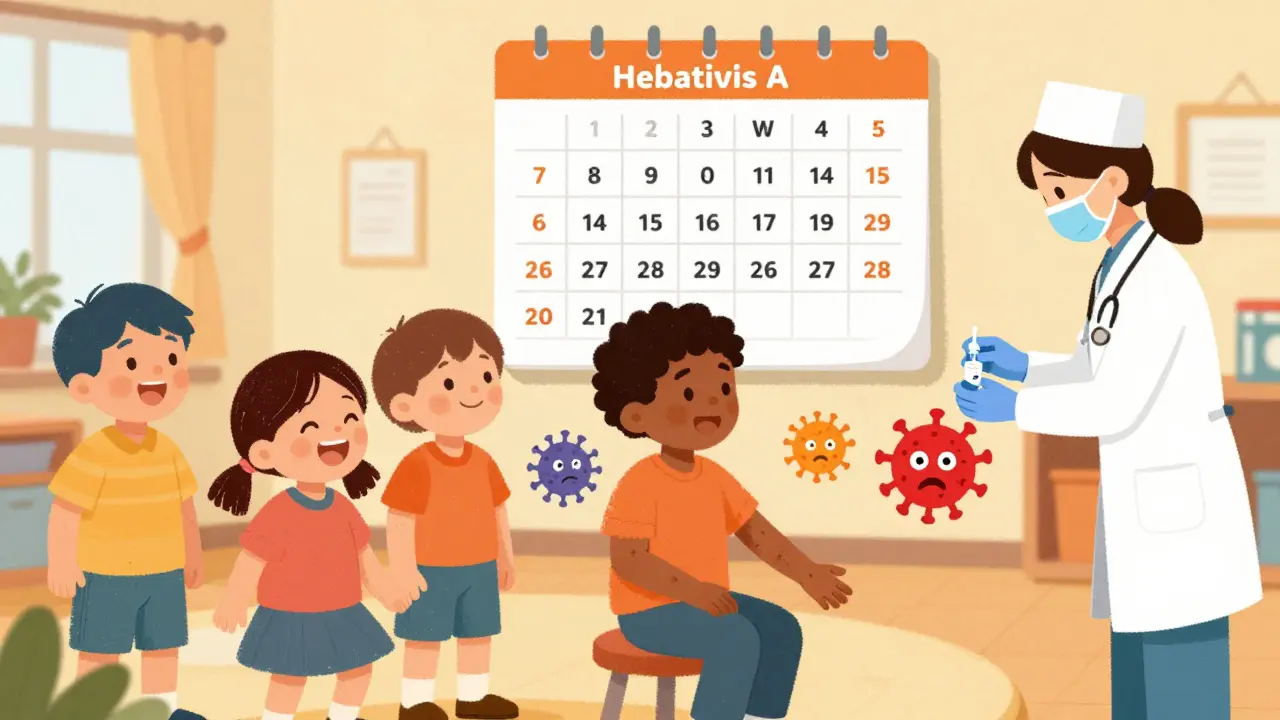
Hepatitis A doesn’t cause chronic liver damage like hepatitis B, but it can make kids very sick-fever, vomiting, jaundice, and weeks of feeling awful. The vaccine prevents this entirely. For children, it’s a two-dose series, starting between 12 and 23 months of age. The second dose must be at least 6 months after the first. There’s no flexibility here: giving the second shot too early means the immune system won’t respond properly.
Some parents think, “My child doesn’t travel, so they don’t need it.” But hepatitis A spreads easily in daycare centers and schools. Outbreaks happen even in clean, middle-class communities. The vaccine isn’t just for travelers-it’s routine childhood protection now, just like measles or polio.
Adult Vaccination Schedules: It’s Not One-Size-Fits-All
Adults have more options, but also more confusion. The traditional hepatitis B vaccine requires three shots: at 0, 1, and 6 months. But newer vaccines change the game. Heplisav-B, approved in 2017, works in just two doses-given one month apart. It’s more effective in older adults and people with diabetes, with up to 90% seroprotection compared to 70% with the old three-dose version. But it comes with a black box warning for heart risks, so it’s not for everyone.
Another option is PreHevbrio, a newer three-dose vaccine given at 0, 1, and 6 months. It’s designed for adults who want the same schedule as children but with broader coverage. Then there’s Twinrix, the combo vaccine for hepatitis A and B. It’s perfect for travelers or people who need both protections. Twinrix has two schedules: the standard three-dose series (0, 1, 6 months) or an accelerated four-dose version (0, 7, 21-30 days, then a booster at 12 months). The accelerated version gives you protection fast-94% of people are protected within 30 days. That’s why it’s popular for last-minute trips to Asia, Africa, or Latin America.
Special Cases: Immunocompromised and High-Risk Adults
If you’re on dialysis, have HIV, or take immunosuppressants, your body doesn’t respond the same way to vaccines. For these groups, higher doses or extra shots are needed. With Engerix-B, hemodialysis patients get four doses of 2 mL each-instead of the standard 1 mL. Recombivax HB requires three doses of 40 mcg/mL at 0, 1, and 6 months. These aren’t suggestions-they’re medical necessities. Without them, protection is weak or nonexistent.
People who inject drugs, have multiple sexual partners, or work in healthcare are also at higher risk. The CDC now recommends universal hepatitis B vaccination for all adults aged 19 to 59. Why? Because nearly half of new hepatitis B cases in the U.S. happen in adults with no known risk factors. You don’t need to be a drug user or have unprotected sex to catch it. A contaminated needle, shared razors, or even a tattoo in an unlicensed shop can do it.
Why People Miss Their Shots-and How to Fix It
Only 33% of adults aged 19 to 49 have completed the hepatitis B vaccine series. Why? Scheduling is messy. People forget. Insurance won’t cover the combo vaccine. Clinics don’t have standing orders. One study found that 41% of adults who start the series never finish it. That’s worse than skipping a dentist appointment-it leaves you unprotected for life.
But there are fixes. Pharmacies in 22 U.S. states now give hepatitis B shots without a prescription. In Perth, many local clinics offer walk-in vaccination. Standing orders-where nurses can give vaccines without a doctor’s direct order-have boosted adult vaccination rates by 28% in community health centers. And Heplisav-B’s two-dose schedule? It cut completion rates from 38% to 89% among people who inject drugs in needle exchange programs. Simpler schedules = more people protected.
What Happens If You Fall Behind
You don’t have to start over. If you missed a dose, just pick up where you left off. The CDC says: “No need to restart.” Even if it’s been years, the next dose still works. The only rule is minimum spacing: hepatitis B doses need at least 4 weeks between dose 1 and 2, and 8 weeks between dose 2 and 3. Hepatitis A doses need 6 months apart. If you got dose 1 of Hep A at age 20 and dose 2 at 25, you’re still protected.
For infants who missed the birth dose, start as soon as possible-even at age 5. The schedule adjusts: three doses with at least 4 weeks between the first two, and the third at least 8 weeks after the second and after age 24 weeks.
How to Know If the Vaccine Worked
Most people don’t need a blood test after vaccination. The CDC doesn’t recommend routine antibody testing for healthy children or adults. But if you’re immunocompromised, on dialysis, or a healthcare worker, a blood test for hepatitis B surface antibody (anti-HBs) is wise. A level above 10 mIU/mL means you’re protected. If it’s lower, you might need a booster or a second series.
For hepatitis A, no testing is needed. The two-dose series works for nearly everyone. Protection lasts at least 25 years, likely for life.
Cost and Access: What You Need to Know
Standalone hepatitis B vaccine costs $60-$80 per dose in the U.S. Twinrix, the combo vaccine, runs $150-$180 per dose. That’s expensive if you’re paying out of pocket. But under the Affordable Care Act, most private insurance plans cover both vaccines with no copay. Medicare Part B covers hepatitis B for high-risk adults. Medicaid covers it for all children and many adults.
If you’re uninsured, community health centers and public health departments often offer vaccines for free or on a sliding scale. In Australia, both hepatitis A and B vaccines are free for children under 10 and for high-risk adults through the National Immunisation Program.
What’s Next for Hepatitis Vaccines
Research is moving fast. Valneva is testing a new two-dose combo vaccine that could replace Twinrix. The NIH is working on a single-dose hepatitis B vaccine using new adjuvant tech-still in early trials, but promising. WHO is also exploring fractional dosing: using one-fifth of the normal dose to stretch supply in poor countries. These aren’t sci-fi-they’re real developments that could make global elimination possible by 2030.
Right now, the goal is simple: get the right shot, at the right time, for the right person. Hepatitis A and B are preventable. The tools are here. The only thing missing is action.
Can I get hepatitis A and B vaccines at the same time?
Yes. You can get them in separate shots on the same day, or use the combination vaccine Twinrix. There’s no safety issue with giving them together. In fact, combining them reduces the number of visits needed, which improves completion rates.
Is the hepatitis B vaccine safe during pregnancy?
Yes. The hepatitis B vaccine is safe during pregnancy and is recommended if you’re at risk-like if your partner has hepatitis B, you’re a healthcare worker, or you’re traveling to high-risk areas. It’s an inactivated vaccine, so it can’t cause infection. The benefits far outweigh any theoretical risks.
Do I need a booster after the full series?
For most people, no. Studies show protection lasts at least 30 years after the full series. The CDC doesn’t recommend routine boosters for healthy children or adults. Only people with weakened immune systems, dialysis patients, or healthcare workers exposed to blood should consider checking antibody levels and possibly getting a booster.
What if I don’t remember if I was vaccinated?
It’s safe to restart the series if you’re unsure. There’s no harm in getting extra doses. If you want to be sure, you can get a blood test for hepatitis B surface antibody. If it’s positive, you’re protected. If it’s negative, start the vaccine series. For hepatitis A, since there’s no routine testing, just complete the two-dose series if you’re unsure.
Can I get the vaccine if I already have hepatitis B or A?
No, and it won’t help. The vaccine prevents infection-it doesn’t treat it. If you already have chronic hepatitis B, the vaccine won’t clear the virus. If you’ve had hepatitis A in the past, you’re immune for life and don’t need the vaccine. Testing for prior infection before vaccination is only needed in high-risk groups, not the general public.
If you’re over 18, ask your doctor or pharmacist about hepatitis B vaccination today. If you have kids under 2, make sure they’ve had both doses of hepatitis A. These aren’t just shots-they’re lifelong shields for your liver.

Skye Kooyman
January 27, 2026 AT 22:08Just got my twinrix shot at the pharmacy yesterday-no appointment, no hassle. Felt like I just bought a latte. Why is this still not common knowledge?
Peter Sharplin
January 29, 2026 AT 01:07As a pediatric nurse, I’ve seen too many parents delay the birth dose because ‘it’s not urgent.’ Then they panic when the baby tests positive at six months. The window closes fast. This isn’t theoretical-it’s biological math. Every hour matters. If your hospital skips the birth dose, ask why. And if they say ‘we don’t have protocol,’ demand it. It’s not optional. It’s survival.
John Wippler
January 30, 2026 AT 17:03Think about this: we vaccinate kids for diseases we’ve never seen. Polio? Gone. Measles? Nearly. Hep B? Still lurking in your uncle’s razor, your coworker’s tattoo needle, the hospital where you gave birth. The vaccine isn’t about fear-it’s about legacy. You’re not just protecting your kid. You’re breaking a chain that’s been running since before antibiotics. That’s power. And it’s free for most people under the ACA. So why are we still talking about it like it’s a choice? It’s not. It’s responsibility dressed in a syringe.
Suresh Kumar Govindan
February 1, 2026 AT 09:34One must question the integrity of pharmaceutical entities promoting such schedules. The CDC’s recommendations are not scientific-they are corporate constructs designed to maximize vaccine uptake, not public health outcomes. The hepatitis B vaccine contains aluminum adjuvants linked to neuroinflammation. Why is this not discussed?
Aishah Bango
February 2, 2026 AT 08:40People who skip vaccines are just selfish. They think it’s about them, but it’s about the community. Your refusal to vaccinate your child is a moral failure. You’re playing Russian roulette with toddlers in daycare. Shame on you.
Jessica Knuteson
February 3, 2026 AT 01:01It’s interesting how we treat vaccines like magic bullets while ignoring systemic causes of disease. Poor sanitation causes Hep A. Poverty and lack of access cause Hep B spread. Vaccines are a bandaid on a hemorrhage. We celebrate the shot but ignore the broken healthcare system that makes people choose between rent and a booster.
James Nicoll
February 3, 2026 AT 10:46So let me get this straight. In Nigeria, a baby gets the Hep B shot within hours. In parts of the US, parents wait until the 2-year checkup because ‘we’re not high risk.’ Meanwhile, my cousin got it from a tattoo parlor in Ohio. We’re not fighting a virus. We’re fighting ignorance with a clipboard. And somehow, the guy who skipped his shots is the one yelling about ‘personal freedom.’
Faisal Mohamed
February 5, 2026 AT 10:32Heplisav-B is a game-changer. Two shots. One month apart. 90% seroprotection in older adults. 🚀 But the black box warning? Yeah, that’s real. My dad had a minor arrhythmia after it. Docs didn’t even mention it. We got lucky. Still-better than 70% protection with three shots. If you’re over 50 or diabetic? Ask for it. Don’t settle for the old schedule. Time is the only thing you can’t refill.
SWAPNIL SIDAM
February 6, 2026 AT 04:16I am from India. My son received both vaccines at the public clinic. Free. No paperwork. No waiting. I cried. In my village, people still believe hepatitis is caused by bad air. We must teach them. Not with fear. With love. With facts. And with vaccines.
Geoff Miskinis
February 6, 2026 AT 17:14The entire vaccination paradigm is a product of neoliberal healthcare commodification. The WHO’s fractional dosing initiative? A transparent attempt to offload responsibility onto low-income nations while maintaining patent monopolies. The ‘elimination by 2030’ rhetoric is performative. Real change requires dismantling IP regimes, not more adjuvants.
Mohammed Rizvi
February 7, 2026 AT 17:42I work in a needle exchange program. Before Heplisav-B, only 38% of folks finished the series. After? 89%. Two shots. One visit. That’s it. No more ‘I’ll come back next month.’ People show up. They get protected. Simple. Why is this not standard everywhere? Because bureaucracy hates simplicity.
eric fert
February 8, 2026 AT 18:00Okay, but what if you’re one of the 1 in 10,000 who gets autoimmune hepatitis after the vaccine? Or the 1 in 50,000 who develops Guillain-Barré? We’re told ‘it’s rare,’ but rare doesn’t mean ‘not me.’ And who tracks these cases? Not the CDC. Not the pharma reps. You get a pamphlet and a pat on the back. Meanwhile, your liver enzymes are climbing and your doctor says ‘it’s probably stress.’ We’re being sold a dream wrapped in a syringe. And we’re supposed to be grateful? The real risk isn’t hepatitis-it’s blind trust.
Curtis Younker
February 8, 2026 AT 18:25Look, I’m not a doctor, but I’ve helped 12 friends get their Hep B shots this year. I texted them reminders. I drove some to the clinic. One guy was terrified of needles-I sat with him while he cried. Another was uninsured-I found a free clinic. It’s not hard. It’s not fancy. It’s just showing up. And if you’re reading this and you’ve been putting it off? Do it today. Not tomorrow. Today. Your future self will thank you. And if you’re a parent? Don’t wait. Don’t overthink it. Just do it. Your kid’s liver doesn’t care about your schedule. It just wants to live.
Uche Okoro
February 10, 2026 AT 10:34The CDC’s recommended schedule for infants is predicated on a flawed assumption of vertical transmission as the primary vector. In sub-Saharan Africa, horizontal transmission via shared utensils and skin abrasions accounts for 67% of pediatric cases, per WHO 2022 surveillance data. The birth-dose imperative, while beneficial, is epidemiologically insufficient without concurrent public health interventions targeting fomite transmission. The vaccine is necessary, but not sufficient. The policy architecture remains reductionist.