
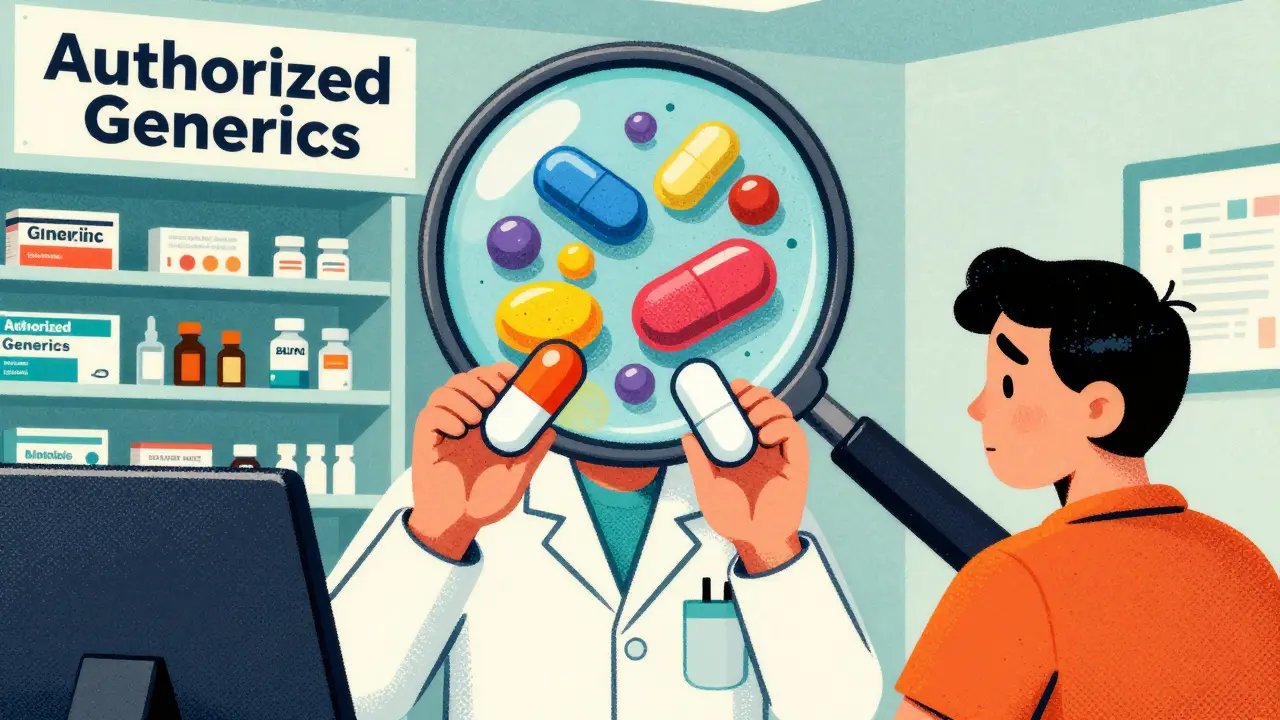
When a patient walks into the pharmacy with a prescription for a brand-name drug, the pharmacist’s first thought shouldn’t just be, "Can I swap this for a cheaper generic?" It should be, "Is this the right generic?"
Many people assume all generics are the same. They’re not. There’s a big difference between a regular generic and an authorized generic. And for certain patients, that difference can mean the difference between safe, effective treatment and a dangerous or ineffective switch.
What Exactly Is an Authorized Generic?
An authorized generic is the exact same drug as the brand-name version-same active ingredient, same inactive ingredients, same manufacturing process, same quality control. The only difference? It’s sold without the brand name on the label.
It’s made by the original brand company-or under their direct license-and then packaged and sold under a different name. Think of it like a car made by Toyota but sold under a different badge, with no changes to the engine, suspension, or safety features.
Unlike regular generics, which go through an Abbreviated New Drug Application (ANDA) and only need to prove they’re "bioequivalent," authorized generics are chemically identical. That means no guessing about whether the fillers, dyes, or coatings might trigger a reaction in someone with allergies, celiac disease, or religious dietary restrictions.
When Pharmacists Should Always Suggest an Authorized Generic
There are three clear situations where an authorized generic isn’t just a good option-it’s the best option.
1. Patients with Allergies or Sensitivities to Inactive Ingredients
Regular generics often use different fillers, binders, or coatings than the brand-name drug. That’s allowed under FDA rules. But for some patients, those differences matter.
Take celiac disease. A patient might be fine on the brand-name version because it uses gluten-free starch. But the generic they get switched to? It might use wheat starch. No warning. No label change. Just a different pill-and a flare-up.
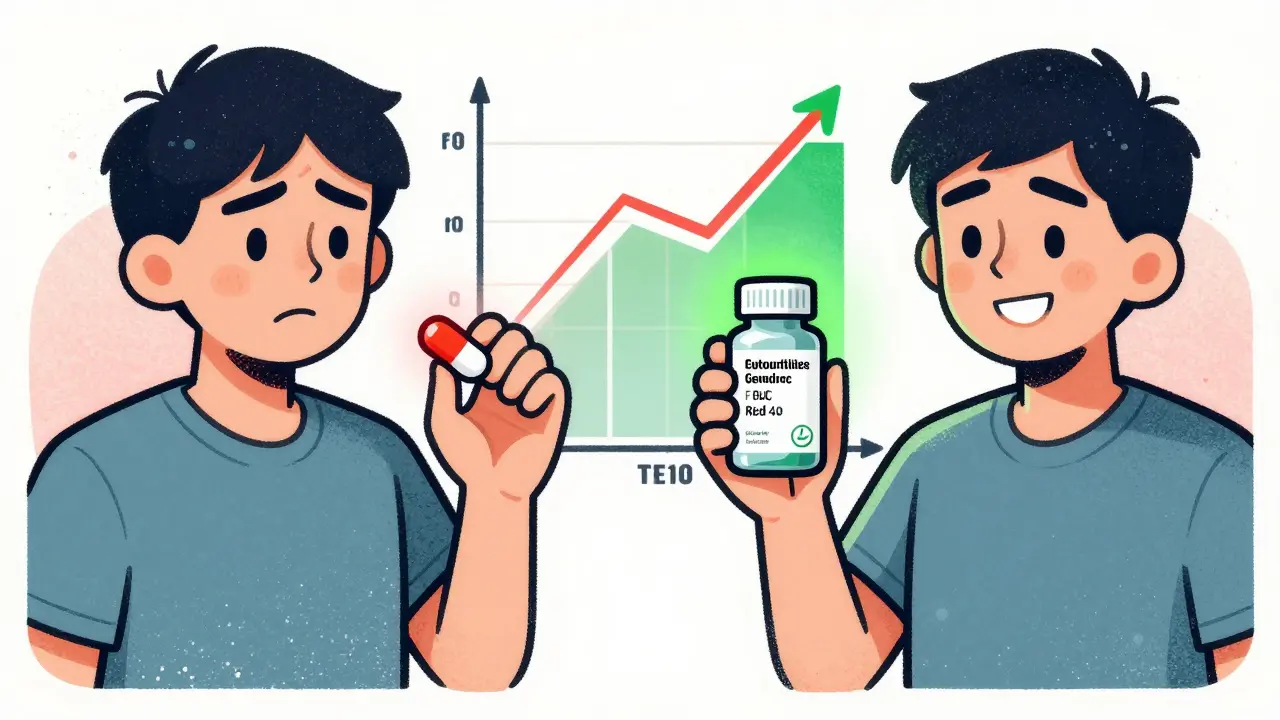
Same goes for lactose intolerance, gelatin allergies (common in Muslim or Jewish patients), or reactions to artificial dyes like FD&C Red 40. Authorized generics eliminate this risk because they use the exact same inactive ingredients as the brand. If the patient tolerated the brand, they’ll tolerate the authorized generic.
2. Narrow Therapeutic Index (NTI) Drugs
Some medications have a very thin line between effective and toxic. A tiny change in blood levels can cause serious harm. These are called narrow therapeutic index (NTI) drugs.
Examples include warfarin (blood thinner), levothyroxine (thyroid hormone), and phenytoin (anti-seizure). Studies show that 3-5% of patients on these drugs experience problems when switched to a regular generic-even if the generic is "bioequivalent."
Why? Because bioequivalence testing doesn’t capture subtle differences in how the drug is released over time, especially with extended-release formulations. Authorized generics avoid this entirely. They’re the same pill. Same dissolution profile. Same absorption rate.
For these patients, switching to a regular generic isn’t just a cost-saving move-it’s a clinical gamble.
3. Modified-Release or Complex Dosage Forms
Not all pills are created equal. Extended-release tablets, delayed-release capsules, and transdermal patches have complex delivery systems. A generic might have the same active ingredient, but if the release mechanism is different, the drug won’t work the same way.
For example, a patient on an extended-release methylphenidate (like Concerta) might get a generic that releases the drug too quickly, causing side effects like jitteriness or insomnia. Or too slowly, leading to poor symptom control.
Authorized generics don’t have this issue. They’re made on the same生产线, with the same coating, same granules, same release technology. If the brand worked, the authorized generic will work the same way.
How to Spot an Authorized Generic
They don’t show up in the FDA’s Orange Book-that’s for regular generics. So how do you find them?
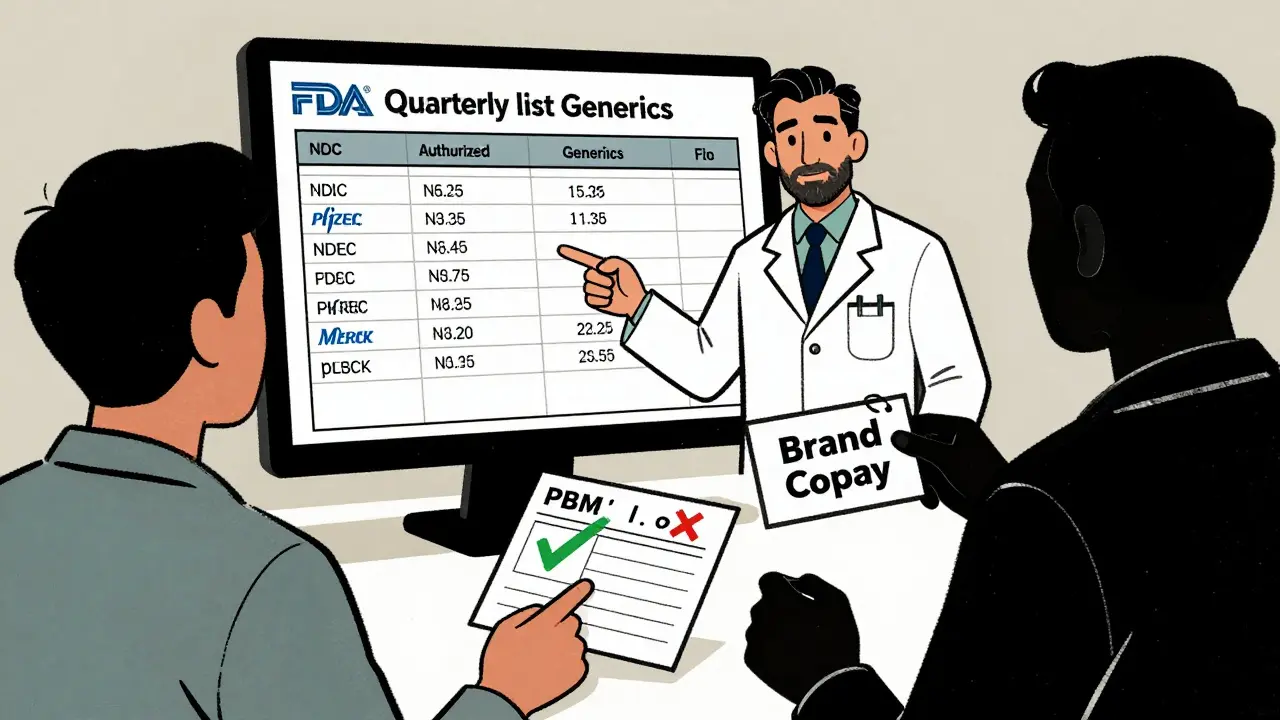
Check the FDA’s Quarterly List of Authorized Generics. As of September 2023, there were 257 authorized generics on the list-about 5% of all brand-name drugs with generic alternatives. Most are oral tablets or capsules.
Look at the National Drug Code (NDC). If the labeler code matches the brand-name manufacturer (like Pfizer, Merck, or AbbVie), or a known authorized licensee like Prasco or Greenstone, it’s an authorized generic. Regular generics will have a labeler code from a different company-like Teva, Mylan, or Sandoz.
And don’t be fooled by appearance. An authorized generic might look completely different from the brand-different color, shape, or imprint. But the inside? Identical.
What to Tell Your Patients
Patients get confused when their medication suddenly looks different. A 2022 study found that 27% of patients stopped taking their drug after a change in appearance-unless they were properly counseled.
Here’s what to say:
- "This pill looks different, but it’s the exact same medicine you were taking before. Same ingredients, same dose, same effect."
- "It’s made by the same company that made your brand-name drug."
- "You’ll save 20% to 80% off the brand price-without any risk of a different formulation."
- "If you had no problems with the brand, you won’t have problems with this."
For patients with dietary restrictions, say: "This version uses the same gluten-free, lactose-free, gelatin-free ingredients as your brand. You’re safe."
Insurance and Cost Considerations
Here’s the catch: even though authorized generics are chemically identical to the brand, many pharmacy benefit managers (PBMs) still classify them as "brand-name" drugs for billing purposes.
That means a patient might pay a higher copay than they would for a regular generic-even though the medication is the same. A 2022 study found that 63% of PBMs treated authorized generics like brand-name drugs in their formularies.
So check the patient’s plan. If the copay is high, ask the prescriber to write "Dispense as Written" only if absolutely necessary. Otherwise, explain the cost difference and offer to call the pharmacy to confirm pricing before filling.
When Authorized Generics Aren’t Available
Only about 5% of brand-name drugs have authorized generics. So you’ll often be choosing between the brand and a regular generic.
In those cases, use your judgment. For NTI drugs or patients with sensitivities, stick with the brand if cost allows. If not, monitor closely. Ask the patient to report any changes in side effects, effectiveness, or appearance within the first two weeks after switching.
And if a patient reports a problem after switching to a regular generic? Don’t assume it’s "just in their head." It’s not uncommon. A 2021 survey of 1,200 pharmacists found that 12% of patients reported reduced effectiveness or new side effects after switching to a generic.
In those cases, switch back to the brand-or if available-switch to the authorized generic.
Legal and Documentation Requirements
Federal law allows pharmacists to substitute an authorized generic unless the prescriber wrote "Do Not Substitute." Most states (42 out of 50) follow this rule.
But 18 states require you to notify the prescriber when making any generic substitution-including authorized generics. Check your state’s pharmacy board rules.
Always document the substitution. Use the "DA" modifier in billing systems to indicate a drug substitution occurred. Keep a record showing the authorized generic is therapeutically equivalent to the brand. That’s your protection if there’s ever a question.
The Future of Authorized Generics
The number of authorized generics has grown 18% per year since 2010. More are coming. The FDA continues to update its list quarterly, and consumer awareness is rising-GoodRx reports a 47% jump in searches for "authorized generics" between 2021 and 2022.
But the real challenge isn’t availability. It’s reimbursement. Until PBMs start treating authorized generics like true generics in their formularies, patients will keep paying more than they should.
As value-based care grows, pharmacists who understand and advocate for authorized generics will play a bigger role in reducing costs without compromising safety. For patients with complex needs, this isn’t just a cost-saving trick. It’s a clinical necessity.
Are authorized generics the same as brand-name drugs?
Yes. Authorized generics are manufactured by the same company that makes the brand-name drug, using the exact same formula, ingredients, and production process. The only difference is the label-they’re sold without the brand name. That means they’re chemically identical, not just "bioequivalent."
Why do authorized generics cost less than brand-name drugs?
They cost less because they don’t carry the marketing, advertising, or research costs associated with the brand name. The manufacturer saves on branding and promotion, and those savings are passed to the consumer. Typically, authorized generics cost 20% to 80% less than the brand, while regular generics save 80% to 85%-but may have different inactive ingredients.
Can I substitute an authorized generic without the prescriber’s permission?
In most cases, yes-unless the prescription says "Do Not Substitute." Federal law allows substitution, and 42 U.S. states permit pharmacists to switch to an authorized generic without notifying the prescriber. However, 18 states require prescriber notification for any generic substitution, including authorized generics. Always check your state’s pharmacy regulations.
Do authorized generics show up in the FDA’s Orange Book?
No. The Orange Book lists regular generics that have passed bioequivalence testing. Authorized generics are not listed separately because they’re considered identical to the brand-name drug by the FDA. To find them, you need to check the FDA’s separate Quarterly List of Authorized Generics.
Why do some insurance plans charge more for authorized generics?
Many pharmacy benefit managers (PBMs) classify authorized generics as brand-name drugs in their formularies, even though they’re chemically identical. This means patients may pay a higher copay than they would for a regular generic. This is a billing policy, not a medical one. Always verify the patient’s out-of-pocket cost before dispensing.
How do I know if a generic is an authorized generic?
Check the National Drug Code (NDC) labeler code. If it matches the brand-name manufacturer (like Pfizer, Merck, or AbbVie) or a known authorized licensee (like Prasco or Greenstone), it’s an authorized generic. You can also cross-reference the drug name with the FDA’s quarterly list of authorized generics.


Gabrielle Panchev
January 6, 2026 AT 18:11Okay, let me just say this-authorized generics are NOT the same as brand-name drugs, and you’re doing a disservice to patients by implying they are. The FDA’s bioequivalence standard is a joke-it allows for 80–125% variability in AUC and Cmax! That’s a 45% swing in exposure. If you’re prescribing warfarin or levothyroxine, you’re playing Russian roulette with a pill that looks identical but may have different dissolution kinetics. And don’t even get me started on the excipients-those ‘inert’ ingredients? They’re not inert. They’re the reason some patients get migraines, rashes, or GI flares. This article is dangerously oversimplified.
Dana Termini
January 7, 2026 AT 12:38I’ve worked in community pharmacy for 18 years, and I’ve seen patients crash after switching to generics that looked identical but felt different. I always check the NDC code first. If it’s Prasco or Greenstone and matches the brand’s manufacturer, I explain it’s the exact same pill-just cheaper. Patients relax immediately. No one wants to be a guinea pig. This isn’t about cost-it’s about trust. And authorized generics restore it.
Lily Lilyy
January 9, 2026 AT 02:18This is such a helpful guide! Thank you for breaking this down so clearly. So many patients are scared when their meds change, and this gives us the words to reassure them. I’m sharing this with my whole team!
Joann Absi
January 9, 2026 AT 15:47THE SYSTEM IS RIGGED. Big Pharma makes the brand, then licenses the SAME PILLS to their own subsidiary and sells it as an "authorized generic"-so they still get the profit, but now they’re calling it "generic" to trick Medicare and Medicaid into paying less. They’re laughing all the way to the bank while patients get confused and overcharged. This isn’t healthcare-it’s corporate theater. 🤡💸
Isaac Jules
January 10, 2026 AT 09:19LMAO at people who think "authorized generic" is some magic solution. You’re still getting a pill made by the same company that charges $1,200 for the brand. The only difference is you’re not paying for the logo. This is like buying a BMW without the emblem and calling it a "better car." It’s still the same factory, same assembly line, same overpriced nonsense. Stop pretending this is patient care-it’s just brand dilution with a side of profit retention.
Mukesh Pareek
January 11, 2026 AT 10:43From a pharmacoeconomic standpoint, the authorized generic model represents a suboptimal market segmentation strategy. The manufacturer captures both the premium segment (brand) and the price-sensitive segment (authorized generic), thereby maximizing revenue extraction while minimizing regulatory risk. The absence of Orange Book listing circumvents ANDA scrutiny, allowing for implicit bioequivalence claims without formal equivalence validation. This is regulatory arbitrage dressed as patient advocacy.
Jeane Hendrix
January 11, 2026 AT 22:16So wait-I just realized I’ve been giving patients the wrong info for years. I always thought "generic" meant cheaper and same. But now I’m checking NDC codes and calling reps to confirm if it’s authorized. I’ve had two patients come back saying their anxiety meds "felt off" after switching-turns out they got a regular generic with different fillers. I’m so glad I found this. Thanks for the wake-up call.
Rachel Wermager
January 13, 2026 AT 05:54Actually, the real issue here is the lack of standardized labeling requirements for authorized generics. The FDA doesn’t mandate a distinct identifier on the packaging, which creates ambiguity for both pharmacists and patients. Without a unique NDC prefix or a mandated "Authorized Generic" banner, this is just marketing semantics. We need legislative action-like the Generic Drug Transparency Act-to force disclosure. Until then, we’re all just guessing.
Saylor Frye
January 13, 2026 AT 14:55Wow. I didn’t realize authorized generics were a thing. I just assumed all generics were made by the same shady Chinese factories. Turns out some are just the brand’s own pills with a different sticker. Kinda wild. Still, I’m not paying more for a pill just because it’s got the same logo on the inside.
Melanie Clark
January 13, 2026 AT 22:31They’re watching us. The FDA, the PBMs, the manufacturers-they all know that when you switch someone to a generic with different dyes, it triggers autoimmune flares in susceptible people. But they don’t care. They don’t want you to know that your thyroid med might be laced with gluten. They don’t want you to know that your antidepressant might have gelatin from pigs. That’s why they bury it in the fine print. You think this article is helping? It’s just another distraction. They’re still selling you poison under a different name. And you’re thanking them for it.
Stuart Shield
January 14, 2026 AT 01:32Man, I’ve had patients cry when they found out they could get the same pill for a tenth of the price. One lady with bipolar disorder switched from the brand to an authorized generic and said, "I haven’t felt this stable in years." She thought the brand was magic. Turns out, it was just the same damn tablet. I wish more pharmacists knew this. We’re not just dispensers-we’re translators between science and fear.
Katelyn Slack
January 15, 2026 AT 00:29just wanted to say thank you for this. i’ve been scared to switch my dad’s warfarin for years. now i know to check the ndc. he’s been on the authorized generic for 3 months and his inr is perfect. no more panic attacks when the pill looks different. you saved us.