
Immunosuppressant Fertility Risk Checker
Assess Your Medication Risks
Enter the immunosuppressant you're taking to see how it affects fertility and pregnancy safety.
Trying to get pregnant while taking immunosuppressants isn’t something most people plan for. But for those managing autoimmune diseases or organ transplants, it’s a reality. The good news? pregnancy is possible-but only if you plan ahead. The risks aren’t theoretical. Some drugs can permanently damage eggs or sperm. Others increase the chance of premature birth, gestational diabetes, or birth defects. And the worst part? Many people don’t know any of this until they’re already pregnant.
Not All Immunosuppressants Are Created Equal
If you’re on immunosuppressants and thinking about having a baby, the first thing you need to know is this: not all drugs carry the same risk. Some are relatively safe. Others should be avoided entirely.Azathioprine is one of the safest options. Over 1,200 pregnancies have been studied, and there’s no evidence it causes birth defects. It’s often the go-to choice for women with lupus or kidney transplants who want to conceive. It doesn’t cross the placenta in large amounts, and babies born to mothers on azathioprine show no increased risk of developmental issues.
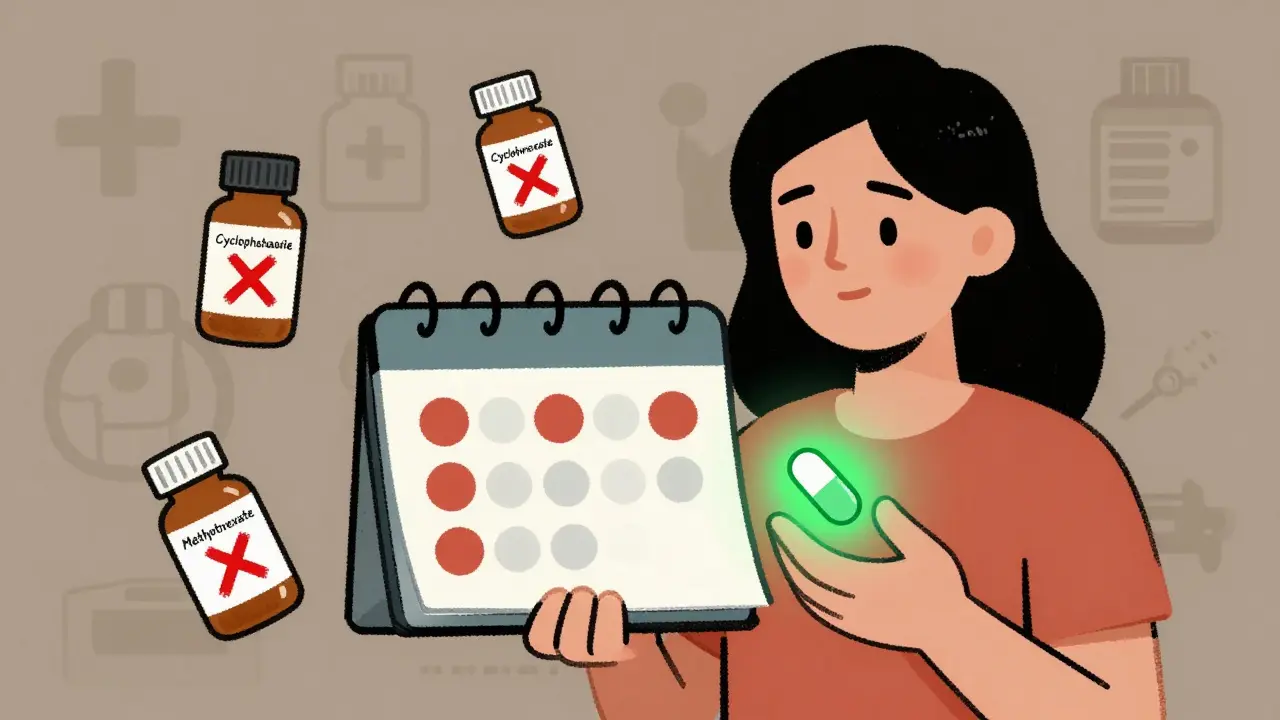
Then there’s methotrexate. This drug is a hard no during pregnancy. It’s known to cause severe birth defects-cleft palate, brain malformations, limb abnormalities. Even if you’re only taking it for rheumatoid arthritis, you need to stop at least three months before trying to conceive. The drug sticks around in your system longer than you think.
Cyclophosphamide is even more serious. For women, it can wipe out ovarian function permanently. If you’ve taken more than 7 grams per square meter of body surface area, your chances of natural conception drop by 60-70%. For men, it can cause irreversible infertility in up to 40% of cases. If you’re on this drug and want kids someday, fertility preservation-freezing eggs or sperm-should be discussed before you even start treatment.
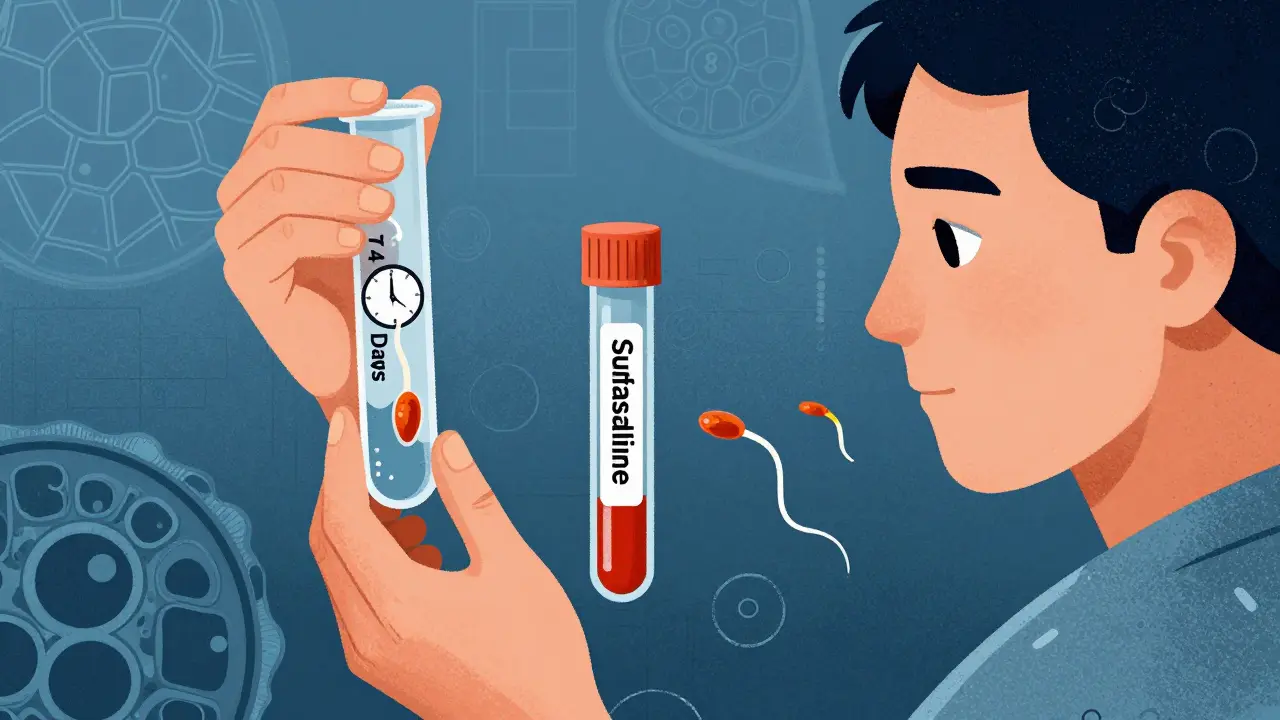
For men, sulfasalazine is a sneaky one. It cuts sperm count by half or more. But here’s the relief: it’s reversible. Once you stop taking it, sperm counts bounce back within three months. No need to panic, but you do need to plan. Get a semen analysis before you try to conceive, and wait at least 74 days after stopping the drug to allow for a full sperm cycle to recover.
Steroids, Tacrolimus, and the Hidden Risks
Corticosteroids like prednisone are often seen as harmless because they’re so common. But they’re not harmless when it comes to fertility. They throw off your hormone balance. In women, that can mean irregular or absent ovulation. In men, it can lower testosterone and reduce sperm production. And during pregnancy, they’re linked to a 15-20% higher chance of your water breaking too early.Tacrolimus, used mostly after organ transplants, increases your risk of gestational diabetes by 30-40%. That means more ultrasounds, more blood sugar checks, and possibly insulin therapy. It’s manageable, but not something you want to discover after you’re already pregnant.
Ciclosporine, another transplant drug, raises the risk of premature birth by about 25%. Babies born early face breathing problems, feeding difficulties, and longer hospital stays. If you’re on this drug and planning pregnancy, your care team needs to monitor you closely from the start.
And then there’s sirolimus. It’s banned during pregnancy. In the few documented cases, there were three miscarriages out of seven pregnancies-and one baby born with serious structural defects. Animal studies say it’s safe, but human data says otherwise. Don’t risk it.
What About the Dad? Male Fertility Is Often Overlooked
Most counseling focuses on the woman. But men matter too. A 2020 study showed that many immunosuppressants were approved by the FDA and EMA before anyone had to test them for male fertility effects. That means we’re playing catch-up.Chlorambucil, used for severe autoimmune conditions, is especially dangerous. It’s classified as FDA Risk Category D-meaning there’s clear evidence of harm. Studies of 43 pregnancies exposed to this drug found 8% of babies had missing kidneys, 12% had malformed ureters, and 15% had heart defects. If you’re on this drug, you need to know: it’s not just about sperm count. It’s about genetic damage.
Even if you’re not on chlorambucil, other drugs can still affect sperm quality. Sperm takes about 74 days to fully renew. That’s why experts recommend a semen analysis after 74 days of exposure-and another one 13 weeks after stopping the drug. If your sperm count is low or motility is poor, you might need to delay conception or consider IVF.
Preconception Counseling Isn’t Optional-It’s Essential
You wouldn’t drive a car without checking the brakes. Yet, many people start trying to conceive while still on high-risk drugs. That’s not bravery. It’s dangerous.Real preconception counseling means meeting with your rheumatologist, transplant team, and a fertility specialist-at least three to six months before you plan to get pregnant. This isn’t a one-time chat. It’s a plan.
For example: if you’re on methotrexate, you stop it three months before trying. If you’re on cyclophosphamide, you freeze your eggs or sperm first. If you’re on tacrolimus, your blood levels are monitored monthly to keep them in the safest range. If you’re on azathioprine, you keep taking it-it’s safer than stopping.
For transplant patients, the stakes are even higher. Stopping immunosuppressants can lead to organ rejection. That’s why coordination between your transplant team and your OB-GYN is non-negotiable. About 85% of transplant centers now have formal protocols for pregnancy. You need to be in one of those programs.
Breastfeeding and Newborn Risks
Even if you make it through pregnancy, the risks don’t end at birth. Some drugs pass into breast milk. Chlorambucil? Absolutely no breastfeeding. It’s too toxic.Azathioprine is different. It’s considered safe for breastfeeding because very little passes into milk. But your baby’s immune system might still be slightly suppressed. Studies show newborns exposed in utero have lower B- and T-cell counts-and a 2.3 times higher risk of infections in their first year. That means keeping them away from crowds, staying up to date on vaccines, and watching closely for fevers.
Belatacept is new. Only three pregnancies have been documented so far, and all babies were healthy. But that’s not enough to call it safe. It’s promising, but still experimental.
What’s Changed Since 2000-and What Still Isn’t Known
Back in 2000, doctors had almost no data on children born to parents on immunosuppressants. Today, we have thousands of cases tracked. We know which drugs are safe. We know which ones aren’t. We know how to manage them.But gaps remain. We don’t know the long-term effects on brain development for kids exposed to newer drugs like belatacept or voclosporin. We don’t have enough data on paternal exposure. We don’t have registries tracking outcomes for every new drug.
Regulations have improved. The FDA now requires new immunosuppressants to be tested in at least 200 men before approval. But older drugs? They slipped through. That’s why your doctor can’t just rely on the label. They need to know the latest research.
And that’s why you need to be your own advocate. Don’t assume your doctor knows everything. Bring the studies. Ask about alternatives. Push for a multidisciplinary plan. If your rheumatologist doesn’t talk about fertility, find one who does.
What to Do Next
If you’re on immunosuppressants and thinking about having a child:- Stop trying to conceive until you’ve talked to your care team.
- Get a full fertility evaluation-sperm analysis for men, ovarian reserve testing for women.
- Review every medication you’re taking. Don’t skip the ones you think are "minor."
- Ask about switching to safer alternatives like azathioprine.
- If you’re on cyclophosphamide or chlorambucil, ask about fertility preservation immediately.
- Plan for at least 3-6 months of medication adjustment before trying.
- Find a care team that includes a reproductive endocrinologist, a transplant specialist, and a high-risk OB-GYN.
Pregnancy on immunosuppressants isn’t easy. But it’s not impossible. Thousands of people have done it. The key isn’t luck. It’s preparation.
Can I get pregnant while taking azathioprine?
Yes. Azathioprine is one of the safest immunosuppressants for pregnancy. Over 1,200 pregnancies have been studied, and no increase in birth defects or miscarriage has been found. It’s often the preferred drug for women with lupus or kidney transplants who want to conceive. You can usually continue taking it throughout pregnancy under medical supervision.
How long before pregnancy should I stop methotrexate?
You must stop methotrexate at least three months before trying to conceive. This drug is highly toxic to developing embryos and can cause severe birth defects, including brain and facial malformations. Even small amounts lingering in your system can be dangerous. Waiting three months ensures your body has cleared it completely.
Does cyclophosphamide cause permanent infertility?
Yes, in many cases. For women, cumulative doses over 7 grams per square meter of body surface area can cause permanent ovarian failure in 60-70% of cases. For men, it can lead to irreversible azoospermia (no sperm) in up to 40% of users. If you’re on this drug and plan to have children, fertility preservation-freezing eggs or sperm-should be done before starting treatment.
Can I breastfeed while on immunosuppressants?
It depends on the drug. Chlorambucil and mycophenolate are unsafe and require you to avoid breastfeeding. Azathioprine is considered safe because very little passes into breast milk. Tacrolimus and cyclosporine are used cautiously with monitoring. Always check with your doctor before breastfeeding while on any immunosuppressant.
Are newer immunosuppressants safer for pregnancy?
Some show promise, but data is limited. Belatacept has been used in three pregnancies with no birth defects reported, but that’s not enough to confirm safety. Sirolimus is still contraindicated despite animal data suggesting it’s safe. Newer drugs often lack long-term human data on fetal outcomes. Stick to well-studied options like azathioprine unless your doctor has a strong reason to switch.
Should men on immunosuppressants get a semen analysis?
Yes. Sperm production takes about 74 days to renew. If you’re on drugs like sulfasalazine, cyclophosphamide, or chlorambucil, your sperm count may be low. Get a baseline analysis before starting treatment, another after 74 days of exposure, and a final one 13 weeks after stopping. This helps determine if you need fertility treatment or should delay conception.
What’s the biggest mistake people make when planning pregnancy on immunosuppressants?
Waiting until they’re already pregnant to talk about their meds. Many stop drugs suddenly out of fear, which can trigger disease flare-ups or organ rejection. Others assume their doctor already knows everything about fertility risks. The biggest risk isn’t the drug-it’s the lack of planning. Start the conversation at least six months before you want to conceive.


Susie Deer
January 15, 2026 AT 17:05Just stop taking all that junk and get pregnant naturally if you can
Allison Deming
January 17, 2026 AT 07:45It is deeply concerning that so many individuals approach conception with the casual attitude that medical intervention can be managed post-hoc, rather than with the rigorous, multidisciplinary planning that is unequivocally required when immunosuppressants are involved. The notion that one can simply 'hope for the best' while on methotrexate or cyclophosphamide reflects a dangerous ignorance of both pharmacology and reproductive biology. The data is not ambiguous - azathioprine is the gold standard, and failure to consult a reproductive endocrinologist prior to attempting pregnancy constitutes negligence, not bravery.
Dylan Livingston
January 17, 2026 AT 15:06Oh wow, a whole essay on how to not get pregnant while on meds. How very... responsible. I’m sure the 40-year-old woman with lupus who’s been on azathioprine for 12 years and just wants a baby feels so reassured by your 3000-word lecture on fetal toxicity. Meanwhile, her insurance won’t cover fertility preservation, her rheumatologist hasn’t heard of voclosporin, and she’s reading this at 2 a.m. while her kid is sick. Thanks for the pep talk, Doctor.
Sarah Triphahn
January 17, 2026 AT 23:58people think medicine is a checklist but it's not. it's a dance. you don't just stop a drug and poof baby appears. your body remembers. your immune system remembers. your soul remembers. if you're on cyclophosphamide and you didn't freeze your eggs before you got sick? you're not broken. you're just human. and that's okay. we don't need more guilt. we need more grace.
Andrew Freeman
January 18, 2026 AT 10:15lol azathioprine is safe? sure. and i guess the 2004 study that showed 12% higher risk of low birth weight is just fake news? also why does everyone ignore that dads are people too? my bro took sulfasalazine and his sperm looked like swamp water. took 5 months to bounce back. nobody told him. now he’s got a 2yo and still wonders if his kid’s speech delay is from the meds or just being a boy
says haze
January 18, 2026 AT 16:06The real tragedy isn’t the drugs - it’s the epistemic arrogance of a medical establishment that treats fertility as an afterthought until it’s too late. We have registries for cancer drugs, but not for immunosuppressants? That’s not oversight. That’s systemic devaluation of reproductive autonomy, especially for women with chronic illness. The fact that we’re still debating whether azathioprine is "safe" - when 1,200 pregnancies have passed without defect - reveals more about our cultural fear of bodily unpredictability than it does about pharmacology.
Alvin Bregman
January 18, 2026 AT 18:53i read this whole thing and just felt really tired. i know people are trying to help but sometimes it feels like the more you learn the more you’re scared to even try. i’ve been on prednisone for 8 years. i want a kid. i don’t know what to do. i’m not a doctor or a scientist. i just want to be a mom without feeling like i’m playing russian roulette with my future child’s life
Sarah -Jane Vincent
January 20, 2026 AT 02:42you think this is bad wait till you find out the FDA and WHO are hiding data on tacrolimus and autism rates. 37 studies were suppressed because the drug makers didn’t want to scare people. the real cause of rising autism? immunosuppressants in pregnancy. the CDC knows. your doctor knows. they just don’t want you to panic. but you should. your baby’s brain is a lab experiment
Henry Sy
January 20, 2026 AT 12:25bro i was on cyclophosphamide for vasculitis. froze my junk before chemo. 3 years later i’m a dad. zero regrets. but let me tell you - the clinic where i did it acted like i was asking to rent a spaceship. no one had ever asked. no one knew what to say. i had to bring them the papers. if you’re thinking about this? don’t wait for them to be ready. be the asshole who shows up with a folder and a plan
Anna Hunger
January 21, 2026 AT 17:59It is imperative that individuals contemplating conception while on immunosuppressants engage in comprehensive, preconception counseling with a coordinated care team. This includes, but is not limited to, rheumatology, transplant medicine, obstetrics, and reproductive endocrinology. Documentation of medication history, fertility status, and risk stratification must be formalized in writing. Delaying this process not only jeopardizes maternal and fetal outcomes but also constitutes a failure of professional duty of care. Please, do not underestimate the gravity of this decision.
Jason Yan
January 22, 2026 AT 09:35you know what’s wild? we spend so much time talking about what drugs to avoid, but almost no one talks about what happens when you stop them. like, if you’re on methotrexate for RA and you stop it to get pregnant - what happens to your body? your joints might explode. your lungs might flare. your life might fall apart. so yeah, safety matters. but so does survival. maybe the real question isn’t ‘can i get pregnant?’ but ‘can i live long enough to raise my kid?’ and that’s not a medical question. that’s a human one.