
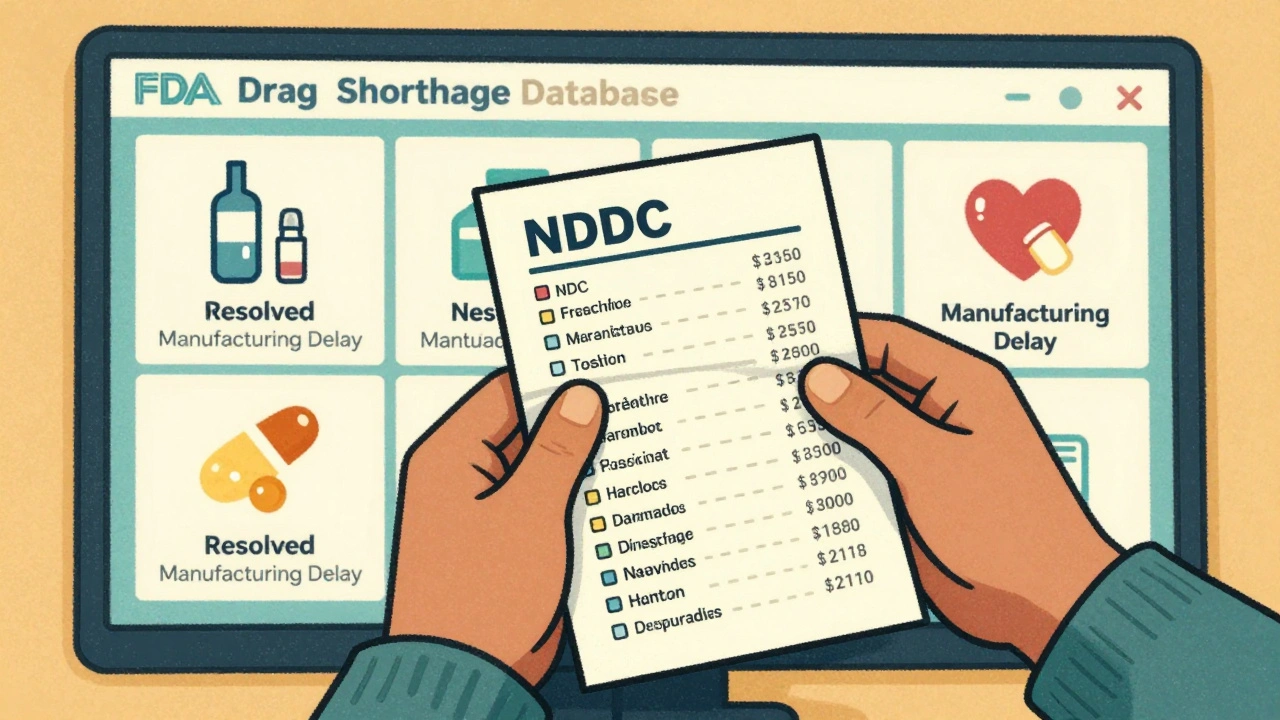
When a medication you or someone you care for depends on suddenly disappears from the pharmacy shelf, it’s not just inconvenient-it can be dangerous. In 2024, over 298 drugs were in short supply across the U.S., with many of them critical injectables like insulin, antibiotics, and heart medications. The FDA drug shortage database is the most reliable federal tool to find out exactly which drugs are affected, why, and when they might be back. It’s free, official, and updated daily. But if you’ve tried using it before, you probably know: it’s not always easy to navigate. Here’s how to use it correctly so you don’t miss critical updates.
What the FDA Drug Shortage Database Actually Shows
The FDA’s database doesn’t just list drugs that are hard to find. It tracks only those where national demand exceeds supply-meaning it filters out local or temporary stockouts. This makes it more accurate than other resources, but also means some shortages you hear about locally might not appear here right away. Each entry includes the drug’s generic name, manufacturer, National Drug Code (NDC), reason for the shortage, and an estimated resolution date. About 68% of shortages are caused by manufacturing problems or quality issues, like contamination or equipment failure-not because of lack of raw materials or high demand alone.
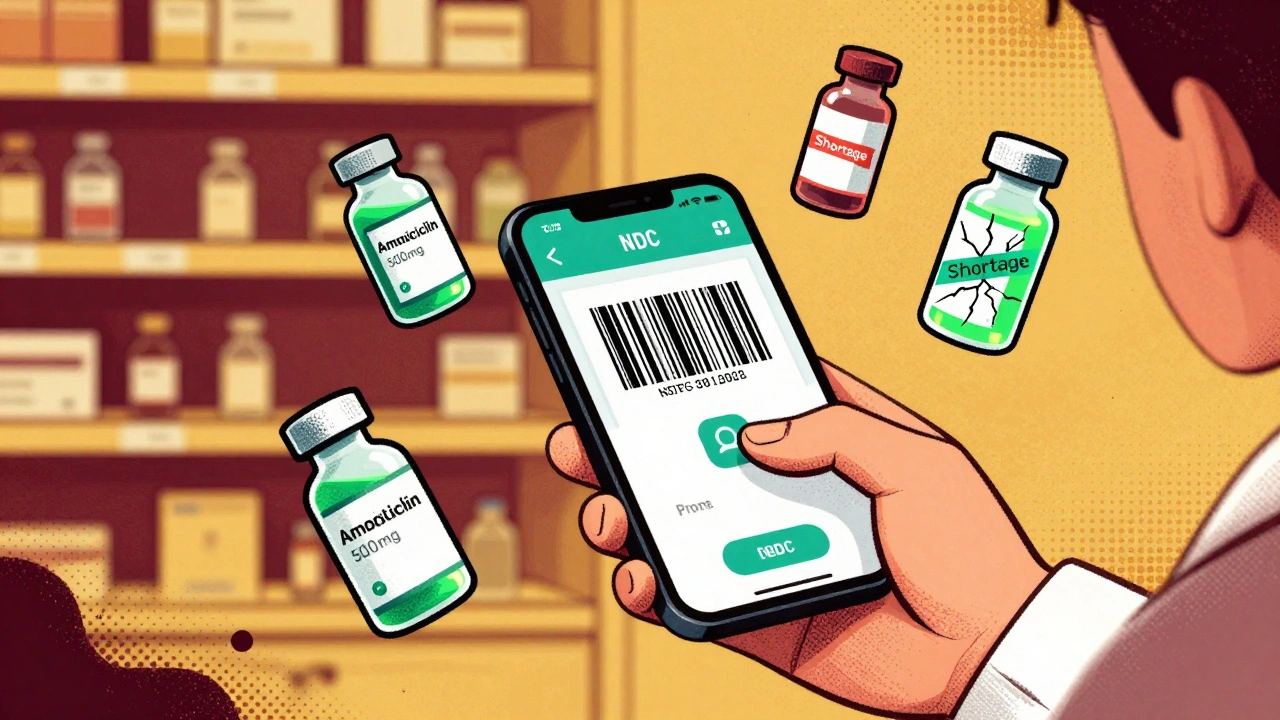
For example, if you’re looking for amoxicillin, you won’t just see “amoxicillin is short.” You’ll see which specific NDCs are affected-say, the 500mg capsules made by Teva versus the 250mg chewables from Mylan. That matters because one formulation might be available while another isn’t. The database also shows if a drug has an extended use date, meaning expired stock is still considered safe to use under emergency conditions. That’s something pharmacies need to know but patients rarely hear about.
How to Access the Database
You can access the FDA Drug Shortage Database three ways: through the website, the mobile app, or the downloadable dataset. The main site is www.accessdata.fda.gov/scripts/drugshortages/default.cfm. It loads fast, works on any browser, and doesn’t require an account. The mobile app, available on iOS and Android since 2022, is better for on-the-go checks. It sends push alerts for critical shortages and lets you report a shortage you’ve noticed that’s not listed yet. You just need your email to verify your report.
Most people use the website because it’s the most complete. Type in a drug name-like “heparin” or “propofol”-and the results show every version of that drug currently in shortage. You can also filter by manufacturer, dosage form (tablet, injection, etc.), or therapeutic category like “cardiovascular” or “antibiotics.” The filter options were added in July 2024 after years of user feedback asking for more precision. Before that, users had to scroll through dozens of unrelated entries.
Understanding the Status Codes
Don’t assume “resolved” means the drug is back in full supply. The FDA defines “resolved” as when supply meets demand-not when shelves are fully stocked. A drug might be resolved on paper but still hard to find in your local pharmacy. Always check the “reason for shortage” field. If it says “manufacturing delay,” the issue might be fixed, but inventory is still being rebuilt. If it says “quality issue,” there could be more batches pulled later.
Some codes are confusing. “Component shortage” means one ingredient in the drug is running low. “Raw material shortage” points to a problem upstream, like a chemical supplier. “Regulatory delay” means the FDA is reviewing a new manufacturing site. Each tells you something different about how long it might take to fix. A 2023 survey found 43% of pharmacists misread these codes, leading to poor planning. The FDA offers a free 22-page user guide with definitions for every code. Bookmark it.
Why the FDA Database Isn’t Enough Alone
The FDA database is authoritative, but it’s not clinical. It tells you what’s short, not what to do about it. That’s where the American Society of Health-System Pharmacists (ASHP) comes in. ASHP lists about 15-20% more drugs because it includes regional shortages and temporary issues. More importantly, ASHP gives you alternatives. If your usual antibiotic is gone, ASHP tells you which other antibiotics work similarly and what dosing adjustments you need.
Most hospitals use both. They check the FDA database first to verify a shortage is real and nationwide. Then they go to ASHP to figure out what to prescribe instead. A 2024 University of Michigan study found 74% of providers used both sources. The FDA has the data. ASHP has the advice. You need both.
Common Mistakes People Make
One big mistake is searching by brand name. The FDA database only lists generic names. If you type “Humalog,” you won’t find anything. You have to search for “insulin lispro.” Another mistake is assuming all forms of a drug are affected. For example, if the 10mg tablet of metoprolol is short, the 50mg extended-release version might be fine. Always check the NDC number on your prescription and match it to the database.
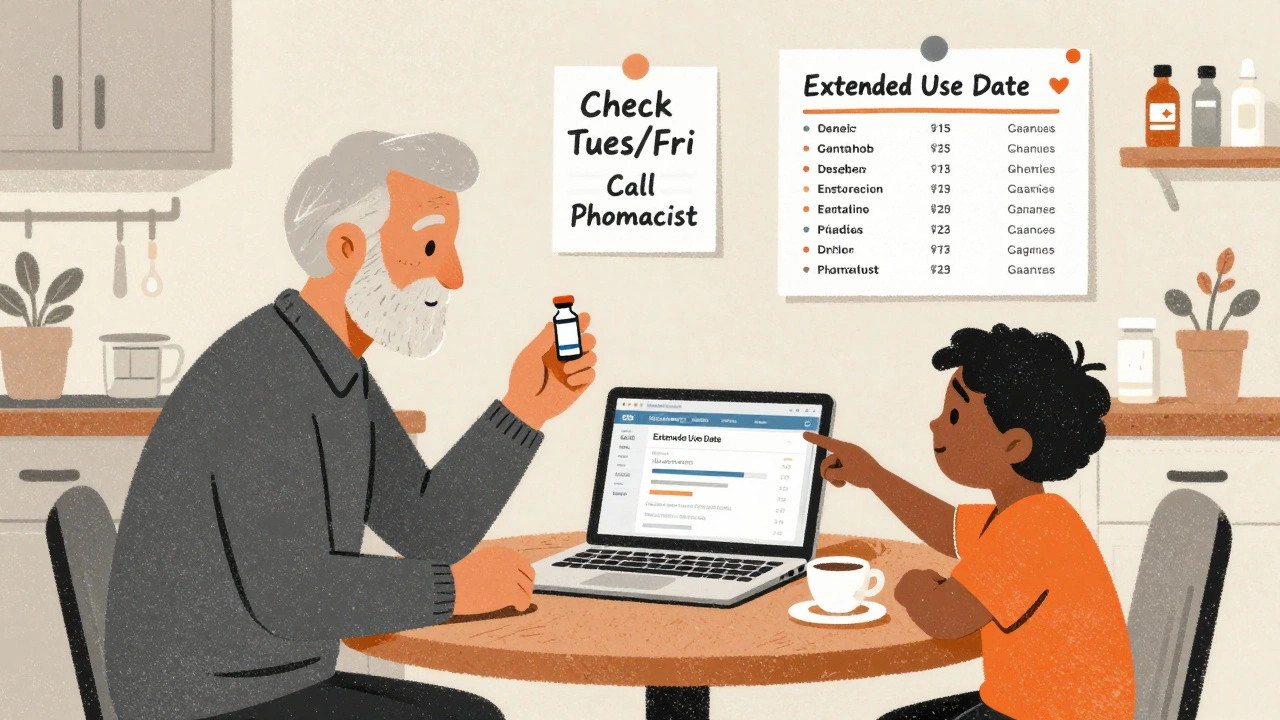
Another error is ignoring the “extended use date.” Some drugs have expiration dates pushed back by the FDA during shortages. If your insulin vial says it expired last month but the database says it’s still safe to use until December 2025, you’re not breaking the law-you’re following FDA guidance. Pharmacists often don’t tell patients this, so you have to check yourself.
How to Report a Shortage
If you can’t find a drug that should be listed-and you’re a healthcare provider-you can report it. The app has a “Report a Shortage” button. You’ll need the drug name, manufacturer, NDC, and where you’re seeing the shortage. If you’re a patient, you can email [email protected]. The FDA doesn’t respond to every report, but if multiple reports come in for the same drug, they investigate. In April 2024, a cluster of reports about a specific insulin NDC led to the database being updated within 48 hours, helping hospitals switch to alternatives before patients were affected.
What’s Coming Next
The FDA is working on AI tools to predict shortages before they happen. Right now, the database is reactive-it shows you what’s already broken. But by late 2025, they plan to start using machine learning to flag patterns in manufacturing delays, supplier issues, and regulatory filings. The goal is to cut the current 7-10 day reporting lag to under 24 hours. They’re also testing barcode scanning in the app so pharmacists can scan a bottle and instantly see if it’s affected.
For now, the best strategy is simple: check the FDA database every Tuesday and Friday. That’s when they send out email updates. Subscribe at the bottom of the website. If you’re managing medications for someone with chronic illness, make this part of your weekly routine-like checking your calendar or refilling prescriptions. It’s not glamorous, but it can prevent real harm.
What to Do When a Drug Is Short
First, don’t panic. Second, don’t stop taking your medication unless your doctor says so. Third, call your pharmacy and ask if they have an alternative NDC. Fourth, check ASHP’s site for clinical alternatives. Fifth, if you’re still stuck, ask your doctor to request an emergency import from another country-something the FDA allows under certain conditions. Many people don’t know this is possible.
Also, keep a list of your medications with their generic names and NDCs. Write them down. Take a photo of your prescription bottle. That way, when you need to look something up, you’re not scrambling.
Is the FDA drug shortage database free to use?
Yes, the FDA Drug Shortage Database is completely free to access. There are no subscriptions, fees, or registration requirements to view current or past shortages. The website and mobile app are funded by the federal government and available to patients, pharmacists, doctors, and manufacturers without cost.
How often is the FDA drug shortage database updated?
The database is updated daily. New shortages are added as soon as manufacturers report them and the FDA verifies the information. Resolved shortages are removed or marked as resolved within 24 hours of confirmation. The FDA’s Drug Shortages Staff reviews all submissions every business day to ensure accuracy and timeliness.
Can I trust the estimated resolution dates in the database?
The estimated resolution dates are based on manufacturer projections, but they’re only accurate about 79% of the time for shortages reported through the FDA’s direct portal. For delays caused by manufacturing or regulatory issues, timelines can shift quickly. Don’t rely on these dates as guarantees. Use them as a general guide and check back frequently. The FDA itself warns that these estimates are often conservative and may be extended.
Why doesn’t the FDA database show shortages in my local pharmacy?
The FDA only lists shortages that affect the entire U.S. supply chain. Local stockouts-like one pharmacy running out due to high demand or delivery delays-are not included. That’s why you might see a drug listed as “available” on the FDA site but still can’t find it locally. For those cases, check ASHP’s database or call nearby pharmacies directly.
What should I do if I can’t find my medication and it’s not listed in the FDA database?
If your medication isn’t listed and you can’t find it, first confirm you’re searching by the generic name, not the brand. Then check ASHP’s Drug Shortages resource. If it’s still not listed, contact your pharmacist or prescribing doctor. They can file a report with the FDA on your behalf or suggest therapeutic alternatives. You can also email [email protected] with details about the shortage you’re experiencing.
Does the FDA database include compounded drugs or international alternatives?
No, the FDA database does not track compounded drugs or medications imported from other countries. It only includes FDA-approved drugs manufactured or distributed in the U.S. Compounded versions used during shortages are not reported consistently, and international alternatives aren’t monitored unless they’re officially imported under FDA emergency protocols. For compounded options, consult your pharmacist or a compounding pharmacy directly.
Final Tips for Staying Ahead
Drug shortages aren’t going away. They’ve increased 300% since 2010 and affect everything from antibiotics to insulin. The best defense is awareness. Set up a weekly 10-minute routine: check the FDA database every Tuesday after their email update. Bookmark the site. Download the app. Keep a printed list of your meds with generic names and NDCs. Talk to your pharmacist about alternatives before a shortage hits. And remember: if you’re unsure, ask. The FDA database gives you power-use it before you need it.
Alex Piddington
December 3, 2025 AT 00:13Thank you for this comprehensive guide. As a healthcare professional, I’ve seen firsthand how confusing the FDA database can be-especially for patients trying to navigate it alone. The breakdown of status codes and NDC specificity is invaluable. I now include this in my patient handouts.
Pro tip: Print the NDCs for all your meds and keep them in your wallet. Saved me during the insulin shortage last winter.
Shofner Lehto
December 4, 2025 AT 03:20The FDA database is essential, but it’s not a substitute for talking to your pharmacist. They know what’s actually on the shelf, not just what’s officially resolved. Always call ahead.
Karl Barrett
December 6, 2025 AT 02:10There’s a deeper epistemological crisis here: the FDA database represents a technocratic ideal of transparency, yet its utility is mediated by institutional inertia. The 79% accuracy rate on resolution dates isn’t just statistical-it’s a symptom of a system that prioritizes bureaucratic closure over clinical reality. We’re treating a symptom, not the disease.
The real issue is supply chain fragility rooted in neoliberal pharmaceutical consolidation. When 80% of API manufacturing is outsourced to two countries, and regulatory oversight is underfunded, no database can fix that. We need structural reform, not just better UI.
ASHP’s clinical alternatives are the real lifeline-not because they’re more comprehensive, but because they acknowledge that medicine isn’t just about availability, it’s about adaptation. The FDA gives data. ASHP gives agency. And agency is what saves lives.
Jake Deeds
December 7, 2025 AT 20:00Wow. Just… wow. I can’t believe people still don’t know you have to search by generic name. I mean, come on. This isn’t rocket science. And yet, I’ve had patients come in with a box of Humalog asking why it’s not in the database. I had to gently explain that they were using a brand name. Like… how? Do you not read the label?
Also, if you’re not checking ASHP, you’re doing your health a disservice. It’s not even a debate. It’s basic. I’m honestly shocked.
val kendra
December 8, 2025 AT 12:31Check the database every Tuesday and Friday. Set a reminder. Do it. It takes 2 minutes. Your life might depend on it.
Also-take a photo of your prescription bottle. Generic name + NDC. Save it in your phone. You’ll thank yourself later.
Ben Choy
December 9, 2025 AT 20:09This is such an important resource. I’ve shared it with my mom who’s on multiple chronic meds. She didn’t even know the FDA had this. Now she checks it weekly. Small habits save lives.
Also, the mobile app push alerts? Game changer. Got notified about a heparin shortage while I was at work-called my pharmacy before my appointment. Saved a trip and a panic.
Emmanuel Peter
December 10, 2025 AT 06:10So let me get this straight-you’re telling people to trust the FDA database? The same agency that let the opioid crisis happen? The same one that approved Vioxx and then pretended it didn’t know? This isn’t a tool-it’s a distraction.
Meanwhile, the real problem is Big Pharma’s monopoly on supply. The FDA’s database just makes you feel like you’re doing something while the system keeps crumbling. You’re being sold a false sense of control.
Bill Wolfe
December 11, 2025 AT 04:32Let’s be honest-most people can’t even spell 'amoxicillin' correctly. You’re asking someone who can’t figure out how to use a pharmacy app to navigate NDC codes and FDA status classifications? This is like giving a toddler a Swiss Army knife and calling it 'empowerment.'
And don’t even get me started on ASHP. That site looks like it was designed in 2003. If you’re relying on that, you’re already behind. The real solution? AI. The FDA should’ve hired me to redesign this five years ago. I’d have made it intuitive. But no-someone else got the contract. Again.
Also, did you know that 92% of patients who use the database incorrectly end up taking the wrong dosage? I read it on a blog. It’s true. I’m basically a public health expert now.
michael booth
December 11, 2025 AT 04:37It is imperative to underscore the critical importance of utilizing both the FDA Drug Shortage Database and the American Society of Health-System Pharmacists’ resources in tandem. The former provides authoritative, federally verified data, while the latter offers clinically actionable alternatives, thereby ensuring continuity of care.
Furthermore, the practice of maintaining a personal inventory of medications, inclusive of generic nomenclature and National Drug Code identifiers, constitutes a prudent and evidence-based precautionary measure. Such diligence significantly mitigates the risk of therapeutic disruption during periods of supply instability.
It is also noteworthy that the FDA’s forthcoming AI-driven predictive analytics represent a paradigmatic advancement in proactive pharmaceutical supply chain management. The transition from reactive to anticipatory systems is not merely convenient-it is ethically imperative.
Libby Rees
December 13, 2025 AT 02:28Good guide. Clear. Direct. I showed it to my sister who’s on insulin. She didn’t know you could check the NDC. Now she does. That’s what matters.
Dematteo Lasonya
December 14, 2025 AT 16:07One thing I wish more people knew: if a drug has an extended use date, it’s safe. The FDA doesn’t extend expiration dates lightly. I’ve used insulin past its printed date because the database said it was okay. No issues. Don’t throw it away out of fear. Check the official info first.
Rudy Van den Boogaert
December 15, 2025 AT 14:57Just started using the app. The alerts are actually useful. Got one for a heart med I take. Called my pharmacy and they had a different NDC in stock. Saved me a trip to the ER. Thanks for the heads up on the filter options too-those saved me hours.
George Graham
December 17, 2025 AT 00:40This is the kind of info that doesn’t get talked about enough. I’m a caregiver for my dad with heart failure. We’ve been burned by shortages before. I used to just panic when his meds were gone. Now I check the database every week. It’s not glamorous, but it’s peace of mind.
Also, the ASHP alternatives saved us when his beta-blocker disappeared. We switched to a different one and he’s doing fine. No drama. Just smart.
Chad Handy
December 17, 2025 AT 13:55I’ve been following this for years. Every time there’s a shortage, I get this sinking feeling. I mean, how many times can we keep doing this? We’re not talking about a rare drug here-we’re talking about insulin. Antibiotics. Heart meds. People are dying because of supply chain failures. And the FDA just sits there updating a website like it’s a spreadsheet.
And don’t even get me started on the manufacturers. They know this is coming. They’ve had years to fix it. But no-profit margins first, lives second. It’s disgusting. I’m not mad. I’m just… tired. And scared. For everyone.
Rebecca Braatz
December 18, 2025 AT 19:12Stop waiting for someone else to fix this. Check the database. Save your NDCs. Talk to your pharmacist. Share this with your family. You have power. Use it.
And if you’re reading this and you’re a provider? Make this part of your intake form. It’s not extra work-it’s essential care.
jagdish kumar
December 19, 2025 AT 16:08Reality is a lie. The database is a mirror. We see what we want to see. The truth? No one controls the supply. The system is broken. We are all just waiting for the next collapse.