
When you're going through chemotherapy, your body isn't just fighting cancer-it's also fighting nausea, loss of appetite, and rapid weight loss. It’s not about eating healthy in the usual sense. It’s about eating enough to keep your strength up, your treatment on track, and your body from breaking down. The goal isn’t to lose weight or clean up your diet. It’s to keep eating, even when everything in you wants to stop.
Why Nausea and Weight Loss Happen During Chemotherapy
Chemotherapy doesn’t just target cancer cells. It hits fast-growing cells everywhere-including the ones lining your stomach and intestines. That’s why nausea hits so hard. For 60 to 85% of people on chemo, food smells wrong, tastes metallic, or just makes you feel sick. Your body also burns energy faster because it’s under stress. Even if you’re eating, your muscles start breaking down. That’s why weight loss isn’t just inconvenient-it’s dangerous. Research from ESPEN and the National Cancer Institute shows that 40 to 80% of cancer patients become malnourished during treatment. And when you lose weight too fast, your treatments get delayed. Your immune system weakens. Recovery takes longer. This isn’t a side effect you can ignore. It’s a medical emergency wrapped in a loss of appetite.What to Eat When You Can’t Keep Food Down
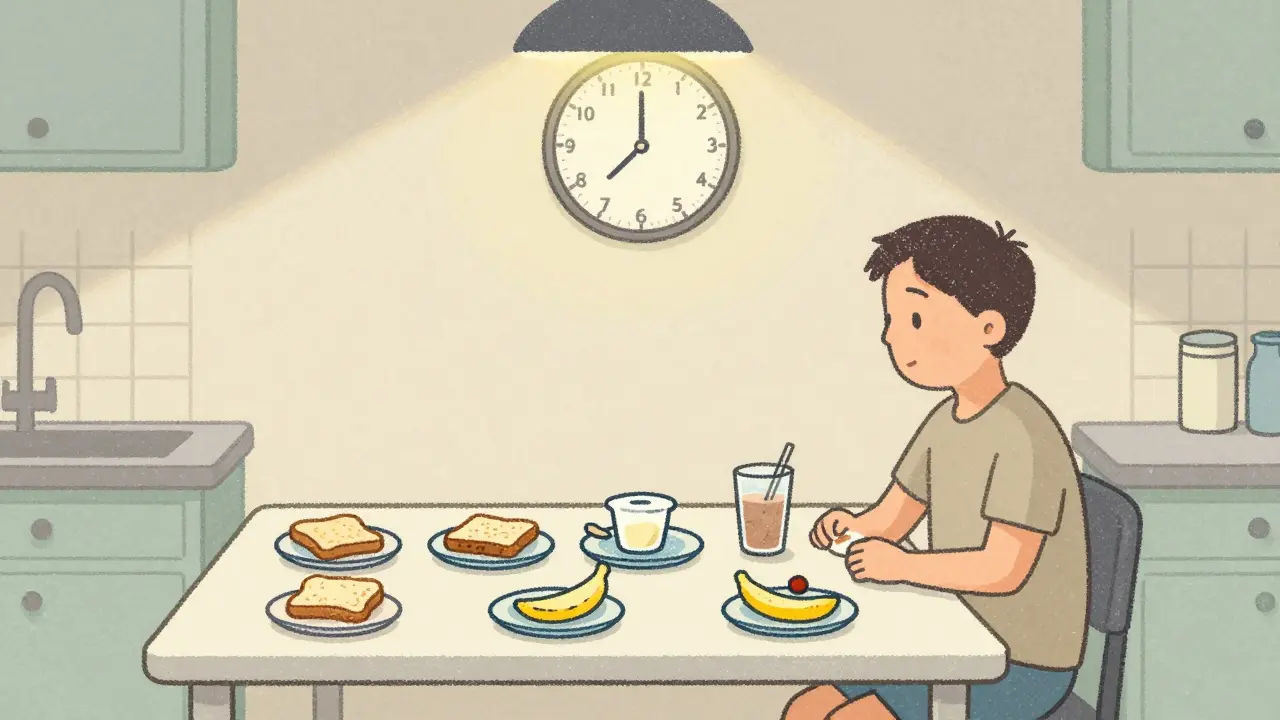
Forget the idea of three big meals a day. That’s not working anymore. Instead, eat five to six tiny meals every few hours. Each one should be around 300 to 400 calories and pack in 20 to 30 grams of protein. That’s not a suggestion-it’s a clinical target. Studies show patients who stick to this pattern control nausea better and keep their weight stable. Start with foods that are easy on the stomach: plain rice, toast, bananas, applesauce, boiled potatoes. Avoid greasy, fried, or spicy foods. They make nausea worse in 73% of patients. Skip strong smells too-cooking bacon or garlic can trigger vomiting. Eat cold or room-temperature foods instead. They don’t give off as much odor. Chilled watermelon, yogurt, or even frozen grapes can be easier to tolerate. Drink fluids between meals, not with them. Sipping water or ginger tea while eating fills your stomach too fast and makes nausea worse. Sip slowly throughout the day. If plain water makes you queasy, try diluted juice, clear broth, or electrolyte drinks.Protein Is Your New Best Friend
Healthy adults need about 0.8 grams of protein per kilogram of body weight. If you weigh 70 kg, that’s 56 grams a day. During chemotherapy, you need 1.2 to 2.0 grams per kilogram. That’s 84 to 140 grams a day. Double the amount. Why? Because your body is using protein to repair tissue, fight infection, and keep muscles from melting away. If you can’t eat meat, try these high-protein options:- Full-fat Greek yogurt (17g protein per 6 oz)
- Cottage cheese (14g per half cup)
- Eggs (6g per egg-cook them well, yolks must reach 160°F)
- Peanut butter (8g per 2 tablespoons)
- Protein shakes made with milk or soy milk, peanut butter, banana, and honey
Food Safety Is Non-Negotiable
Chemotherapy weakens your immune system. What’s harmless to others can make you very sick. No raw eggs. No sushi. No rare steak. No soft cheeses like brie or blue cheese. Avoid deli meats unless they’re reheated until steaming hot. Eggs must be cooked until the yolk is firm. Homemade mayonnaise, Caesar dressing, or cookie dough? Skip them. Use store-bought versions labeled “pasteurized.” Wash all produce thoroughly. Use separate cutting boards for raw meat and veggies. If you’re unsure, cook it longer. Better safe than hospitalized.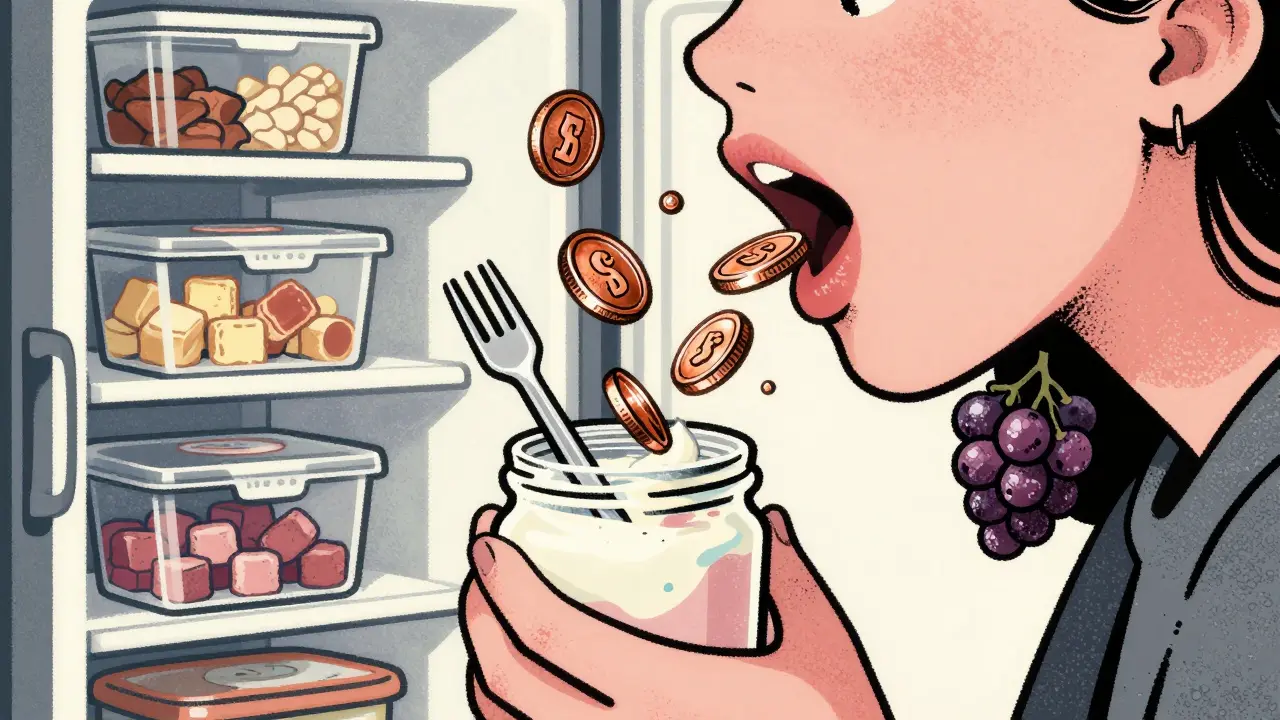
What to Do When You Can’t Eat Enough
Sometimes, even the best plan isn’t enough. If you’re losing more than 5% of your body weight in a month, you need help. Don’t wait. Talk to your care team. Supplements like Ensure Plus or Boost can help-but they’re expensive. A 12-pack costs $35 to $45. Many patients make their own high-calorie, high-protein snacks instead:- Peanut butter crackers (220 calories, 7g protein per serving)
- Trail mix with nuts, dried fruit, and chocolate chips (280 calories per quarter cup)
- Smoothies with whole milk, avocado, and protein powder
- Cheese sticks and whole-grain crackers
Practical Tips That Actually Work
Real people, real stories. Here’s what works based on thousands of patient experiences:- Ginger chews help 60% of people with nausea. Try them 15 minutes before meals.
- Plastic utensils reduce the metallic taste that chemo causes. Metal spoons make everything taste like pennies.
- Freeze grapes for mouth sores. They numb the pain and give you something to suck on.
- Wear a mask while cooking or when someone else is preparing food. It blocks strong smells.
- Track your calories and protein for three days. Use a free app like MyFitnessPal. You’ll be surprised how little you’re actually eating.
When to Call for Help
You don’t have to do this alone. But you need to speak up. Call your oncology team if:- You’ve lost 5% of your body weight in one month
- You can’t keep any food or liquids down for more than 24 hours
- You’re too weak to get out of bed
- Your clothes are looser than usual, and you’re not trying to lose weight
What Not to Do
Don’t try to “detox” or go vegan to “starve the cancer.” That’s not science. It’s dangerous. Don’t restrict calories. Don’t skip protein. Don’t wait until you’re too weak to eat. The goal isn’t to eat perfectly. It’s to eat enough. Even if it’s just a spoonful of yogurt or a handful of crackers. Every bite counts.What’s Changing Now
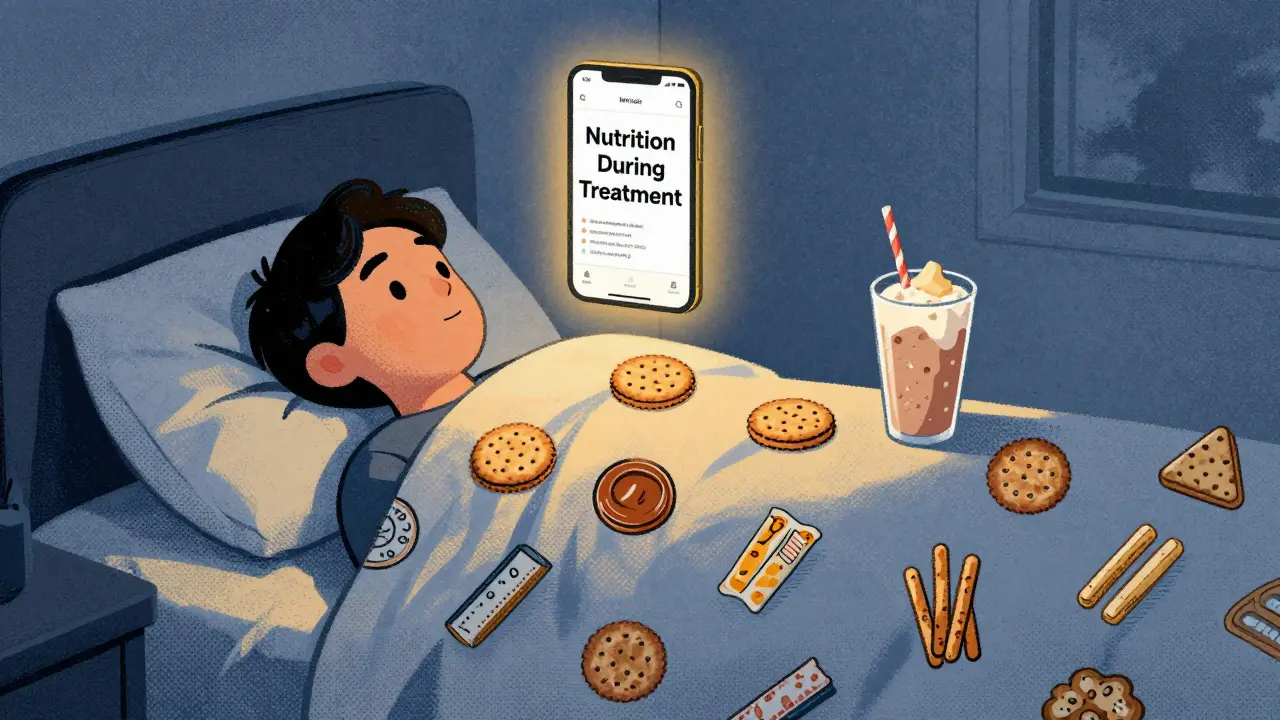
In 2023, the National Cancer Institute launched a free app called “Nutrition During Treatment.” It tracks calories, suggests recipes, and reminds you to eat. Over 42,000 people downloaded it in its first six months. Hospitals like Mayo Clinic have cut treatment delays by 28% just by making nutrition a priority from day one. Research is moving fast. Scientists are now testing whether your genes affect how you respond to certain foods during chemo. In the next few years, you might get a custom meal plan based on your DNA. But right now, the best advice is simple: eat often, eat protein, eat safely, and never feel guilty for eating what works-even if it’s ice cream or soda.Frequently Asked Questions
Can I drink alcohol while on chemotherapy?
It’s best to avoid alcohol. It dehydrates you, irritates your stomach, and can interfere with how your body processes chemotherapy drugs. Some treatments make your liver work harder, and alcohol adds extra stress. If you really want a small glass of wine, talk to your doctor first-but don’t make it a habit.
Why do I taste metal during chemo?
Chemotherapy changes how your taste buds work. Many people say everything tastes like metal, plastic, or cardboard. Try using plastic utensils instead of metal ones. Rinse your mouth with baking soda and water (1/2 tsp baking soda in 1 cup water) before eating. Eat foods with strong flavors like citrus, mint, or ginger to override the metallic taste.
Should I take protein powders or supplements?
If you’re struggling to get enough protein from food, yes. Look for powders with at least 15-20 grams of protein per serving and no added sugar. Mix them into smoothies, oatmeal, or even mashed potatoes. Avoid powders with herbal ingredients-some can interfere with chemo. Always check with your oncology dietitian first.
I’m losing weight even though I’m eating. What’s wrong?
Your body is under extreme stress. Even if you’re eating, your metabolism is burning through calories faster than normal. You may need more protein and calories than you think. Track your intake for three days. If you’re still losing weight, ask for a referral to an oncology dietitian. They can calculate your exact needs and suggest high-calorie snacks you might not have tried.
Is it okay to eat sweets during chemo?
Yes. Sugar doesn’t feed cancer more than it feeds your healthy cells. If ice cream, pudding, or cookies are the only things you can keep down, eat them. Your priority is calories and protein-not sugar limits. Save the sugar restriction for after treatment. Right now, you need every bit of energy you can get.
How long does nausea last after chemo?
It varies. For some, nausea peaks within 24 hours and fades in a few days. For others, it lasts up to a week, especially with strong chemo drugs like cisplatin. Medications like ondansetron or aprepitant help, but eating small, frequent meals and avoiding triggers (smells, greasy food) makes a big difference. Keep a nausea diary-note what you ate, what you felt, and what helped. You’ll start to see patterns.
Next Steps
Start today. Not tomorrow. Not after your next chemo session. Right now.- Write down your weight. Do it weekly.
- Plan your next 24 hours: what will you eat every 3 hours?
- Make one high-protein snack today-something you can grab without cooking.
- Call your clinic. Ask if they have an oncology dietitian.
Isabella Reid
January 17, 2026 AT 02:05I used to think I had to eat salads and quinoa to be healthy during chemo. Then I realized: if the only thing I can keep down is ice cream and peanut butter crackers, then that’s my new superfood. My oncologist said I’m doing great. Who cares if my diet looks like a 5-year-old’s snack drawer? I’m still here.
Also, plastic utensils? Life-changing. Metal spoons tasted like licking a battery. Now I just grab a spoon from the kids’ toy set. Works like a charm.
Nick Cole
January 18, 2026 AT 16:47My mom went through chemo and lost 30 pounds in two months. We started making these smoothies: whole milk, banana, two scoops of whey, a spoon of peanut butter, and a handful of frozen mango. She’d sip it slowly between naps. She gained back 15 pounds in three weeks. No magic, just calories and protein. Don’t overthink it. Just get it in.
And yes, ginger chews. Buy the big bag. They’re not fancy, but they’re real.
Riya Katyal
January 18, 2026 AT 23:08Oh wow, so now we’re supposed to eat like a bodybuilder while puking? Cute. Meanwhile, my cousin’s oncologist told her to just eat whatever she wants-even if it’s Pop-Tarts. But you? You’re here preaching 140g of protein like it’s a cult. Some of us don’t have the energy to calculate grams. We just want to not throw up.
Also, ‘no soft cheese’? Bro, I had brie the other day and I’m still alive. Maybe your fear is worse than the chemo.
swarnima singh
January 19, 2026 AT 13:40you know what they dont tell you? that this whole thing is a scam. the chemo is what makes you lose weight, not the cancer. they want you scared so you eat their expensive shakes and buy their ‘cancer-fighting’ snacks. real nutrition is fasting and detoxing. i lost 40lbs on lemon water and gratitude. you think protein shakes fix your soul? no. your soul needs silence. not peanut butter.
and why do you all keep talking about eggs like they’re holy? i ate raw eggs for 3 weeks and my hair grew back. they’re scared of that. they dont want you healing naturally.
ask your doctor if they’ve ever fasted. they havent. they’re paid to keep you sick.
kanchan tiwari
January 21, 2026 AT 06:55OMG I JUST REALIZED-this whole article is a government psyop. Did you know that the ‘Nutrition During Treatment’ app is owned by Big Pharma? They’re using protein shakes to track your DNA! That’s why they want you to scan your meals. They’re building a database of cancer patients so they can sell your data to insurance companies. And the ‘plastic utensils’ tip? That’s so you don’t trigger the metal sensors in your body that detect when you’re healing. They want you to stay sick so you keep buying their drugs!
I saw a video where a woman ate only chocolate and cried for 4 days and her tumors vanished. But they banned the video. They’re scared. I’m not eating anything unless it’s organic, moon-phase aligned, and blessed by a shaman. Send help. Or at least a crystal.
Allen Davidson
January 21, 2026 AT 18:09Just wanted to say thank you for this. I’ve been helping my sister through her third round and this is the first time I’ve seen something that actually feels practical-not just ‘eat healthy’ nonsense.
My sister started doing the mini-meals thing and it made all the difference. She was down to 98 pounds. Now she’s at 112. She still hates the taste of meat, so we blend cottage cheese into mac and cheese. She calls it ‘magic cheese sauce.’ I don’t care what it’s called as long as she’s eating.
Also, the ginger chews? She eats them like candy now. She’s even sharing them with the nurses. That’s the kind of win we needed.
brooke wright
January 23, 2026 AT 08:34My aunt did the protein shake thing with avocado and whole milk. Said it tasted like a milkshake but didn’t make her gag. She started keeping a little jug in the fridge and sipping it between naps. She went from 102 to 118 pounds in six weeks.
Also-freezing grapes? Genius. She calls them ‘cancer ice cubes.’ I’m stealing that term.
And no, she didn’t track calories. She just ate when she felt like it. Sometimes it was crackers. Sometimes it was ice cream. Sometimes it was both at the same time. And guess what? She’s still here.
Don’t let anyone make you feel guilty for eating what works. Even if it’s Cheetos. Especially if it’s Cheetos.
Henry Ip
January 24, 2026 AT 10:31My dad had chemo for 18 months. He ate nothing but mashed potatoes with butter and honey for three weeks straight. We thought he was dying. He didn’t lose a pound. He just kept eating. That’s the secret. Not the protein math. Not the fancy shakes. Just food that doesn’t make you want to vomit.
He still eats mashed potatoes with honey every morning. Says it reminds him he won.
Also, plastic fork. Always. Metal spoons are the devil.
Nicholas Gabriel
January 26, 2026 AT 02:12Let me just say-this is one of the most thoughtful, practical, and compassionate guides I’ve ever read on cancer nutrition. Seriously. You didn’t just list facts-you gave people permission to eat without shame. That’s rare.
I’m a nurse on an oncology floor, and I’ve seen too many patients starve themselves because they think they ‘should’ be eating kale. They’re not. They’re eating toast with jam because it’s the only thing that doesn’t taste like metal. And that’s okay. That’s heroic.
Also, the part about ‘no raw eggs’? Please, please, please keep saying that. I’ve had two patients hospitalized from homemade mayo. Don’t risk it. Store-bought is fine. Your life is worth more than your principles.
Thank you for writing this. I’m printing it out for my next patient.
Cheryl Griffith
January 27, 2026 AT 09:22I didn’t eat for 11 days straight. Just sipped ginger tea and stared at the ceiling. My oncologist said I was ‘in danger.’ I cried. Then I ate a spoonful of ice cream. Then another. Then a whole tub. I didn’t feel guilty. I felt alive.
That’s all I needed to hear: it’s okay to eat what you can. Not what you should. Not what’s ‘healthy.’ Just what doesn’t make you want to die.
Now I eat chocolate-covered pretzels for breakfast. And I’m still here.
Thank you for saying that out loud.
Kasey Summerer
January 27, 2026 AT 17:5510/10 guide. Also, plastic utensils are the real MVP. Metal spoons = taste of regret. 🤢
My cousin ate nothing but mac and cheese for 6 weeks. Said it tasted like childhood. She’s in remission now. Coincidence? Maybe. But I’m not arguing with results. 🍝💪